
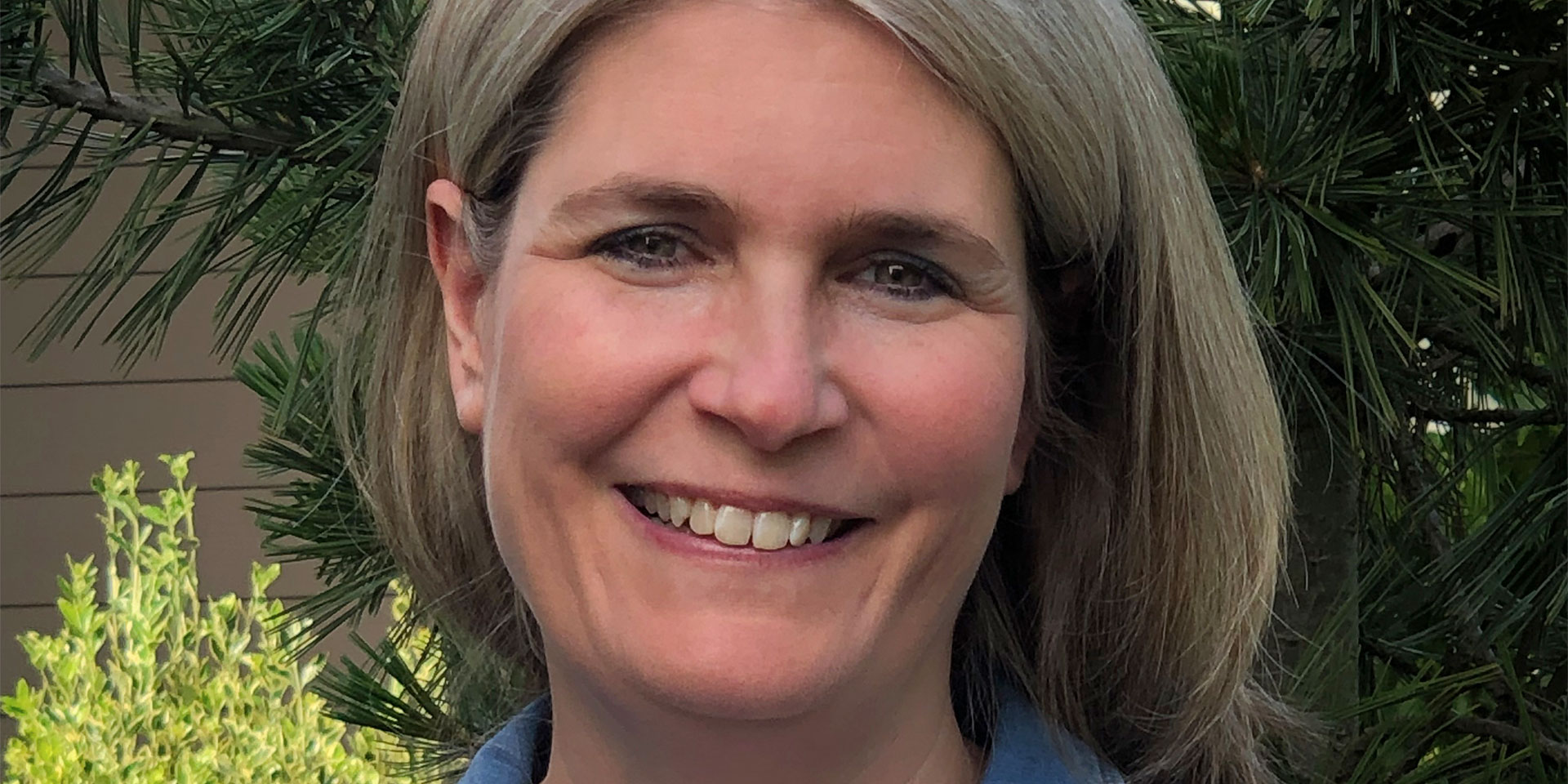
Kellie Nunley began her career as an intern in the US Congress, and worked in several organizations where she had the opportunity to interact with important people and promote noble causes.
How did you get involved in lobbying?
I was studying political science and taking law prep courses. As I am from Virginia, I wanted to return to Washington, DC, and an old family friend let me stay in her basement until I got on my feet. I started applying for internships to figure out where I would fit in best. I was offered an internship at a lobbying firm that advocates for children’s rights.
I read that the term “lobbying” comes from the room or hallway located in front of a meeting room, where members of the legislature meet with constituents and other guests to interact and exchange ideas. Can you explain the term a little?
You’re right. It comes from the place where influential and powerful people, such as members of Congress or a board of directors, can be met. Capitol Hill is where people go to be heard and to have their cause supported by those who can bring about change and ensure their elected representatives represent their interests. This is what lobbying is all about: speaking on behalf of individuals or groups with a special interest.
It was a very interesting situation. I am a conservative person. However, the firm that hired me was quite liberal. In early 1995, when the Republicans had won a majority in both houses, I had more opportunities to knock on doors and be received than my employers did.
The issue was this: There were many dysfunctional families due to poverty and the incarceration of a family member. The children would end up in the public welfare system, far from their families, instead of first seeking a suitable family member to take care of them. Our goal was to keep them within the extended family until their parents could take them back into their care. Once children enter the social welfare system, it is very difficult for them to leave. Sometimes, parents rehabilitate themselves, but are unable to get their children back. We were striving to bring about this change.
To make it a legal procedure.
Yes, to be included in the legislation. After a while, I realised that we wouldn’t succeed, but my job was to draft a text that would form part of the reforms for the first 100 days of the new Congress. Do you remember the “Contract with America”, initiated by Newt Gingrich when he was Speaker of the House?
I met him and worked with lawmakers. It was a very interesting time. I spent more time in the field than in the office. I didn’t choose this cause—I felt it chose me. However, it gave me the opportunity to meet people and figure out what I wanted to do.
The work was very meticulous: I would work 16 hours a day to formulate a single sentence that would be supported by as many members of Congress as possible and sent to the president. This is often the nature of work in Washington.
You write and rewrite; you deal with details and nuances.
Yes. In addition, you attend receptions and dinners. You bring attention not only to your cause, but also to yourself. People notice you. In Washington, you look for your next job. Don’t forget that I was an unpaid intern and this period was coming to an end. I had to find a job related to Congress.
Did you want to stay in this field?
Yes. I felt at home there. I had a degree in Political Science, and I was one of the few people with such a degree who worked in the field. I intended to study law. However, I noticed that many of my classmates had changed after their first year of law school, not necessarily for the better. After praying about it, I believe God led me in a different direction.
My first job was coordinating the meeting schedule in Congress. It was a very influential position. Now, it was me who received those who wanted to lobby. I was no longer knocking on doors, but opening or closing them. I liked it. I had the opportunity to work with members of Congress and their families.
You got to know the world of high-level politicians, their families, and their staff. How did that influence your view of how politics is done?
I found it both interesting and challenging. As an Adventist Christian, perhaps I didn’t practise my faith as much as I would have liked. However, I was surrounded by friends and family who prayed for me, encouraged me, and were concerned about me given where I worked. My brother said it was “Sodom and Gomorrah”.
Can you give us some examples of challenges?
People’s willingness to understand that you don’t work on Saturdays. Sometimes, I broke the Sabbath because I didn’t want to push it too far. However, I told myself that if I held this conviction, I had to stick to it. I became increasingly disciplined about keeping the Sabbath. People got to know me. If you do a good job, you can get people to understand. It was also a way of bearing witness to my faith. Although I was in a dangerous position for a Christian but it was a great opportunity to bear witness if you are strong. I felt a huge sense of responsibility.
As a general rule, honesty is not a priority among politicians. The chief of staff wants certain things to turn out a certain way and, to achieve that, you have to lie. You are told to say certain things so as not to cause trouble. I cannot function that way. It’s possible to be honest without upsetting people, but I had to strike a balance without compromising my values. It was very difficult. Subjective preferences, personal antipathies, and plots orchestrated by those seeking to advance their own interests often come into play.
The biggest challenge is the constant internal struggle we all face in life, and I felt it very acutely at that time. My family encouraged me to quit that job. I thought I might be more useful working in the private sector than in the public sector. I would still be lobbying, just from a different sector.
I had a few jobs with lobbying firms. I gained experience and learned about some of the more dubious aspects of the work, as well as the extraordinary stress it generated. I even received calls on the Sabbath while I was at church. I took two months of unpaid leave to decide what to do next. Thankfully, I had saved up enough money to get by without a job.
During this time, I continued to look for other jobs, hoping to return to a government relations position in the private sector. I attended many interviews. One of them was at the American Cancer Society. However, I was told that I was overqualified for the position they had available. Looking back, I realised what had happened. God didn’t want me to take that job. They told me that they had another position available, but it wasn’t open to applicants yet as it had to be offered to internal candidates first. I really wanted that job. When they described it to me, I realised it was exactly what I was looking for. It was in the organisation’s lobbying department, in the government relations office, and I would be working for the central organisation.
I really wanted that job. But I didn’t receive a call. It was the morning of the last day of my two-month leave. It was a Friday. I was due to start work the following Monday. I needed the salary. I prayed and cleaned the house frantically. I had to keep myself busy. The phone didn’t ring. I had been ill all week and couldn’t leave the house to look for another job.
“I don’t know what to do, God! What have you got in store for me? I have nowhere to go.” It was 4.45pm. In Washington, at 5 o’clock on Fridays, everyone goes home. I realised that nothing was going to happen. At 4.45pm, I received a call. The job was mine. They needed me to start immediately. So I did. That was in 1998. I was hired by the government relations office and worked at the headquarters in the federal capital and Atlanta from 1998 to 2005.
Can you describe your work for us?
Four days after I started, new tobacco legislation reached the Senate. Previous anti-smoking bills had never made it past the House of Representatives, but this one was now in the Senate, which had the power to decide. We needed to bring people from all over the country to Washington to lobby for the bill. My first task in my new role was to arrange long-term hotel accommodation, set up headquarters, and coordinate these activities involving members of the Senate.
Among other things, we needed C-SPAN 2, the channel that broadcasts Senate proceedings, to be available in the hotel. I asked, and they agreed. However, when the people arrived, the TVs were only showing C-SPAN 1 with the House proceedings.
The hotel had misunderstood!
Yes! I told them, “I don’t care what you do, but I need C-SPAN 2 within 15 minutes.” They went to the neighbouring hotel, laid a 150-metre cable, and provided us with C-SPAN 2. I quickly earned a reputation for getting things done.
Was the law passed?
We lost that time around, but the fact that it made it to the Senate was a huge accomplishment. Many things are achieved in several steps. Anti-smoking legislation involved not just a change in policy or laws, but also a change in behaviour. We had to convince Americans that smoking was a serious health issue and that tobacco needed to be regulated.
As a conservative who prefers a limited federal government, I believe this was a situation in which the government could effect change. The US Food and Drug Administration had concluded that tobacco was addictive, a view with which we concurred. The bill was narrowly defeated in the Senate, but we realised that if we came back, we would have a much better chance. This wasn’t a typical conservative issue. Republicans were heavily funded by the tobacco industry. So, we wanted a more Democratic Congress. Having a Democratic president helped us secure the votes and pass the bill. It was another very close vote, but it passed. At the time, I was still working for the American Cancer Society. We were thrilled to see the anti-smoking bill pass. Restaurants and workplaces were required to ban smoking. Being able to go to a restaurant without being asked if you wanted to sit in the smoking or non-smoking section was a huge achievement.
It seems like common sense now!
But not then! After all, we had 100 years of tobacco industry tradition. In Virginia, around the federal capital, tobacco was an economic issue as well as a moral one.
Looking back, you have reason to be very happy because huge changes have been made, not only in terms of the comfort of non-smokers in public places, but also in the sharp decline in the number of consumers in the United States. Later, you were asked to coordinate another important project.
That’s right. The American Cancer Society initiated the National Cancer Dialogue, bringing together leaders from around 150 prestigious health and cancer organisations and research and treatment centres. General conventions were held once or twice a year and there were also specialised subcommittees. Topics such as the relationship between cancer and nutrition, obesity, or diabetes were addressed. They needed an iconic figure, someone who was no stranger to cancer. As you know, former President George H. W. Bush and his wife Barbara lost their three-year-old daughter, Robin, to leukaemia. Barbara said that her hair turned white as a sign of her love for her sick daughter. Consequently, George and Barbara Bush were invited to be co-chairs of the National Cancer Dialogue.
As I coordinated a large number of volunteers within the organisation, I had the opportunity to work closely with the Bush family. I had the privilege of visiting them at their home in Kennebunkport, Texas. I was present when the former president celebrated his 80th birthday by jumping out of a plane with a parachute. They were an extraordinary family. If I have ever seen an exemplary marriage, it is theirs. I don’t ever remember seeing them not holding hands. They both had a very strong presence, and when they were together, he certainly wasn’t the boss! Their Christian faith was very strong and guided them throughout their lives.
Did working with them cause any problems regarding the Sabbath? Since there were volunteers, most of their activities took place during the weekend.
Yes, there were conflicts. However, they were very careful to ensure that my work was finished by Friday evening. I tried very hard to arrange everything in advance.
The former president and his wife dedicated themselves to the National Cancer Dialogue. It was customary to ask each other what we were doing for the organisation. The answer was always, “I want to become unemployed”—meaning that cancer would be eradicated and we would no longer be needed. For me, that was the highlight of my work.
Remarkable.
When I was about to have a baby, I started to withdraw from work. The former president asked me why I was leaving and what I was going to do. I told him that I was going to become a mother and devote myself to my child. After pausing for a moment, he said, “I’m not even going to try to change your mind!”
I want to ask you a few more questions about lobbying. Many people view this activity with suspicion. One objection is that it promotes the interests of small groups, sometimes to the detriment of society as a whole.
Our motivation was to protect public health. Our lobbying efforts were more grassroots, originating from within the community. It’s this kind of lobbying that brings benefits.
Are large sums of money involved?
Of course! No matter what your goals are, there will always be people who pull strings not for the public good, but for their own personal gain or that of their constituents. Lawmakers have to fight for their group, but they also often fight for re-election. There has to be a balance. If a member of Congress supports anti-smoking legislation but represents Virginia, it’s difficult. You may be in favour of smoking regulations, but if you take that position, you won’t get re-elected. Finding that balance is very difficult.
Yes, there are conflicting interests.
I tried to stay away from these issues. In Washington, influence is everything! It’s uncomfortable trying to be someone you’re not to achieve something you believe in. In my case, the challenge was whether remaining true to myself would be beneficial to my career. But God worked. I did everything I could to maintain my integrity. It’s difficult in DC, but you can make a big difference. That’s what I discovered.
It wasn’t just about me, but about all the people I worked with too. Some people told me that they could see I was different. They said, “We don’t know how you got to be who you are, do what you do, talk to these people, and still maintain your standards. Many of us had to sell our souls to ensure a law was passed.” I didn’t have to do that.
People think that you have to compromise to get what you want.
That’s right. You can do that where it’s neither illegal nor immoral. But there’s a difference here. We’re talking about ethics and legality. Just because something is legal doesn’t mean it’s moral. Being moral means taking a very difficult step. When you feel you have to compromise on something important, you should withdraw.
Have you done that?
Yes, several times. But the American Cancer Society was a perfect fit for me—there, I could keep the Sabbath and be myself. That’s how I came to enjoy the best job of my life.
However, wouldn’t it be better for all citizens to exercise their rights and express themselves instead of leaving everything to a select few?
In America, we have a right that can be a great blessing but also cause problems. It’s called freedom of speech. I’ve seen a lot of protests lately that have gotten out of hand. However, when protests remain peaceful and non-confrontational, they can be seen as a form of lobbying. It can be very effective. It doesn’t have to be expensive.
Some protests are heavily funded and people are told what to chant. If you believe in something and fight for it legitimately, there are many ways to make your voice heard. You should always speak out, even when it is not convenient. It doesn’t matter how many people support you or are against you. If your cause is worthwhile and means something to you, fight for it. But it must come from the heart.
I have learned one thing. My daily relationship with God has helped me to maintain my religion, my Christianity, and my integrity—to maintain what is part of me. I have always encouraged people, even my son, to do the same: “If you don’t like something, speak up. Don’t speak in an un-Christian manner. Follow the steps in Matthew 18.” We all have that right. Matthew 18 essentially tells us, “If you have a problem with someone, go and tell them.” That means lobbying.