
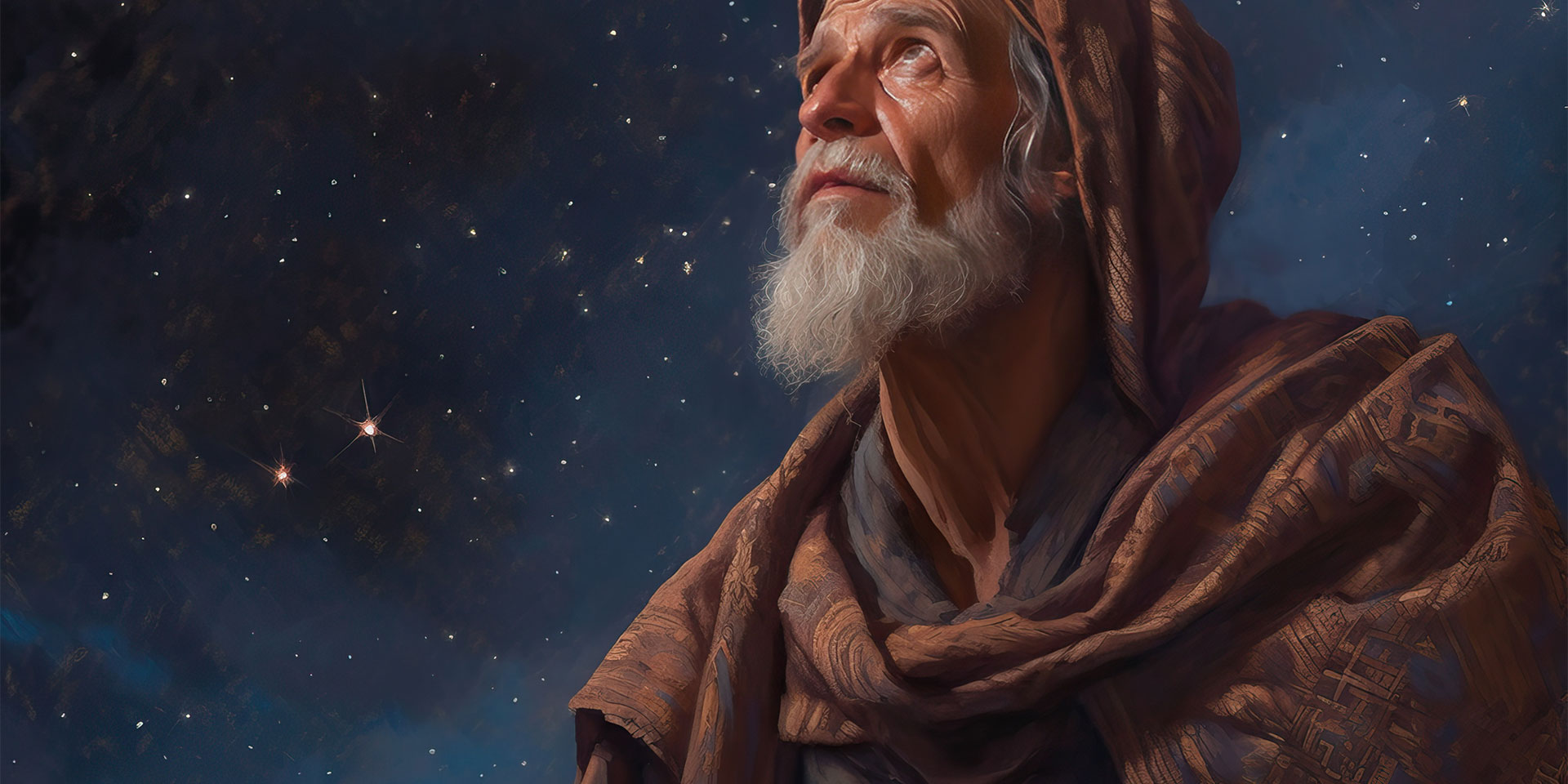
“Patriarchs and Prophets” tells the story of a love that never gives up, pouring itself out to show wandering sons the way home. By examining the events and characters of the Old Testament from a range of perspectives—some familiar, others unexpected—the volume offers readers multiple interpretive keys. Perhaps the most compelling of these is the idea of a divine love that chooses us again and again.
Patriarchs and Prophets is part of the “Conflict of the Ages” series written by Ellen G. White. The series also includes Prophets and Kings (1917), The Desire of Ages (1898), Acts of the Apostles (1911), and The Great Controversy (1888).
Following the thread of Scripture, the book explores the major events of the Old Testament: Creation and the Fall, the Flood, the call of Abraham and the history of the patriarchs, the Exodus from Egypt, the years of wandering in the wilderness, the giving of the Law at Sinai, the entry into Canaan, and the establishment of the monarchy at the people’s request. Prophets and Kings continues this narrative, revealing how divine promises to the chosen people are fulfilled and how the relationship between God and His children is built and tested.
One of the major obstacles to reading the Old Testament is the perception that its narratives portray a severe God, more inclined to punish than to extend grace—seemingly in contrast to the God of love revealed in the New Testament. Patriarchs and Prophets addresses this tension without denying the reality of judgment or the consequences of disobedience. Instead, it frames them within a broader context: that of a love constantly striving to restore a broken relationship.
The power of the narrative also lies in its ability to draw the reader fully into the text. Even those already familiar with the biblical story do not remain passive spectators; they become intensely engaged witnesses to extraordinary events—experiencing the tension of the moment, weighing alternatives, grasping the stakes, and recognising themselves in the choices made by the biblical characters.
Seemingly insignificant decisions reveal their eternal consequences. Divine interventions overturn what appeared to be inevitable outcomes. Characters and destinies are shaped or shattered depending on the heart’s response to divine revelation. Page after page, the reader encounters the clash between divine promises and plans on the one hand, and human calculations on the other. Invited behind the scenes of each struggle, one comes to understand that spiritual collapse begins where trust in God is replaced by confidence in one’s own resources and strategies.
The opening chapters lift the veil from the plan of salvation, revealing the measures determined in the divine council to rescue humanity from ruin. “The Son of God, heaven’s glorious Commander, was touched with pity for the fallen race. … Before the Father He pleaded in the sinner’s behalf. … The plan of salvation had been laid before the creation of the earth. … Yet it was a struggle, even with the King of the universe, to yield up His Son to die for the guilty race. But ‘God so loved the world, that He gave His only-begotten Son, that whosoever believeth in Him should not perish, but have everlasting life’ (John 3:16).”[1]
The chapters that follow recount God’s interventions in the history of the people of Israel from the perspective of the eternal plan of salvation, emphasising that they are expressions of the same grace that seeks, comforts, disciplines, and restores. Acts of correction or punishment—such as in the case of those who worshiped the golden calf or the rebellious leaders Korah, Dathan, and Abiram—difficult to digest for the modern reader, are examined from angles that may escape a superficial reading. They illustrate the repeated rejection of grace, the corrupting and contagious power of evil, and the calling of the chosen people to reflect God’s character before the other nations.
When addressing the most severe forms of divine judgment, the author invites readers to discern the voice of grace even in sentences that appear final. The punishment of Korah, Dathan, and Abiram is illustrative. In light of the previously discussed evidence of divine love, the command—“Move back from the tents of these wicked men! …if the Lord brings about something totally new, and the earth opens its mouth and swallows them…then you will know that these men have treated the Lord with contempt” (Numbers 16:26, 30)—emerges as a final call to repentance.
The theme of Israel’s election is interpreted through the same lens of grace that abandons no one. Election is not a sign of separation, superiority, or exclusivity. As Pastor Dwight Nelson has observed, there was only one reason Abraham’s descendants were chosen: to become a bridgehead, allowing the blessings they received to flow beyond the borders of their land to those who had never heard of the God who loves them. Because “God focuses His heart on one in order to win the hearts of all,”[2] the reason some were chosen was not their exceptional qualities, but the loving heart of the One who has always longed, if possible, to save everyone.
Perhaps the book’s most powerful effect lies in the way it turns the lives and choices of biblical characters into a mirror of our own spiritual trajectory. Page after page, it invites us to glimpse the gap between who we are and who we might have become had we made the Eternal the anchor of our desires and plans, as Pascal prayed. At the same time, it paints in hopeful colours the portrait of the One who does not give up on us, but accompanies us with transforming love to the threshold of the Promised Land.
Carmen Lăiu is an editor of Signs of the Times Romania and ST Network.