
André and Penny Brink grew up surrounded by the extraordinary beauty of nature in South Africa. The art of photography enabled them to observe nature more closely and to get to know the Creator of nature. They shared this experience in Through the Lens.
André founded the Hope Africa TV channel and produced the captivating documentary series Encounters with Animals. From 2010 until recently, André and Penny worked at the headquarters of the global Seventh-day Adventist Church in Maryland, USA. During this time, André produced the second season of Encounters with Animals, which was filmed in Costa Rica. The couple have recently returned to South Africa, so we can look forward to more remarkable productions.
We’ve known each other for many years. You’re originally from South Africa, which held a significant place in my mind as a teenager due to the apartheid regime. Newspapers in my country wrote about it all the time. You also had Christiaan Barnard, that extraordinary surgeon who performed the first successful heart transplant. I read everything I could find on the subject in my country.
A.B. That’s interesting! Few people know that the world’s first successful heart transplant was performed in South Africa. Our house is just 30 minutes from Groote Schuur Hospital. The hospital is right at the entrance to Cape Town.
So, did you both grow up in South Africa?
A.B. We’re the third or fourth generation of South Africans. Our ancestors came from Europe during a period of religious persecution. We know our roots are in England, Germany, and the Netherlands.
P.B. In my case, my earliest memories are tied to that time in my childhood when my mother would come home at teatime. She worked a lot. Sometimes, she would take me with her to the office, and when we got home, she would read me Bible stories. I think those Bible stories shaped the entire course of my life. I later studied theology and used to say that I passed my exams more on the basis of what I learned from her than what I learned at university!
What was it like growing up in such a diverse and racially divided country?
A.B. Yes, it is diverse. There are four main ethnic groups: black people, white people, immigrants from India, and mixed-race people. As for apartheid, I grew up in isolation. We weren’t aware of it. The apartheid regime controlled the media, so I didn’t hear about Nelson Mandela until I was 16. I knew the authorities were enforcing segregationist measures—for example, we attended different schools to black people, and there were separate beaches for different racial groups.
Then, I went to high school. The Adventist school had a special relationship with the leader of the regional parliament. He turned a blind eye to what was happening at our school, Helderberg College, which accepted students of different races. As a result, we grew up in a multiracial community, which was different from the experience of many other South Africans. Eager to effect change, we joined organisations that supported racial integration.
However, 1994 marked the beginning of a new South Africa, which became a democratic country. The white population was called upon to vote in a referendum on whether they wanted to move towards a democratic society. An overwhelming majority voted yes. We have made mistakes in the past. Now, let’s move forward, change things, and work together!
We still have a long way to go, but many wrongs have been righted. I believe it will take a few more generations before the wound is completely healed. One thing that I believe has helped in our country was the “Truth and Reconciliation Commission”, which set a good example for other parts of the world because it gave people the opportunity to acknowledge their guilt and ask for forgiveness without being prosecuted.
So many miracles happened! I am amazed by Nelson Mandela, who completely forgave those who had wronged him and moved forward by working with everyone.
A.B. That is one of the miracles. Many people around the world were praying, and it is incredible that a civil war did not break out. Looking back, we feel guilty. We feel extremely guilty that we didn’t do more, that we didn’t get involved. And yet, at the time, we felt paralysed.
Immediately after that, the shocking events in Rwanda took place. Rwanda is another remarkable example of healing and reconciliation.
A.B. In South Africa, bloodshed was avoided, but the killings and atrocities in Rwanda were unimaginable. This made the subsequent healing and reconciliation process both more difficult and more remarkable.
P.B. I’d just like to add that I think Africans have big hearts and are very forgiving. After graduating from college, I completed an internship. I was a pastor to a group of Adventist students at the University of Cape Town. They chose me to be their pastor that year of their own accord.
Were they African?
P.B. Yes, most of the group were African. I was both a woman and white. I was chosen in 1994, before the referendum. It was the best year of my life. They supported me so much. Sometimes, they would call me in the middle of the night just to say how grateful they were for what I was doing. What could I say in response? “Thank you so much! But could you please call a little earlier next time?” They’re such wonderful people. They’ve grown so much, they’ve achieved a lot, and they’re very faithful to God. I’m so proud of them!
When did you decide to take the courses to become a pastor?
P.B. Initially, I chose accounting. After a year at university, I continued my studies part-time while working in the field for six years. Then, one year, I attended a youth conference at Helderberg College. At one of the meetings, I literally felt that the Lord was calling me to study theology. I had a new job, a new apartment, and a new car. I had no intention of doing anything differently.
You had your life all figured out.
P.B. This event, however, completely changed the course of my life. I can therefore attribute the change solely to a divine calling. I felt as if the Lord had sent me on a spiritual holiday, and I enjoyed every moment of my years of study. Student life has its ups and downs—you have to pay tuition fees and study for exams—but after all this time, you only remember the positive aspects. It was then that I formed friendships that will last a lifetime.
So, was your first pastoral work focused on that group of students?
P.B. Yes. That was in 1994. It was also the year we got married. That was our starting point.
How did you two meet?
A.B. We were just good friends. We always said, “We’re friends, nothing more.” But things gradually changed. People started saying, “Hmm!”
And then you both said, “Hmm!”
P.B. We realised how we felt and admitted that we were more than friends. We’ve been married since 1994.
It’s good for two people to be friends for a few years before adding something more to the friendship.
P.B. I think it is very good! I once told him that I married him because he makes beautiful videos.
A.B. I’m glad someone thinks so!
She’s not the only one who thinks so!
P.B. I love photography and beautiful things. I think my father influenced me the most in this regard. He loved beautiful things, too. When we met, he had just bought his first video camera: A Sony VX 5000. He had started producing his first videos with it.
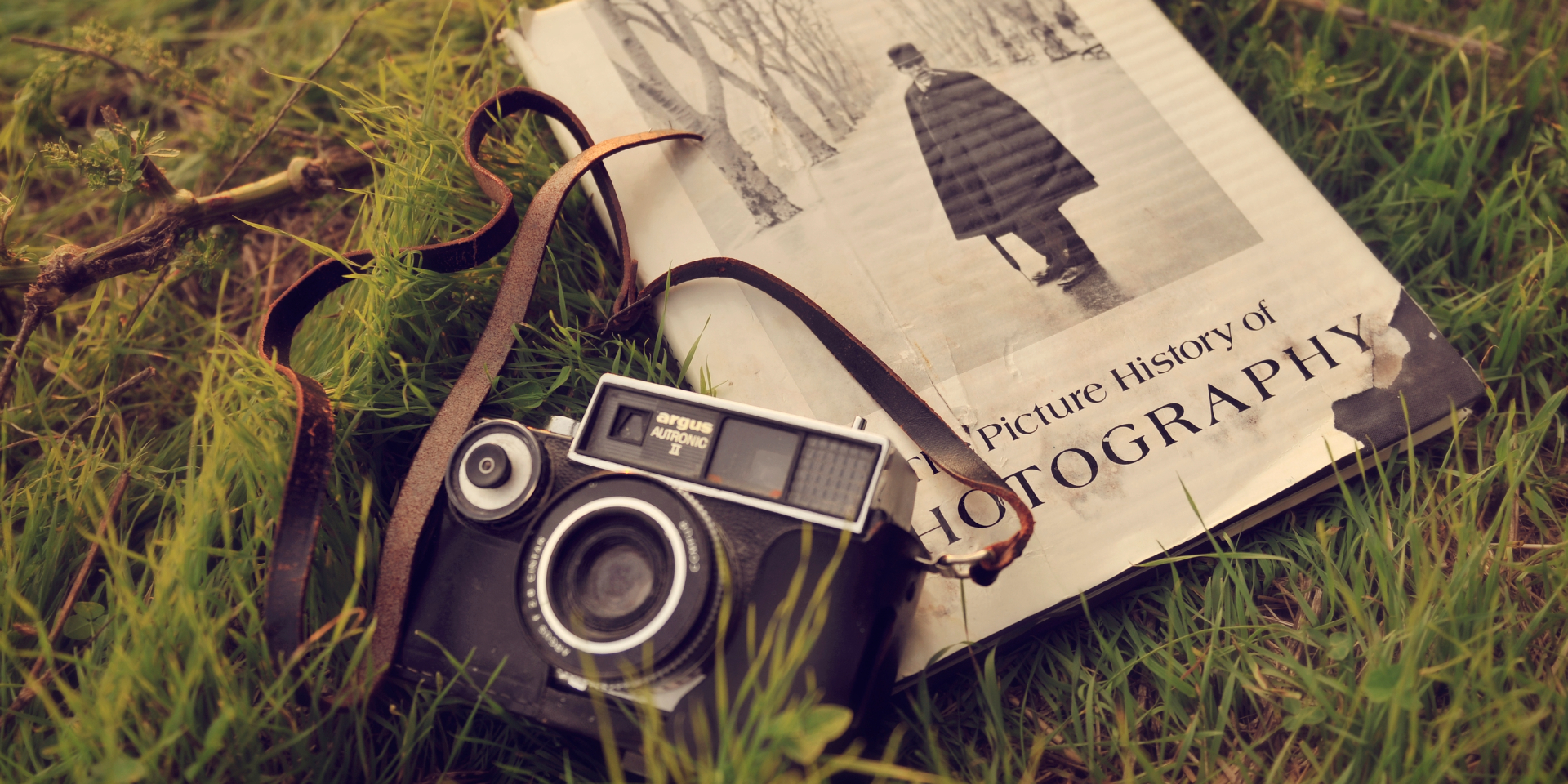
A.B. One of my grandfathers was a professional photographer and the other a missionary. It has been said that I combined both of their activities. I actually started my career by taking photos. My grandfather gave me an old camera, one of those vintage cameras that didn’t even have a light meter, so you had to set the aperture and shutter speed yourself and learn through trial and error.
I know them. I had one of those too. Did you have a darkroom at home for developing photos?
A.B. My friend had one and we used to get together at his place to process black-and-white photos.
You put the paper in the tank and wait . . .
A.B. Yeah, and you watch the image gradually appear. Another friend had a darkroom for colour photos, so we’d go there.
That must have been fascinating! And much more complicated. It’s good that we have digital cameras now, but we don’t get that thrill anymore.
A.B. Yes! You have no idea what a pleasure it was to see the photo appear right before your eyes. Sometimes, we were thrilled and other times completely disappointed. It’s interesting to see the evolution of photo and video technology. I always say that my job is my hobby, and I love what I do.
P.B. He never works; he just plays.
A.B. I’ve never had that feeling I hear some people have when they wake up in the morning and say, “Ugh! I have to go to work!” I exclaim, “Great! Another day!” To young people, I would advise: Do something you enjoy!
Yes. And find someone to pay you for it.
A.B. If you can do that for God, that’s a bonus.
How did you come to do what you love for God?
A.B. I studied business administration and marketing, and I was sort of self-taught. I enjoyed contributing to various projects and learning from what I saw. Right after graduating, I started my own business and ran a video production company for 13 years, making documentaries and materials for organisations. I also did missionary work. Before that, I had copied and distributed hundreds of thousands of DVDs and videotapes.
However, I wasn’t very satisfied with what I was doing. One week, I would produce a clip for the Dairy Products Commission about the benefits of milk for the human body. Three weeks later, I was making another clip about how harmful milk is to the human body. I was generating profit for companies by promoting real estate developments and golf course resorts, but I didn’t see the point.
I had always wanted to start a television channel. I knew that the Hope Channel had been set up, and I believed that something similar needed to be launched in Africa. I spoke with the regional church organisation in Southern Africa and the president, Dr Pardon Mwansa, told me, “I had exactly the same idea.”
Six months later, we set up the media centre. Initially, it was just a small room with a single computer and I was the only person working there. Then Penny came to volunteer. Eventually, she was hired. The operation grew steadily. By the time we left, there were around 20 people working there, ten students and ten full-time employees.
There were also some special projects for television.
A.B. Yes, we produced all kinds of programmes: for young people, for children, about nature, music, and so on. We felt that we had to prepare young people for the new mass media, so we launched a course called “Mission through the Media”. For a year, the students learned about television, radio, and the internet through an intensive curriculum. They also worked on all productions made in our studios. We did this for a year, and I must say that many of those ten students are now working in the church’s media centres around the world.
You’ve both already spoken about your passion for photography. You also created a series called Through the Lens.
A.B. I interviewed some Adventist photographers who are well-known in South Africa. If you buy postage stamps or photos online, you might recognise their names.
Really?
A.B. I thought to myself: There are so many talented photographers! I asked them to talk about how they got started in photography and the equipment they use, and to show us some of their best shots. At the end of the programme, they talked about how taking photos in nature makes them feel closer to God. It was wonderful to hear these photographers’ answers.
Is photography a different way of finding God and appreciating the things He has created?
A.B. Most people now live in cities. I think we lose touch with God because if we are constantly surrounded by concrete and noise, we can’t connect with Him through nature. I believe that photography helps people to see the beautiful things that God has created for us.
I also think that we often focus on doctrine and theology. We need to promote the image of God, and depicting the beautiful things He has created is one way to do that. They draw people in. Beauty draws people in. And I believe that if we incorporate more beautiful things into our broadcasts, viewers will be drawn in and understand the message.
Does photography shape character?
A.B. Yes. It has taught me to be patient. You have to wake up early and wait for the sunrise. Sometimes, you don’t get the shot you want because a cloud appears or something else happens. You learn to be willing to wait and to embrace surprise. My favourite style is using a macro lens to get close to a flower. The things you see—things you wouldn’t normally see with your own eyes—are simply wonderful. The attention to detail that God has given to everything He has created is simply amazing.
I recently discovered the world beneath the ocean’s surface while filming underwater. It’s a completely different world down there, a three-dimensional space. God created all the colours and beautiful things there, as well as our ability to see them.
Has this intentional focus on nature also strengthened your faith in a personal creator?
A.B. Absolutely. We see so many wonderful things, and we always ask ourselves: How could this have come about by chance?!
From there, it was a short step to creating the series Encounters with Animals.
A.B. Having grown up in South Africa, I have always loved wildlife, nature, and national parks. But I was bothered by the fact that all the interesting nature documentaries were approached from an evolutionary perspective and I said: We have to change this situation. We collaborated with the Voice of Hope studio in Germany, selected three presenters, and began filming. We filmed one episode a day. We only had two weeks to film all the footage.
P.B. It was a miracle because the weather was perfect that week in an area where it usually rains a lot, but everything fell into place and God helped us to finish everything. When we had to film at sea, the sea was calm. Then, we had to film some clouds for the forest scenes in the episode with the wolves. We had clouds! Everything was perfect!