
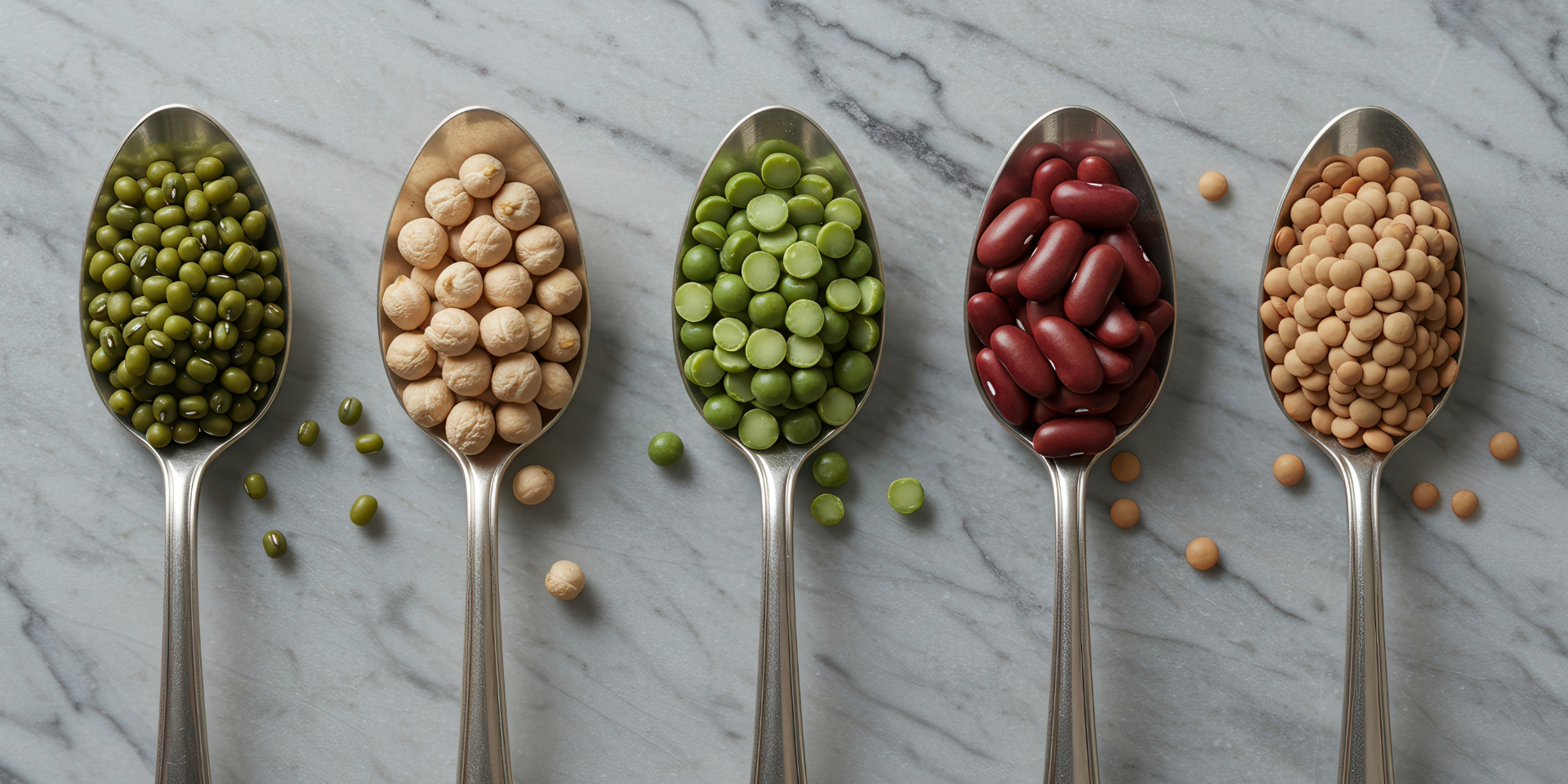
In reality, the human body, like that of many powerful animals—from horses to elephants—is perfectly capable of extracting and using protein from plant sources. And plants provide an abundant supply of protein.
Myth: The human body cannot absorb plant proteins.
A misunderstanding of human digestive anatomy and physiology has led to the mistaken belief that plants are not a viable source of protein for our long-term health. As a result, highly beneficial foods have often been neglected or underestimated. A return to the fundamental principles of science can quickly clarify the human body’s ability to absorb plant proteins.
An efficient and intelligent system
As we know, for the food we eat to be useful to the body, it must be broken down into its basic chemical components so that they can be absorbed. Proteins are large chemical structures and, regardless of whether they come from animal or plant sources, they must be broken down into the “building blocks” from which they are made. These basic building blocks are amino acids. Thus, as a result of digestion, it is not proteins but amino acids that are released into the bloodstream (with a few exceptions, such as bioactive peptides and immunoglobulins). Our bodies use these amino acids to synthesize (produce) the proteins they need. To use a simple analogy, imagine someone demolishing an old house, salvaging and cleaning the bricks, and then using them to build a new home adapted to their needs. Our digestive system makes no distinction between the types of proteins it digests: it is capable of breaking them all down into amino acids.
Protein digestion begins in the mouth. When we chew our food (the so-called mechanical digestion), this physical process not only breaks food into smaller pieces but also exerts mechanical force on the structural chains of proteins and breaks some of the bonds between amino acids, although most of these bonds remain intact at this stage.
The process continues with chemical digestion in the stomach, the small intestine, and even within the wall of the small intestine. Once food reaches the stomach, a strong acid called hydrochloric acid acts on the proteins, changing their shape. This process, known as “denaturation,” opens up the protein’s complex three-dimensional structure, allowing specialized “tools” to break the proteins down more easily. These tools are called proteolytic enzymes because their role is proteolysis—the breakdown of proteins into smaller parts. Pepsin is the first enzyme to act, “cutting” the protein into smaller pieces. However, not every enzyme can “cut” anywhere along the chain of amino acids that makes up a protein. Enzymes are, in fact, like specialized scissors, each of which “cuts” at a particular point. When these pieces of the original amino-acid chain become very small, consisting of only a few dozen amino acids at most, we call them peptides.
In the small intestine, enzymes secreted by the pancreas continue the breakdown process, producing even smaller pieces of protein chains (dipeptides and tripeptides, meaning short chains of two or three amino acids). When dipeptides or tripeptides reach a cell in the intestine, they are “cut” by enzymes located in the cell wall into individual amino acids, just before entering the cell. Dipeptides and tripeptides that have not been broken down by proteolytic enzymes are absorbed and then “cut” inside the cell. Once these short chains have been broken down into individual amino acids, they are released into the bloodstream, which transports them throughout the body.
Essentially, our bodies transform the proteins in the food we eat into building blocks, or “bricks,” that are used to create the specific proteins the body needs (enzymes, protein fibres such as collagen, cellular maintenance structures, muscle structures, etc.). These proteins are built according to the “instructions” encoded in our DNA. In practice, we transform our food into the essential components needed for the proper functioning of the body.
What is interesting and relevant to our subject is that these essential building blocks, the amino acids, can come from both plant and animal sources. But it is essential to remember that when we eat, we are not consuming amino acids alone. Foods contain many other components and have many other effects on our health. Therefore, when choosing what to eat, it is important to consider their overall impact on our health, not just their protein content.
Conclusion
The symphony of enzymes involved in protein digestion is capable of digesting proteins from both plant and animal sources. Therefore, no one needs to worry that plant proteins are less bioavailable than proteins from animal sources. Feel confident consuming rich sources of plant protein—legumes, whole grains, nuts, and seeds—which also provide other health benefits, such as increased intake of fibre, vitamins, minerals, and antioxidants.
References
- Hall, J. E., and Hall, M. E. (2021), Guyton and Hall Textbook of Medical Physiology, ed. a 14-a, Elsevier, Philadelphia, pp. 797–832.
- Interactive Physiology 10 System Suite CD-ROM, Pearson Benjamin Cummings, 2008.
- Melina, V., Craig, W., and Levin, S. (2016), “Position of the Academy of Nutrition and Dietetics: Vegetarian diets”, in Journal of the Academy of Nutrition and Dietetics, vol. 116, no. 12, pp. 1970–1980.
- Ross, C. A., Caballero, B., et al. (ed.) (2014), Modern Nutrition in Health and Disease, ed. a 11-a, Wolters Kluwer, Baltimore, pp. 3–35.
Konrád Szallós-Farkas is a clinical dietitian, physician, vice president of the Romanian Society of Lifestyle Medicine, and lifestyle coach. He has been working in the field of lifestyle medicine for more than 10 years and has delivered dozens of presentations aimed at educating the public about a healthy lifestyle.