




Dr Herta von Stiegel draws fascinating parallels: between Nadeș and New York, London, and Nairobi; between the hills of Transylvania and Kilimanjaro; between life lessons learned in childhood and a remarkable career in leading banking institutions; and between the planet’s potential for development and the divine plan for character building.
I am delighted that we are able to have this conversation. It has taken us a few years—six, I think. We couldn’t coordinate our schedules in London or Nairobi. But we’ve managed to meet in a rather unexpected place: Atlanta. So, where did your life begin?
I was born in Transylvania, in a Saxon region, in the village of Nadeș near Sighișoara in Mureș County. That’s where I went to primary school. I then attended the Haltrich German High School in Sighișoara.
My origins have shaped me and made me who I am today. Without my past, I wouldn’t be who I am today. I grew up during the height of communism, belonging to a minority within a minority.
Can you explain what that was like?
Firstly, even before the defeat of Germany, being German in Romania was difficult. Great efforts were made to destroy our identity. I was part of an ethnic minority, which had many implications.
By the age of four, I could speak three languages and a dialect. I spoke Hungarian, Romanian, and German fluently. At home, we spoke Saxon, a German dialect. I could switch easily from one language to another. My father had a gift for languages.
You were part of an ethnic minority. In what other ways were you in the minority?
I was a practising Christian in a communist country when everyone was campaigning against belief in God.
A practising Christian. Almost everyone believed in something, even if not openly. The problem was being a practising Christian.
Exactly. Thirdly, it wasn’t just about being a Christian. Most of the Saxons were Lutherans. They had the wonderful heritage of justification by faith, understood the importance of education, and attached great importance to the Bible. My family were Adventists. My father was baptised as an Adventist at the age of 14. My mother was born to an Adventist mother and a Lutheran father who vehemently opposed Adventism.
So, I grew up in an Adventist family during the heyday of communism. I was in the minority in three ways. I understand what it means to live in an environment where you are not part of the dominant culture, ethnic group, or religion.
Speaking of your Saxon heritage, do you know when your ancestors settled in Transylvania?
Yes, it’s a beautiful story dating back to the eleventh century. During the reign of Géza II, the Austro-Hungarian Empire encouraged Germans to settle in the Carpathian region. The region was called Siebenbürgen, meaning “seven castles”, because these fortresses were built for defence. The Turks and Tatars were advancing from the east. The Empire had to be protected.
It was an advanced defence system.
Exactly. This shaped the entire region. There were strong fortresses and communities.
Even the churches were fortified.
Indeed. The churches were at the centre of attention. When the bells rang, everyone would rush to these places of refuge. The churches had food supplies and water sources. These fortresses were very well protected and could withstand a siege lasting three to four years.
One of these fortresses, the Black Church, stands in Brasov (or Kronstadt). It is the largest Gothic church between Vienna and Istanbul. If you visit, you will see carvings in the granite walls just before you enter.
What is their significance?
Attacks from the East were constant, so the men would literally sharpen their swords before entering the church. The women and children always sat in the middle. The men stood around them in groups according to their trades – butchers, bakers, goldsmiths, bankers, and so on. They stood with their swords at the ready to protect their families. It’s wonderful to think that people felt protected inside the church.
What memories do you have of the social life of the Saxon community? I’m thinking of celebrations such as weddings and funerals, which were full of traditions that made a great impression on children.
I have very fond memories. On the one hand, we were under the yoke of communism. We knew we were being watched all the time. My grandfather was in Austria. My aunts had been deported to labour camps in Russia. The fact that part of our family was in the West aroused suspicion. Even as a child, I knew we were under surveillance and had to be careful about what we said and how we spoke. But despite these oppressive circumstances, I have fond memories because the community was very close-knit. Funerals and weddings were events that brought the whole community together. People were always helping one another. There was a real sense of belonging. You never felt alone. The community was always there to help.
This sense of community was very important to me. I didn’t go to school on Saturdays. My sister and I didn’t go because we were Adventists and didn’t go to school on the Sabbath. My neighbour and best friend helped me catch up. She would tell me everything that had been learnt on Saturdays.
How lovely! Did you suffer any financial hardship as well?
Yes, a great deal. After the war, all possessions had been confiscated. My grandparents had to start again from scratch. They had very little left. My parents were very brave, but it wasn’t easy for them.
Nevertheless, we were very hospitable. We always had guests. I don’t ever remember going hungry. I remember there being a severe food shortage in the late 1960s and throughout the 1970s. We would get up early in the morning and stand in long queues for basic foods.
Returning to the religious situation, were most of the villagers Lutheran? What was the Adventist church like?
It was a small, close-knit congregation. People supported and loved one another.
Were there friendly relations between Adventists and Lutherans?
The relations were very friendly. However, at that time, Adventism was taken to extremes, and the expressions of faith were much more legalistic. So, it was felt that we had to be separate. Even my parents acknowledge this in hindsight: we missed out on many opportunities by trying to remain separate.
The emphasis was on our differences rather than what we had in common.
Very true. I am now convinced that we have more to gain by focusing on what unites us than on what divides us. With God’s grace and mercy, a bridge can be built over what divides us.
You said you didn’t go to school on the Sabbath. How were you treated at school?
At first, there were no problems. However, when I was in Year 3, the Communist authorities tried to enforce compulsory school attendance six days a week. My mother was summoned by these authorities and threatened with labour camps, among other things. It was a difficult meeting.
The same thing happened to me in Year 3, even though we lived in a different part of the country.
By the time we finished primary school, both my sister and I were model pupils. Our teachers protected us a great deal. They told the authorities that we could learn in five days what others learnt in six. I had the best marks in the class right up to Year 8. I received an extraordinary education. However, because I didn’t attend school on Saturdays, my conduct mark was lowered.
When I saw my friend receiving her Student of the Year award, I was sitting in the hall and everyone was applauding. I thought I should be in her place.
Nowadays, many people don’t realise this, but back then, the end-of-year ceremony and awards ceremony were among the most important events. Everyone was there.
The headteacher announced, “This is Herta’s overall average.” It was clear that it was higher. I was sitting there with tears streaming down my face. Then, I thought of a passage from the Bible which says that God has an imperishable crown in store for us. These things are fleeting, but I haven’t forgotten that moment.
I passed the secondary school admission test. As you know from your own experience, only the very best were admitted. Soon, it became clear that I would be expelled because I wasn’t attending school on Saturdays. My school’s headteacher did his utmost to persuade me to come, saying, “Herta, why do you want to waste your brain?! At home, you can believe whatever you like!”
At the same time, people from the church, who were well-meaning, incidentally, would say to me: “Jesus is coming back soon. Why do you need school?” Some believers and leaders sent their children to school on the Sabbath. I remember them telling me: “Herta, given the circumstances, I think you’re making an unnecessary sacrifice.”
I was 14 years old. I still remember it clearly. I’d say to myself, “I am a child of God. What should I do now?” Throughout all this, my parents didn’t say a word to me. They just kept saying, “Herta, it’s your decision. You’re a clever girl. You know what you have to do.”
I was expelled and thought I wouldn’t achieve anything in life. I started working at a carpet workshop that my sister had opened after also being expelled. I worked and studied hard, and I continued high school through distance learning. I only took the exams.
What did you gain from those struggles, humiliations, and experiences of prayer? What do the tears shed back then mean to you now?
I wouldn’t change my experience for anything in the world! At that time, God seemed very real and close to me. Only then did I truly understand that God means what He says, and that sometimes when you do what is right and stay close to Him, you don’t receive immediate rewards. Sometimes, it takes years to see the benefits of the good decisions you’ve made.
Over the years, I’ve learnt that God expects us to obey Him: “If you love me, keep my commandments.” This does not mean that we can earn His love. He has already done everything for us. However, when we choose not to obey Him in any way, we step outside the framework through which God can bless us unconditionally. His blessings depend on our obedience. I am very grateful for those days.
Now, I’m going to ask you a more difficult question. We defend religious freedom. But is it better to live under an oppressive regime? Isn’t it better to practise your faith freely? Does freedom make us better or worse off than oppression and persecution?
That’s an excellent question! I don’t think it’s either one or the other. Circumstances undoubtedly shape us. I often think of Joseph. He’s an incredible role model for me. Like him, I currently work at the highest level with government authorities and business partners. It’s true that it’s much harder to stand tall on the mountain than in the valley. But circumstances are neither good nor bad. In my experience, what matters is how we react to them. God’s grace is sufficient for us, whatever the circumstances.
As human beings, we often make mistakes; we feel secure in the knowledge that we have a good job and do not have to fight for our faith. In other words, why do we need God? The reality is that it doesn’t matter how well you are doing. We need God no matter where we are or what our circumstances may be. I encourage our church to continue fighting for religious freedom. I believe the world is thirsting for true Christianity. Let us make use of this freedom. There are still billions of people who have never heard of Jesus Christ. And there are billions more who profess to follow Jesus but do not live according to His commandments. We have a duty to all of them.
In your final year of secondary school, you made a significant decision.
Yes. My grandfather died in Austria in 1975. My father couldn’t even attend the funeral. That was life behind the Iron Curtain. However, also in 1975, the United States granted Romania most favoured nation status. One of the conditions was that Romania had to allow people with immediate family members in the United States to emigrate.
People used to joke that Romania had three main exports: Saxons, Jews, and oil. The German government was willing to pay for Germans to return home. Similarly, Israel was willing to pay for Jews to return. Nevertheless, it was still difficult to leave.
My sister married an American in 1974. I personally didn’t think I had a future. I couldn’t see beyond the present. I didn’t know how I could go to university. Before she left, my sister told me, “Herta, I’m going to get you out of here, even if it’s the last thing I do.” We decided to apply for passports.
To emigrate?
Yes. As a family, we applied for passports so that we could emigrate to the United States, but we agreed not to try and pull any strings. As my dad was working, it fell to me, I was in Year 11 at the time, to gather and submit all the documents. It was a very fiddly job.
I remember the moment when I thought I had everything we needed. I travelled by shared car from Nadeș to Târgu Mureș. I went there and handed in all the papers. However, a very arrogant lady told me that I was missing some stamps from the town hall. I took the file and rushed out to the place where you could catch a lift. A car picked me up straight away, and I ran all the way to the mayor’s office. The lady there knew me. She asked me, “Herta, what else do you need?!” “I still need a few more stamps,” I replied. After sorting it out, I rushed off to find another car to take me to Târgu Mureș. In the end, the lady at the counter was appeased—I had everything I needed.
I was told to wait. The hall was full of people submitting their applications. They were all called in one by one. There were whole families. I was left there on my own. At eight o’clock, I looked at my watch. My bus from Târgu Mureș to Nadeș was due to leave at eight sharp.
It was the last one that day.
Exactly and the problem was that I was still in the passport waiting room. I prayed and told myself that I would see this mission through, even if it were the last thing I ever did. At 8.30pm, I was called. I went into the office and sat at the end of the table facing a Securitate (ed. communist secrete service) major general. He had all the stripes, all the insignia of authority. Those people really did have power. One gesture from him and you could cease to exist, and no one would ever hear from you again.
The first question he asked me was, “Why do you want to leave Romania? Aren’t you getting on well here?” I knew I had to be very careful. I gave an answer that satisfied him. We continued to discuss the file. It was complete. He looked at me and glanced at his watch. He said to me, “Your last bus has gone.”
He knew everything.
Yes. I told him that was true. He said: “You can come to my house.”
He was trying to get sexual favours from a child. Did you see anything on his face when he said that? You had no experience. People didn’t talk about things like that. The #MeToo movement hadn’t started yet.
I realised what he wanted. I just told him I’d manage. I didn’t know how I’d manage it. Then, I ended the conversation.
He didn’t press the issue.
No. In fact, he stood up, shook my hand and told me we’d get the answer at home. As I walked out, the confidence I’d felt melted away. It was nearly nine o’clock in the evening. What was I going to do? Suddenly, I heard a voice behind me. “Herta?!” I looked over my shoulder and saw that it was a friend of my dad’s. He asked me what I was doing there. I explained. Then I asked him what he was doing there. He had come to pick up a friend but hadn’t found them. Since he had come by car, he gave me a lift home. When I went through the gate and into the house, my mum was in tears. She knew where I’d been and that I should have been back by then. She was certain that something terrible had happened.
The last bus had gone. You’d gone to the most dreaded place.
Exactly! She sensed that something had happened, so she knelt down and prayed that God would protect me and send His angels to watch over me.
And that’s exactly what happened.
As a family, we decided to wait patiently. If it was God’s will for us to emigrate to the United States, then that would be our fate. Nine months later, we received a reply. It was unheard of—we had been granted permission to emigrate!
But what was it like to leave your whole life behind, especially for your parents, and set off with just two suitcases?
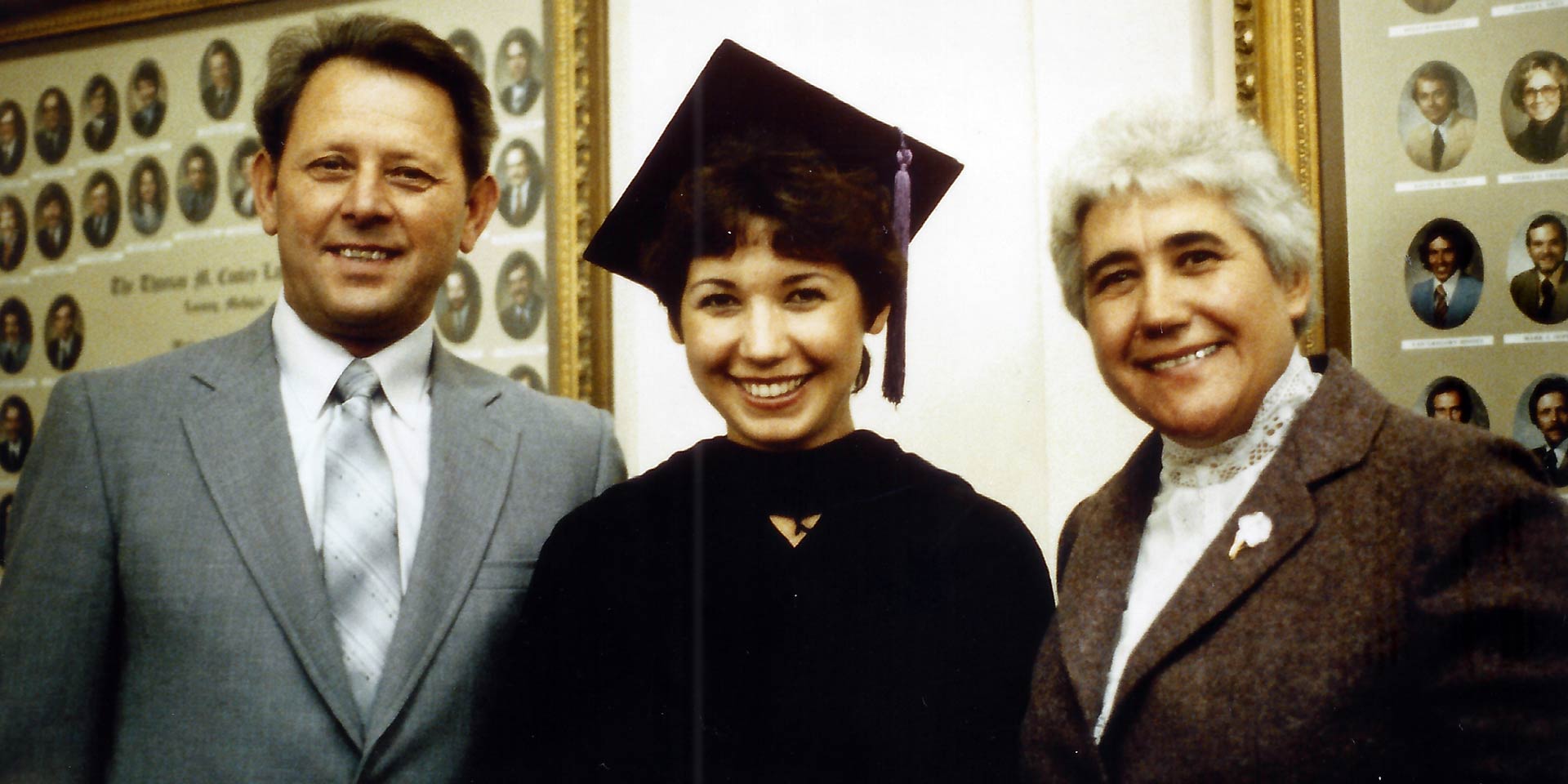
We left everything behind. Literally, we left everything behind. Generations of hard work. The house my grandfather had built—everything, absolutely everything. Once we arrived in America, I set about studying. I wanted to be a lawyer and help people in trouble. First, I went to a church-run school called Andrews University, where I studied history, linguistics, and religion. After that, I went to law school in Michigan. I then specialised in various fields.
I’ve had an amazing professional career. I have been incredibly fortunate and blessed. I practised law in New York during an extraordinary period. I became a banker and helped to build up companies. I worked within highly sophisticated financial structures at large corporations such as Citibank, JP Morgan, and AIG.
However, I gave it all up when I reached the peak of my career. In 2008–2009, I set up my own business, Ariya Capital, which focuses on infrastructure development in sub-Saharan Africa.
Why did you choose that part of the world?
From a business perspective, it’s a fascinating region. What we often forget is that the world’s greatest population growth is taking place in Africa and India. By 2050, Africa’s population will have more than doubled, accounting for a quarter of the global population. India will have around 1.5 billion inhabitants. The demographic figures speak for themselves. Secondly, Africa is a region with abundant natural resources and most of the world’s fertile land is also found there. Africa has a very young population. Purely from an investment perspective, we must invest in Africa, if only for our own sake. Migration from Africa to Europe or the United States is not a solution. The continent itself must prosper and develop.
One of the biggest obstacles to this is the lack of electricity. In sub-Saharan Africa alone, nearly 600 million people currently have no access to electricity. This has a particularly negative impact on girls’ and women’s education.
Why?
In many rural areas, these issues are driven by culture. As there is no electricity, it is the girls who are sent to gather firewood. This means they cannot go to school, and they also have no light to study by. This creates a vicious circle.
My husband and I firmly believe that we must invest in Africa in order to break this cycle of poverty. How? Investment in infrastructure is one of the key elements. Ariya Capital currently operates in three areas. We install high-capacity power stations, manage funds, and run a company that provides innovative energy solutions. We focus particularly on clean and renewable energy. We have moved from London to Nairobi.
What is it like living in that culture? I’m particularly interested in the business environment.
I have the opportunity to engage with people from government, education, and business at the highest level. One of the decisions I made right from the start, informed by what I learnt as a child, was to act with integrity and faithfulness, and then to let things take their course. I trusted that God was in control.
We work on a continent where corruption seems to be ingrained in people. It’s evident within the police, at customs, and amongst government officials.
So, how do you manage?
It helps enormously if people know where you stand. You can imagine that we’ve lost business as a result. A very large-scale project has finally got off the ground after being delayed for almost three years because we refused to pay a bribe to the relevant minister. We knew this. I spoke to him face to face. It was obvious what he wanted. When people ask for a private meeting, you have to read between the lines.
“What’s in it for me?!”
Exactly! This applies just as much to police officers on the street as it does to ministers at the very top. If they know you won’t play along, they sideline you, delay things, and you have no choice but to abandon the whole project.
Years of work.
That’s right. It can be very frustrating. But honestly, it’s much worse if you start paying bribes. You get caught in a vicious circle. There’s no way to stop. We’ve made it very clear to them that we are obliged to comply with strict anti-corruption laws because we have American capital, and that we are Christians who operate with complete integrity. I’ve noticed that we can sometimes be at a disadvantage in the short term. However, now that our reputation is known, people seek us out and want to do business with us.
They know they’ll get a fair deal.
I’ve found that it’s worth living a life of integrity. I’ve got nothing to hide. Before doing anything, I ask myself, “What if I read about this in the Wall Street Journal or the Financial Times? Would I be comfortable with this being made public, or would I be ashamed?” Every action I take is filtered through this question. If you have nothing to hide, you have nothing to worry about. Ultimately, I believe that God isn’t interested in what we achieve, although He does want us to grow and prosper. However, He is far more interested in what we become. Our character determines what we can become. Character is what endures.
You’ve also found time for other activities, such as reviving the childhood tradition of going to the mountains. You climbed Mount Kilimanjaro!
Yes! The mountains in Africa are even higher than those in Romania and are very beautiful. My husband and I both love climbing mountains. Mount Kilimanjaro is one of the most beautiful in the world. At 5,895 metres, it is the world’s highest freestanding mountain. Unlike the Carpathians or the Alps, it isn’t part of a mountain range. We were the co-producers of the film The Mountain Within and the book of the same title, which was published by McGraw-Hill. The subtitle is “Leadership lessons and inspiration for your climb to the top.”
When did this happen?
In 2011. McGraw-Hill heavily promoted the book as a major debut. I led a team of people with and without disabilities up Mount Kilimanjaro. Our group was the first to climb Kilimanjaro comprising people with and without disabilities, and of various nationalities. My aim was to demonstrate vividly that we can achieve more together than we can alone, and that everyone has the right to pursue their dreams, regardless of their past, abilities, race, or gender.
This is the mountain within.
Exactly. The mountain we must conquer is not out there, but within us. Sir Edmund Hillary expressed this beautifully.
He was one of my teenage idols.
Really? He said that we didn’t conquer a mountain; we conquered ourselves. My book is about leadership and helping people fulfil their dreams. Our expedition was a great success. We filmed it, and we had a fantastic team, so we chose the most scenic, but also the most challenging, route. On average, only 35 per cent of tourists reach the top. In our case, however, nearly 60 per cent made it to the top.
Despite the unusual group.
Exactly. It was an incredible, exhilarating experience.
I’d like us to have two endings for this programme: one closed and one open. Ideally, I’d like to leave the ending open and continue. However, if we don’t manage to make another programme, what would you like to say to Romanian readers?
This will always be my homeland. It holds a very special place in my heart. I will always remember the beauty of Romania and the wonderful people there.
If we were to leave it open-ended, what promise would you make? What would you like to show them in the next programme?
I’d love to talk about leadership. Honestly, everything rises and falls because of leadership. In an era where political leaders are far from ideal and religious leaders fail to take a stand, we are in dire need of leadership. I therefore spend a great deal of time in high-level leadership roles. I chair boards of directors at the highest levels of corporate leadership. Now more than ever, we need people of integrity to step forward. If there is a next time, I would love to speak about the importance of leadership and how we can become effective leaders who honour God.
My motto is: “It takes enlightened men and brave women to change the world.”
Enlightened men and brave women…
These adjectives have been chosen with great care. We need men who are enlightened by the power of the Holy Spirit, not by tradition or the idea that “that’s how we’ve always done it”, but by a visionary mindset. We also need brave women because they tend to be ten times more fearful than men. As women, we tend to be fearful for many reasons. We must learn to step forward and claim our rights because God created men and women as partners. When we rise up as strong partners, our world will become a better place.
Thank you very much.