
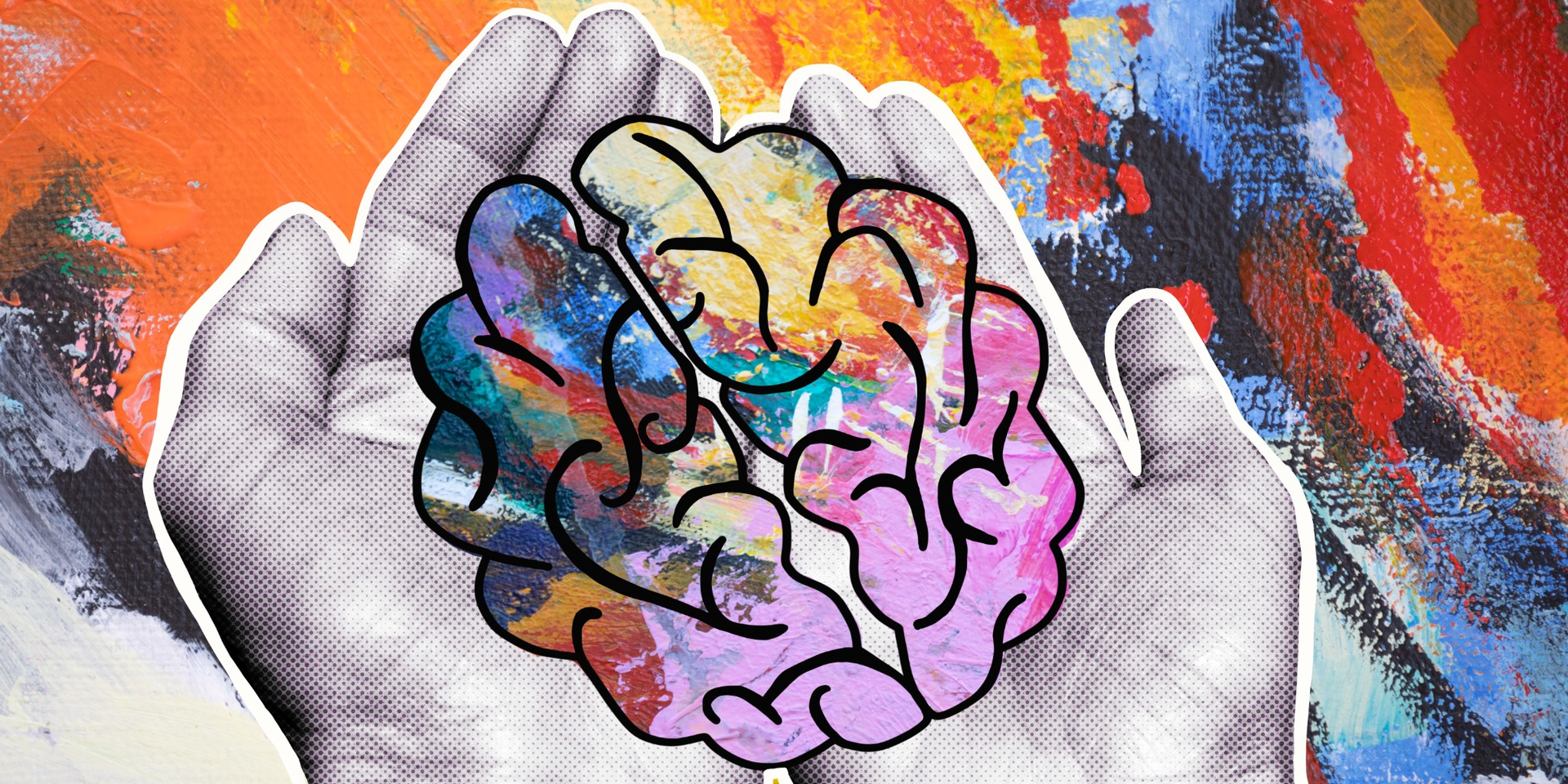
It often happens that, when faced with another person’s powerful emotions, whether intense joy or heart-wrenching pain, we do not know how to react. And whilst, in the case of joy, the other person may find it easier to overlook our inability to share in their feelings because those feelings are a comfort in themselves, when it comes to pain, things are quite different. Suffering that is not understood can cause the person experiencing it to isolate themselves, even from those amongst whom they might find solace. How can we truly help someone who is suffering?
The way depression creeps into our lives can sometimes make it easier for those around us to spot than for the person affected by it. If we find ourselves in a situation where we notice that a loved one is suffering from depression, it is quite possible that common sense alone will not be enough to help them. Sometimes, we may need to resort to counter-intuitive strategies, which we can best learn by seeking advice directly from specialists.
Depression can be overcome, and the support of a loved one throughout this process is invaluable. If needed, a friend can help someone suffering from depression to cope, to overcome their negative thoughts, and to regain their energy, optimism, and ability to enjoy life. To do this, however, the friend must first recognise the symptoms of depression in the other person.
Recognising depression in a loved one
The Depression and Bipolar Support Alliance, an international NGO working to raise awareness of depression, states that there are several indicators that should be regarded as warning signs.
If the other person seems to have lost interest in everything that used to interest them: if they are no longer committed to their work, if they are distancing themselves from family and friends, and generally avoiding social activities, or if they no longer find pleasure in sex, their hobbies, or other activities they used to enjoy, this is already an early sign.
A depressed person will express a gloomy and pessimistic outlook on life. They will be unusually sad, irritable, impatient, critical, or emotionally unstable. They will talk of helplessness and despair.
They may constantly complain of headaches, stomach problems, or back pain. They will say they are tired, or even exhausted, all the time.
A lack of sleep or excessive sleep may indicate depression, particularly when accompanied by an inability to make decisions, organise themselves, or fully engage in what they are doing.
If a loved one is eating much more or much less than usual, or if they have put on weight or lost weight suddenly, this is another warning sign.
Someone suffering from depression may turn to excessive alcohol consumption or sedatives, or even drugs.
In the case of older people, according to the charity Age UK, the symptoms may be slightly harder to spot, but they are there for those who look: an empty fridge or pantry (which could suggest a poor diet), a neglected physical appearance (they no longer shower or look after their appearance), and a lack of joy when they have visitors are all signs that the older person may be experiencing a mood disorder. Someone who cares could make the difference between a lonely and sad old age, and one full of affection and meaning.
How to help someone with depression
“Depression can cause people to shut down and withdraw, which can feel like rejection,” wrote mental health campaigner JoEllen Notte in a BBC article. “I suffer from depression myself and I know how tough it can be,” wrote Notte, “but I want to talk to the partners – the people living with the people who are living with depression. I know it’s not easy for you, either.”
Don’t take it personally, advised Notte. If your partner broke their leg and didn’t want to go out dancing, you certainly wouldn’t feel offended. Well, it’s the same with depression. It causes a disability. And although it may seem as though the person with depression is simply refusing to spend time with you, more often than not, the truth is that they simply can’t at that moment, she notes.
The writer Steven Skoczen described depression as being like a cold that wears you out and confines you to bed. It’s like when “you wake up one morning, and wonder if you have the flu again. You’re zapped, and even getting out of bed seems hard. You think about the day ahead, all the meetings and appointments and people you have to see, and you wonder how exactly you’re going to do all of that with the energy level you have. Getting out of bed is hard enough. . . You skip your shower. . . You shove whatever food requires no energy to make into your mouth, and you get to work.Your 8-hour day feels like it’s closer to 18. By the time it ends, you’re barely standing. You make it back home, and collapse on the couch. You feel zapped, off, and sometimes weird, dark thoughts stop by. You find something that eases the tired and darkness. Maybe it’s tv. Maybe it’s a beer. Maybe it’s just sleep.”
This is the context in which Skoczen strongly asserts that “you can totally help, and it’s easy.” How? He answers himself: “Just listen. Sit like a bump on a log, and listen. I promise you. Promise you like just writing that out brought tears to my eyes, I promise you that will actually help.”
“Some people have pointed out: ‘but it doesn’t address the root cause!’ That’s true. But the middle of a depressive episode isn’t the time to worry about root causes. That’s like talking about chainsaw safety while you have a severe leg wound. Yes, chainsaw safety is good. But maybe tend to the leg wound first.” Cognitive behavioural therapy can have a positive, long-term impact on depression, writes Skoczen. “But those are long-game solutions. You are triage.” To people who, having experienced depression themselves, are tempted to immediately come up with solutions for those suffering right now, Skoczen tells them that “there is a time and a place where it’s appropriate. Here’s how you’ll know it: When the person asks you, ‘Hey, you got any ideas on how I could take this on?’ That is your cue. If you haven’t heard that, sit, ask, listen. Why? Here’s why – by simply sitting, asking, and listening, you are giving a person who feels fundamentally disempowered by a weird thing happening to their brain a sense of control back.”
The writer warns that this path of listening can create a negative state for those who force themselves not to voice their well-intentioned ideas: “Note that keeping all those great, helpful, well-intentioned ideas in will not make you feel any better. But it will massively help them. Why? Because you neutralize the toughest thing about depression. Depression is massively, massively isolating.”
Some brief recommendations on the NHS website outline a few ways in which we can help someone suffering from depression:
– Let them know that we care and that we’re willing to listen;
– Accept them as they are, without judging them;
– Gently encourage them to help themselves (by staying physically active, eating a balanced diet, and continuing with activities they enjoy);
– Find out about the services that might help them (perhaps psychotherapy or a support group for people with depression near their home);
– Keep in touch with them via text messages, phone calls, or meetings. People who are depressed may withdraw and find it difficult to leave the house;
– Try to be patient.
Additionally, the British doctor Radha Modgil offers some very practical suggestions. In a BBC podcast about practical ways we can help someone suffering from depression, she said that we “could help them with practical chores like shopping or washing because sometimes these everyday things are so hard to do when you’re experiencing depression”. Then, we should offer them our company. “‘If they don’t feel like talking then just sitting with them and doing something simple like watching TV can help. Sending regular messages and calling them is really important.”
When the risk of suicide is real
In the most urgent situations, a person suffering from depression may have suicidal thoughts. Suicide is a very real risk when a person is depressed, warn Melinda Smith, Lawrence Robinson, and Jeanne Segal in a support article published by HelpGuide.org. “It may be hard to believe that the person you know and love would ever consider something as drastic as suicide, but a depressed person may not see any other way out. Depression clouds judgment and distorts thinking, causing a normally rational person to believe that death is the only way to end the pain they’re feeling.”
Experts say there are several signs that a depressed person is harbouring suicidal thoughts: they talk about suicide, death, or self-harm, or are preoccupied with death. They express feelings of despair or self-loathing. They behave in self-destructive ways. They put their affairs in order and say “goodbye” to their loved ones. They show an interest in pills, weapons, or other lethal objects. They suddenly appear calm after a period of depression.
If you think a friend or family member is considering suicide, don’t wait, act on your concerns. Talking openly about suicidal thoughts and feelings can save someone’s life, so if you’re worried, talk to them and seek professional help straight away, the experts write. If the person in question does not seem willing to see a psychologist or psychiatrist for help with these thoughts, if they cannot promise not to harm themselves, or if the risk of suicide seems imminent, it is best to call either a local suicide prevention centre or an ambulance; or even take the person to A&E. In such circumstances, experts recommend ensuring that the person in question does not have access to weapons, medication, or other objects with which they could take their own life, and not leaving them alone.
How to look after yourself, too
Depression is not contagious. However, it is vital that, when we want to help a friend or loved one suffering from depression to recover emotionally, we also equip ourselves emotionally to cope with a wide range of feelings. When we try to help someone suffering from depression, we may be surprised to find ourselves feeling helpless, frustrated, angry, worried, guilty, and sad. This happens because dealing with depression is a challenge, even for those who suffer indirectly as a result of it. That is why, it is important not to neglect our own health, so that we are not overwhelmed by the problem we are trying to alleviate.
The Ring Theory, introduced by psychologists Susan Silk and Barry Goldman, will prove very useful in protecting our mental health when helping someone who is suffering. Their theory is intended as a guide for responding to crisis situations that do not centre on us, and it recognises the need we all have to vent our emotions when under pressure.
We all need and want, when faced with a challenge (in this case, the challenge of helping someone going through a crisis), to be able to unburden ourselves to someone. However, when we try to strike a balance, not just listening, but also being listened to, we may make the mistake of asking to be listened to by the very person who is suffering, and who has no resources left for themselves, let alone for someone else, even if that person is the one that has their best interests at heart. The Ring Theory, or that of concentric circles, is a model for action in such circumstances. It follows a few simple steps.
The first step is to draw a small circle, within which we place the person in distress. Around this circle, we then draw another circle, containing the person or people closest to the person in crisis. Then, in each successive, wider circle, we place people in order of their closeness to the person in distress. In this way, we can create a series of concentric circles that look like this: The person in distress is in the centre.
The next circle contains their partner, children, and parents. The following circle contains close friends. Then, on another circle, more distant friends and work colleagues, and finally, strangers. We will also place ourselves in the circle that suits us. Next, we will follow the basic principles of the theory: (1) The only person allowed to say anything to anyone is the person in the centre; (2) We will not “vent” to people in a circle smaller than our own, to those people we will simply offer our support, by listening and helping them, but we will only unburden ourselves to people in a circle larger than our own.
Balance is one of the first things we need when offering help to someone who is suffering. But we also need balance when we take a step back and assess the help we have been able to offer.
Matthew Johnson, a relationship researcher and professor at the University of Alberta, said that someone’s efforts to help a person suffering from depression do indeed help, even when we do not feel the positive effects. “Efforts from a partner to help alleviate stress may prevent the development or worsening of mental health problems and, in fact, could help keep the relationship healthy.”
Perhaps the most valuable insight to be gained from this assessment is that we should not lose heart, but do our very best to help those who are suffering. Even if we do not see immediate results, one day we will realise just how much we have helped them.