










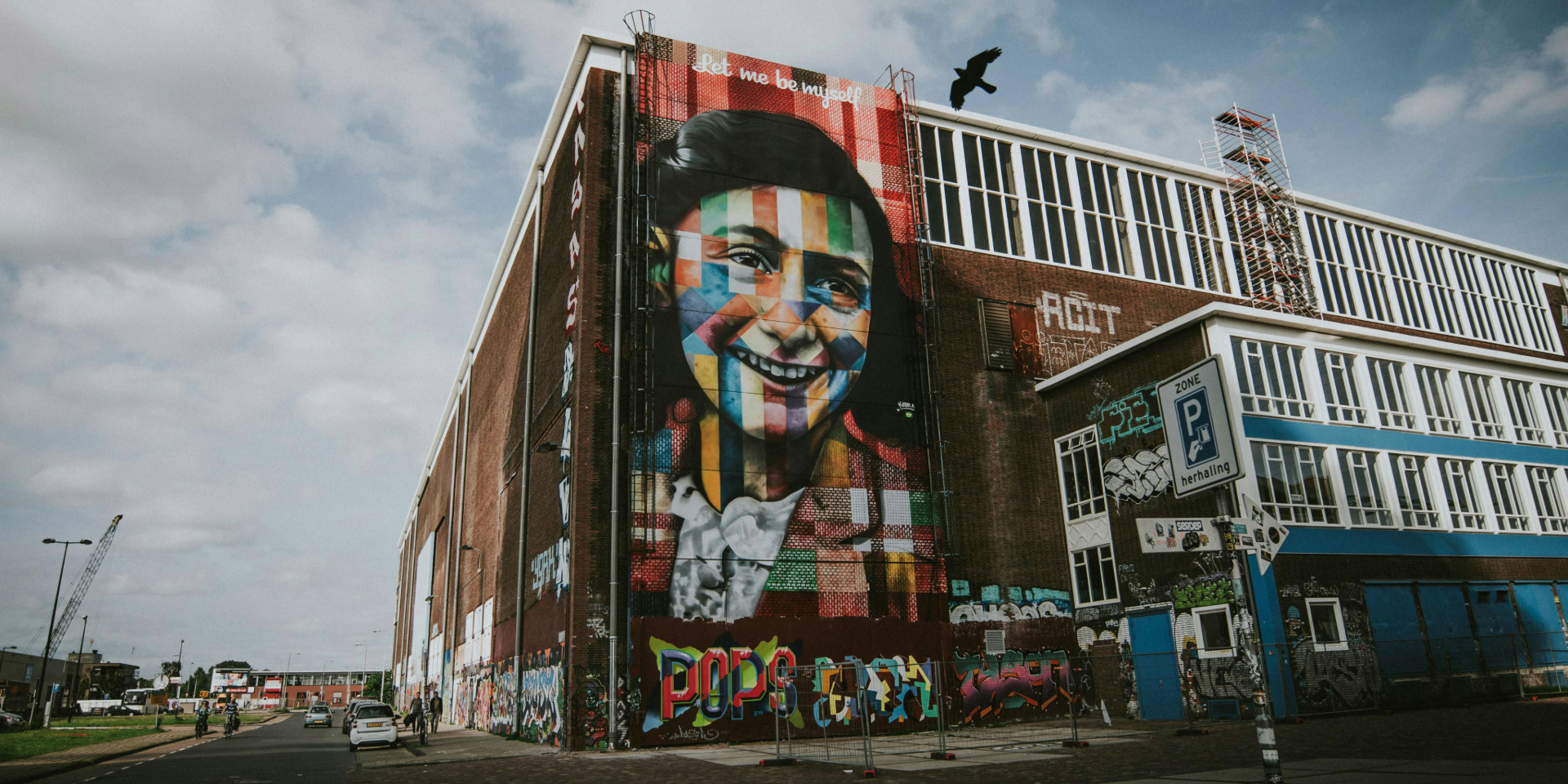
When I think of patience and resilience, many inspiring life stories and names come to mind. Among them, one shines with particular intensity: Anne Frank.
You may wonder what lessons could be learned from the brief 15 years of a young girl’s life. But if you have not yet read The Diary of Anne Frank, I encourage you to do so. Why? Because beneath the apparent simplicity of a child’s writings lies a profound world of emotions, questions, vulnerability, hope, courage, and trust. There is an old wisdom that says it is not the events in our lives that define us, but the way we choose to look at them. Yet we all know that there are situations in life that are difficult to view from an optimistic, positive, or constructive perspective. Difficult, however, does not mean impossible. Human beings have the capacity to adapt, and I believe this is one of the greatest qualities we could have been endowed with. But even this is a choice, and we must want to choose this path.
A life beginning in a world that was coming to an end
Anne Frank was born in Frankfurt, Germany, in 1929. Her family consisted of her mother, father, and older sister, who was three years older than Anne. At that time, Adolf Hitler was beginning to gain more and more supporters in Germany. As a Jewish family, and given Germany’s difficult economic situation, her parents decided to move to Amsterdam.
When Anne was 10, the Second World War began. Before long, the Nazis invaded the Netherlands. The Dutch army surrendered, and the lives of Jews in the Netherlands were increasingly affected by the changes that followed. Anne was no longer allowed to go to the park, the cinema, or non-Jewish shops, and she was required to attend a separate school for Jewish children. But things did not stop there. We now know what happened next, but for those living through the events at the time, one after another, it was only the beginning of a tragic story whose full extent was impossible to imagine.
The hiding place and the diary
In 1942, Anne’s father began preparing a hiding place where, together with his family and several other people, they decided to hide in order to escape persecution. The space was small and the sense of fear was becoming increasingly constant and pervasive; the hiders had to remain quiet and not speak in order to avoid being discovered.[1]
Before going into hiding, when she turned 13, Anne received a diary as a gift. During the two years she spent in the secret annex, the girl wrote to her diary-confidante about everything she experienced: events, emotions, and insights. Anne had high aspirations and dreamed of becoming a journalist and a famous writer. “You’ve known for a long time that my greatest wish is to become a journalist some day and later on a famous writer. Whether these leanings towards greatness (or insanity) will ever materialize remains to be seen, but I certainly have subjects in my mind. In any case, I want to publish a book entitled Het Achterhuis after the war. Whether I shall succeed or not, I cannot say, but my diary will be of a great help.”[2]
On August 4, 1944, after two years in hiding, the police discovered and arrested the hiders. Anne and her sister were deported to the Bergen-Belsen concentration camp; their parents were sent to Auschwitz. Conditions in Bergen-Belsen were inhumane: lack of food, cold, damp, and contagious diseases. Anne and her sister contracted typhus, and both died in February 1945. The only surviving member of the family was their father, Otto Frank.
Anne’s diary became famous around the world and was translated into approximately 70 languages and adapted for the stage and screen. People around the world learned her story, and in 1960 the hiding place was turned into a museum. Her father hoped that readers of the diary would become aware of the dangers of discrimination, racism, and hatred of Jews.[3]
In 2022, I had the opportunity to visit the Anne Frank Museum. You cannot leave that place without being deeply moved. But above all, you leave encouraged by the amount of hope and strength that could exist in a child’s soul, in such stark contrast to the conditions in which she had to live for those two years. Her hope that she would achieve her goals, her desire to be a good person, her optimism and positive outlook on life despite her circumstances, and her ability to see beauty and hold on to hope in that dark moment cannot help but convey something of what she experienced. “On the contrary, I’ve found that there is always some beauty left—in nature, sunshine, freedom, in yourself; these can all help you. Look at these things, then you find yourself again, and God, and then you regain your balance. And whoever is happy will make others happy too. He who has courage and faith will never perish in misery.”[4]
For Anne Frank, writing was one of the ways she was able to cope with what she was going through. But she had another source of help, which she also speaks about in her book: “God has not left me alone and He will not leave me alone”[5]; “and therefore I am grateful to God for giving me this gift, this possibility of developing myself and of writing, of expressing all that is in me. I can shake off everything if I write; my sorrows disappear, my courage is reborn. But, and that is the great question, will I ever be able to write anything great, will I ever become a journalist or a writer?”[6]
Her goal was another source of hope that gave her a reason to live, although Anne became an important writer only after her death—and, more than that, through her life, an inspiration to us today.
Hope’s legacy: life lessons from Anne Frank
It is not easy to live with constant fear, with the knowledge that you could be discovered at any moment, that your life could end at any time. Yet for Anne, it was not impossible. She chose to draw on her ability to adapt and, although her life was short, her impact has resonated to this day.
We all have our own unique stories, filled with inner struggles and challenges that we share with family and friends, or perhaps only in our silent conversations with God. There are difficult moments and situations that, deep in our hearts, we wish we could change. And sometimes we have the power to change those situations because they are within our control. Yet there are also things that, no matter how much we wish they were different, we simply cannot control.
Faced with these situations, we can choose to fight and stubbornly try to change something that, deep down, we know is beyond our control. This path would drain our energy, stress us, cause us to lose control of our emotions, deepen our anxiety or depression, and affect our health. On the other hand, by accepting that some things are beyond our control and that life does not always unfold as we imagined, we can find joy and gratitude in what we have.
I appreciate the way God gives us reassurance, just as Anne Frank felt, that we are not left alone, regardless of the trials we face: “So do not fear, for I am with you; do not be dismayed, for I am your God. I will strengthen you and help you; I will uphold you with my righteous right hand” (Isaiah 41:10). God encourages us to entrust all our worries to Him, “because he cares for” us (1 Peter 5:7).
A persistent thought comes back to me from something I read years ago: Imagine that you are about to leave on a trip to the Netherlands! You have studied everything, from the tourist attractions to the routes you will take, familiarising yourself with everything you can see and experience there. This is how we envision our own lives, anticipating and hoping that everything will go according to plan. But, in an unexpected turn of events, you discover that your plane has landed in Italy, not at your planned destination.
All your preparation was for the Netherlands, yet you find yourself in Italy, unfamiliar territory. You are disoriented. This is how it feels when life unexpectedly changes course, whether because of a physical illness or unforeseen challenges. What do you choose to do? Do you withdraw and refuse to enjoy Italy simply because it was not part of your plans, or, in the face of change, do you choose to adapt and discover the joys and hidden beauty of this new, unexpected reality? It is not an easy path, but it is possible.
Remarkable figures such as Helen Keller, Viktor Frankl, Malala Yousafzai, Ayaan Hirsi Ali, Paul Kalanithi, Thomas Edison, Jean-Baptiste Alaize, and Tiberiu Ușeriu, alongside inspiring biblical figures such as Job, Daniel, David, Joseph, and Esther (as well as the film Rising Phoenix, which explores the history of the Paralympic Games), demonstrate that although these individuals faced significant difficulties in their lives, they not only managed to overcome them but did so with hope, confidence, courage and, most importantly, a remarkable capacity to adapt. These stories inspire us and remind us that, despite seemingly insurmountable obstacles, human resilience and adaptability can pave the way to unexpected triumphs.
Are you going through a difficult situation? I encourage you to ask for help, talk to people close to you, perhaps keep a journal, begin a gratitude practice, try new things, step outside your comfort zone, pray or ask someone to pray for you, seek God, because… “what is impossible with man is possible with God” (Luke 18:27).