










Rembrandt van Rijn’s life was marked by suffering and loneliness. He lost his wife and several children, and he went bankrupt. Rather than becoming cynical, however, he transformed his pain into artistic compassion.
In his paintings, love is not idealised, but portrayed as it is in life: real, fragile, and full of tears. Through art, Rembrandt sought solace and spiritual meaning. He produced over 300 works inspired by biblical narratives, mostly etchings and drypoints, as well as around 60 paintings with biblical themes. To him, the Bible was not just a religious text, but a reflection of the human soul. Biblical figures were not perfect heroes to him, but real people who love, make mistakes, suffer, and rise again. This is why Rembrandt painted love in all its forms.
Love in Rembrandt’s biblical paintings
Marital love is depicted in the painting Isaac and Rebecca (also known as The Jewish Bride), which was painted between 1665 and 1669. The couple’s hands gently touch and protect each other, conveying tenderness and spiritual communion. Here, the hands become a vehicle for emotional communication between the spouses, suggesting that marital love encompasses protection, respect, and intimacy.
Love for one’s neighbour is depicted in “The Good Samaritan” (1648–1649), where the Samaritan’s compassion is transformed into action as he lifts and supports the wounded man. His hands express active love and responsibility.
In “The Descent from the Cross” (1634), Rembrandt conveys the idea of forgiveness through light caressing the faces of those who have been forgiven. This lends the scene a profound emotional intensity whilst showcasing remarkable technical mastery. Christ’s relaxed hands bear visible wounds, while the other figures express their grief through wrenching gestures: Mary faints and Mary Magdalene wrings her hands, overwhelmed by sorrow.
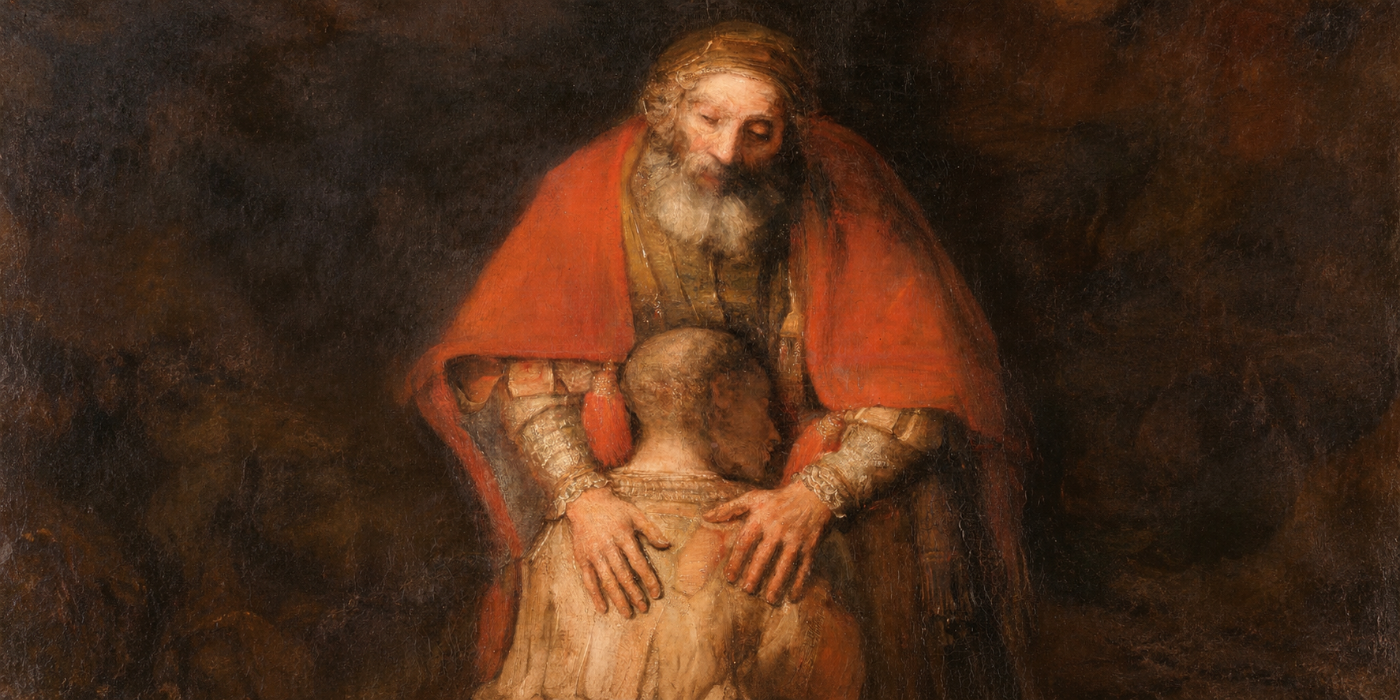
The depth of parental love is depicted in the work “The Return of the Prodigal Son” (c. 1668), widely regarded as one of Rembrandt’s most moving paintings. The father welcomes his lost son with a forgiving embrace. Warm light falls upon the father’s hands as he embraces the prodigal son, an image of divine compassion towards the returning sinner.
The return of the prodigal son: a love that welcomes and forgives
After spending several hours contemplating this painting, Henri Nouwen wrote the following in his book The Return of the Prodigal Son: “The story of the prodigal son is the story of a God who goes searching for me and who doesn’t rest until he has found me.”[1] Looking closely at the painting, Nouwen noticed a striking detail: the father was depicted with two different hands, one masculine and the other feminine. “As soon as I recognized the difference between the two hands of the father, a new world of meaning opened up for me. The Father is not simply a great patriarch. He is mother as well as father. He touches the son with a masculine hand and a feminine hand. He holds, and she caresses. He confirms and she consoles.”[2]