














When conflict occurs
Disagreements between husbands and wives happen no matter how much they love each other, and this isn’t necessarily bad. Conflict is normal in daily life, even for happily married couples. It happens when two very different people grow closer to each other and notice that they have different priorities, beliefs, habits and values.

I’m here! | friendship and interest in each other
I'll leave my heart as payment among the coins, and pass... – Nichita Stănescu

COVID-19: What do we do after the relaxation of restrictions?
After the authorities in different countries announced a relaxation of the restrictions, people started to impatiently waiting for that, maybe even with plans to recover last bits of a confiscated spring.

From rancour to forgiveness: How do Christians manage conflict?
A lack of conflict is not necessarily a sign of spiritual maturity, as some Christians might be tempted to believe. The way in which we manage conflict says a lot about how we understand the role of grace, forgiveness and reconciliation in a sinful world.

Silence after the storm: Friendship, between quarrels and forgiveness
Eskimos don't have the word "quarrel" in their vocabulary. They live in a particularly harsh climate, so no one wants to risk getting pneumonia (or dying) just to prove that they are right.

Pets: Our help for a better life
I've always liked pets, but from a distance. Raised by a mother convinced that animals cannot possibly live under the same roof as people, I adopted a similar opinion, which I kept for many years, even if a great number of people tried to prove me wrong.

Is there a cure? The painful limitations of the fight against paedophilia
Little over a decade ago, a highly acclaimed British documentary filmmaker, Louis Theroux, stepped into the midst of 500 paedophiles admitted to the psychiatric hospital in Coalinga, California, trying to find out if the complex treatment the convicts had to go through was really working.

The family we choose for ourselves
In a world of many predetermined things, friends are the family we choose for ourselves. Often, their presence is what keeps us going. In Vital Friends, Tom Rath says that many of those who end up on the streets, divorced, or addicted to overeating, struggle with inner demons precisely because they are alone. They feel excluded, abandoned, unloved.

Clash of sexual cultures (I)
More than half a century has passed since the beginning of the sexual revolution, which was characterized by a period of suspension of conventional boundaries, in order to experience a deeper sexual freedom. Fifty years of experimentation, however, do not seem to have been enough to dispel the persisting suffering and confusion present in romantic relationships.
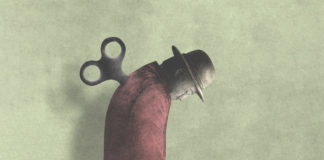
Forgiveness heals the one who forgives
Everyone thinks forgiveness is a lovely idea until he has something to forgive. – C.S. Lewis

The transforming power of one caring adult
Statistically, by now Josh should have been either in jail, living on the street, or dead. The long years in which he was abused and expelled from the families who took him in made him no longer trust anyone. But the love of adults who showed him that they cared was stronger than anything that pushed him toward self-destruction.

How to mend a relationship and improve it
There are many reasons why your daily interactions may become tense and even fractured, but if you decide to mend a relationship, you could also take a few extra steps to improve it.
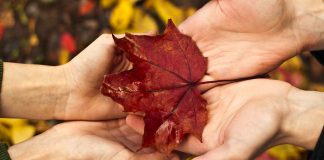
Love doesn’t give up, regardless of the prognosis
Lace-edged rumours wafted through the student campus in Sagunto, Spain: Devin, one of the American boys who had come to Spain for a year of study, was dating Teresa, a second-year theology student who was hard to miss. Her striking beauty and cheerful nature attracted gazes like a magnet. No one suspected then, not even the protagonists of this relationship, that their love...

The power of grief: How to survive the death of a loved one
There has been an increase in the number of so-called "experts" in an increasing number of so-called "fields". It seems that all of life has been divided into neatly-marketable industries. No wonder then that the arrival of a new expert in something familiar to mankind for ages, is met with caution. In the case of Julia Samuel's expertise in the field of grief...

COVID-19: The new mirror in which we look at our parents
How can we encourage the elderly during this time? How can we help them understand that we don't want to lose them and that, although it's hard for them, we didn't abandon them. I have an elderly mother and, honestly, it would help me a lot. Can you write for me?