











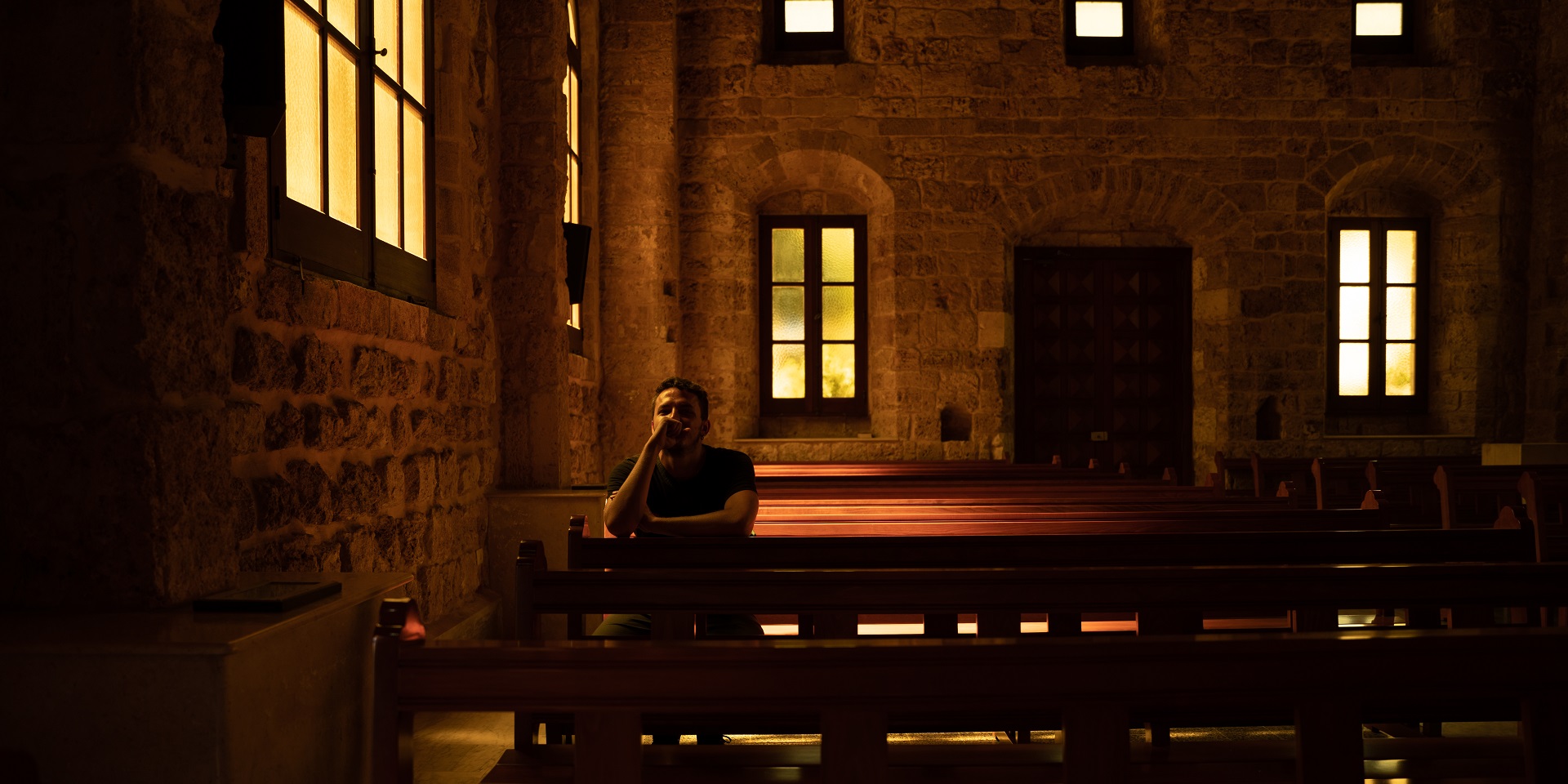
Studies reveal that only a small percentage of those who believe—or identify themselves as religious—actually participate in worship. How can we increase children’s and young people’s interest in worship? Have we truly understood their needs? Is the competition from the secular world and technology simply too strong? With such a large proportion of young people expressing an interest in faith, how can we encourage greater participation in public worship?
A child’s education and development depend on a variety of factors that help shape character and personality. Nutrition, recreation, learning, relationships, and religion all provide the framework for a child’s growth and development.
Is religion based on restrictions or privileges?
Religion is viewed from two perspectives: as a means of education—regardless of whether one assumes that God exists or not—and as a personal, saving relationship with God. From the perspective of a personal relationship with God, worship conveys the idea of a real God who is actively involved in human life and gives it meaning.
The way a child is raised in terms of religious education can have a significant impact on their practice of worship. This is why there is so much discussion today about young people’s lack of involvement in religious life and about churches that have few children or young people in attendance. The foundation upon which religion is built in the life of a child or young person is crucial. Reducing worship to mere forms and rituals is a direct consequence of religious education that lacks the foundation of a personal relationship with God.
Personal knowledge implies relationship, and relationship goes beyond rigid forms. It creates interest, desire, and a willingness to make sacrifices. Therefore, the first important question in any discussion about worship is whether it fosters a relationship or merely communicates a set of rules—whether it brings a person into a child’s life or simply passes on a tradition and a ritual.
The immediate consequence of asking this question is a discussion about the form of worship itself. Parents’ daily struggle to provide a constructive counterbalance to the attractions of digital media is reflected in the sphere of worship as well. How can going to church compete with video games waiting at home? How can children be expected to follow a sermon or a worship service when their habits are shaped by reels—messages condensed into extremely short video clips?
There is a time for everything
Secondly, parents, educators, pastors, and priests must keep in mind that moments of worship within a religious service are not in competition with a child’s recreation and entertainment; they are a different element altogether—a necessity within the complexity of life. No matter how much a child enjoys playing, a wise parent will not provide endless playtime. This principle helps both adults and children understand that “there is a time for everything” (Ecclesiastes 3:1). There is a time for sleep, a time for study, a time for play and recreation, and a time for worship. If video games begin to replace work, sleep, meals, and family interaction, life gradually becomes a relentless pursuit of pleasure—and, in the end, that is a race that cannot be won.
The path of attachment
Louis Cozolino observes that “anxiety and fear are the enemies of curiosity and exploration” and that “attachment enhances learning.”[1] Step by step, we come to understand that “rejection of religion is on an emotional level rather than an intellectual one.”[2]
The following passage highlights the direction parents should take in their efforts to engage young people actively and win their commitment to public worship: “kindness, courtesy, and the sympathy which flows from a heart filled with love to Jesus, will gain their confidence, and save them from many a snare of the enemy.”[3]
Not long ago, I visited a youth church and was struck, upon entering, by the dim visibility in the room caused by artificial smoke and by the pounding beat of drums played at maximum volume. The pastor approached me and explained, “This is contemporary worship.”
In their desire to bring the entertainment culture of the secular world into a religious setting, many churches have lost sight of the personal relationship with God as the true foundation of young people’s interest in faith and worship. Nothing can replace the drawing power of a genuine encounter with the Saviour.
The Sabbath and worship services, experienced and offered in a setting unaltered by the blending of the sacred and the secular, are only one step in the process.
The day of worship and the worship services held in church cannot—and should not—be left to chance[4]. Starting from this premise, the next steps require intentionality and planning aimed at involving young people and helping them take ownership and responsibility.
Based on our experience, we can share a few ideas for involving children and young people in worship:
Involve them in preparing for the day of worship, even in small and seemingly insignificant tasks. Within the family, a plan for the day of worship can be created that includes time spent together as a family, attending church services, visiting others or welcoming guests, and spending time in nature. The more thoughtfully this planning and organisation are done together with children and young people, the more meaningful the worship experience will become for them. Planning the day of worship and preparing age-appropriate activities are responsibilities that belong to those entrusted with leadership in both the family and the church. Trying to compete with technology while neglecting the needs of the youngest members is simply a losing battle.
Involve children and young people in preparing the worship service. Choosing hymns, participating in congregational singing with musical instruments, collecting offerings, or reciting Bible passages from memory are all aspects of public worship in which children and young people can—and should—be involved. One particularly important point is that children should participate alongside adults in the main worship service. They are not a distraction; they are an active, valued part of the community, called by God to be there: “Let the little children come to Me, and do not hinder them” (Mark 10:14).
Using visual aids—such as presentations or displaying the texts being read—can be highly effective in helping younger children maintain their attention.
Providing an example of kindness and genuine faith offers essential anchors in the journey of knowing God.
Perhaps one of the most encouraging thoughts—and a concise, memorable answer to the questions and concerns of parents, teachers, pastors, and all those who work with children and young people—is found in Scripture: “Start children off on the way they should go, and even when they are old they will not turn from it” (Proverbs 22:6).
Daniel Oncea is convinced that relationships are built more on privileges than on rules, and that rules arise naturally from the authenticity of the relationship itself. For him, passing on religious values to children is inseparable from nurturing a meaningful and beautiful relationship.