







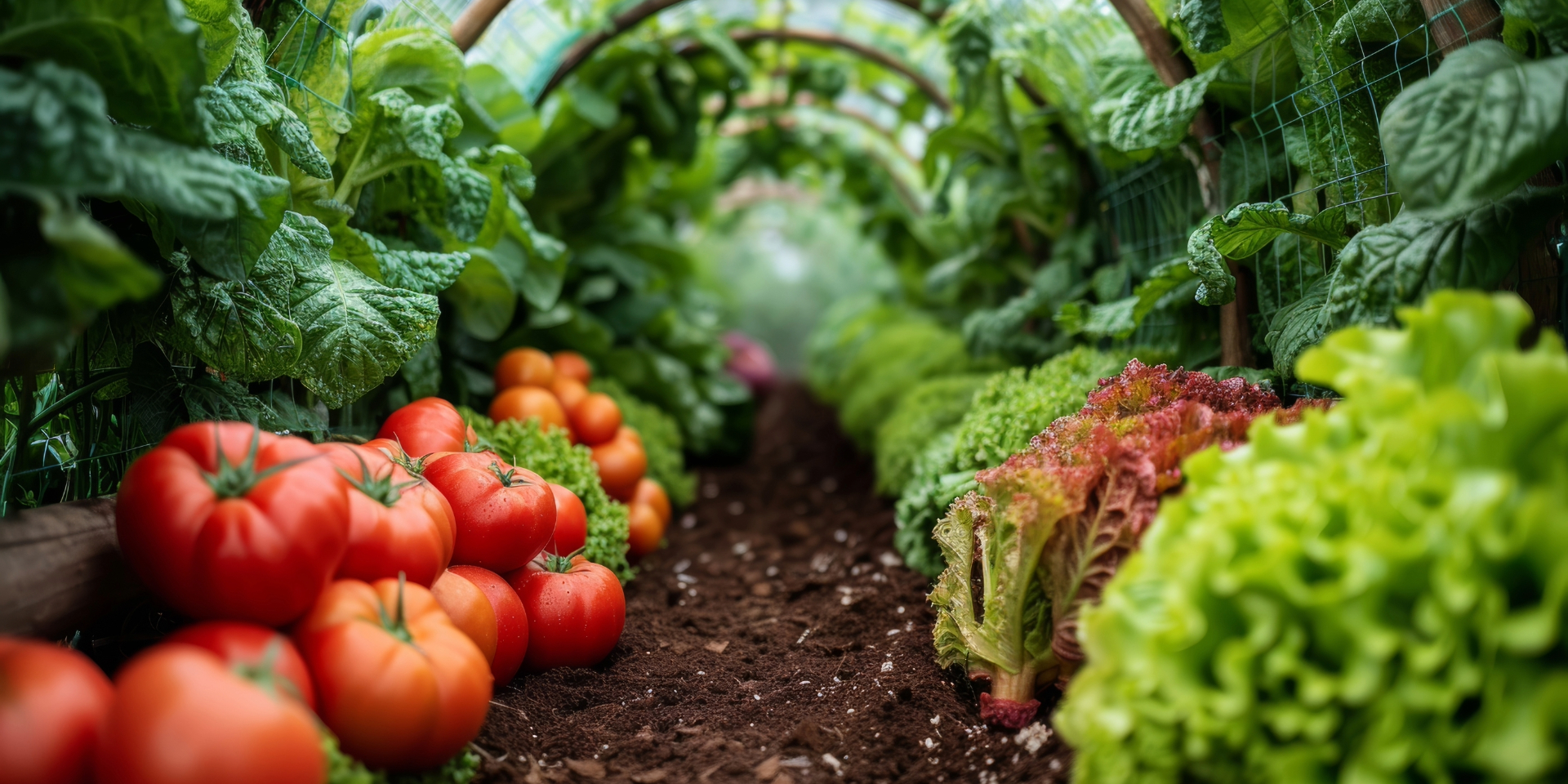
The term “natural” is not always regulated and does not guarantee that a product is healthy.
Myth: Natural products are healthy.
In ancient times, people relied on what nature provided to meet their nutritional needs. As societies evolved and developed, the first methods of food processing and preservation emerged, such as salting, fermentation, and drying. However, it was only with the rise of the modern food industry that a wide variety of processed foods became available. Alongside this development came growing concerns about additives, preservatives, and their potentially harmful effects.
It was in this context that the perception arose that “natural” foods—chemically unaltered or only minimally processed—are safer and healthier than processed foods. The phenomenon was further amplified by increasing concerns about food safety and environmental impact. The use of terms such as “natural,” “organic,” or “non-GMO” (GMO standing for “genetically modified organism”) on food labels reinforced the belief that anything natural must also be healthy, and the natural products and dietary supplement industries have capitalised on this perception. It is essential to understand the difference between marketing and scientific reality so that we can make informed nutritional choices.
Established facts
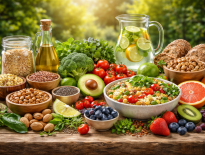
It is widely recognised that, in nutrition, the term “natural” has no clear or standardised definition. As a result, natural products may be interpreted differently by manufacturers and consumers, which can create confusion and ambiguity. At the same time, we know with certainty that a diet rich in fresh fruits and vegetables is associated with numerous health benefits. We also know that natural products often do not contain the additives and preservatives commonly found in processed foods. Research findings further emphasise the importance of consuming all types of foods—including “natural foods”—in moderation (Sharifi, Izadpanah et al. 2022).
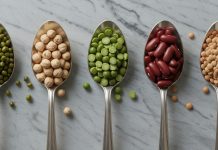
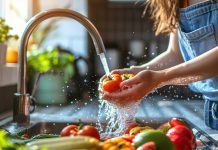
Minimally processed foods generally retain more nutrients than heavily processed ones. However, food processing should not be viewed as inherently harmful to our diet as a whole. In fact, processing has played a significant role in the development of human civilisation, providing safer foods and broadening culinary options. Various processing techniques are used to inhibit the growth of microorganisms or to inactivate pathogens in food. For example, fresh fruits and vegetables can be a major source of foodborne illnesses associated with microbial pathogens such as norovirus or various species of Salmonella (Murray, Wu et al. 2017). In addition, food processing can neutralise certain toxic substances, such as lectins found in beans, chickpeas, lentils, and similar foods. Mycotoxins and heavy metals may also be partially removed during processes such as dehulling, which involves removing the outer husk from grains, seeds, or legumes. Therefore, processing itself does not necessarily make a food less healthy.
We also know that natural products contain a variety of nutrients essential to human health. Fruits, vegetables, and seeds are natural sources of vitamins, minerals, and antioxidants. At the same time, we know that natural substances can be just as toxic as synthetic ones. There are many examples of natural toxic or allergenic substances capable of causing severe reactions, and the principle that “the dose makes the poison” remains a central concept in toxicology: any substance can become toxic if consumed in sufficiently large quantities, even substances normally considered safe in small doses. In addition, the way a substance is consumed—for example, on an empty stomach or with food, in pure form or diluted—can influence how the body responds to it.
For instance, cyanogenic compounds, highly toxic substances, can be found in certain natural foods such as bitter almond kernels or apricot pits. A large number of people are exposed daily to low concentrations of cyanogenic compounds through food consumption or the accidental ingestion of plants, and this exposure may pose a health risk, especially for children (Chaouali, Gana et al. 2013). Another example is solanine, an alkaloid found in small amounts in potatoes, eggplants, and green tomatoes. When potato tubers are exposed to light, solanine levels increase, and excessive consumption may cause nausea, vomiting, diarrhea, and even neurological disorders (Al Masaoud, Alharbi et al. 2022).
Making informed food choices
In conclusion, not all natural foods are automatically healthy, and not all processed foods are harmful. It is essential to stay informed and to understand the benefits and risks associated with each type of food. A balanced diet that includes a variety of foods is crucial for maintaining good health. The quality of the foods we choose is often more important than their origin or whether they are processed. Research in the field of nutrition helps us better understand the impact different foods have on our health and enables us to make informed and balanced dietary decisions.
Bibliography
- Al Masaoud, F. S., Alharbi, A., et al. (2022), “A challenging case of suspected solanine toxicity in an eleven-year-old Saudi boy”, in Journal of Family Medicine and Primary Care, vol. 11, no. 7, pp. 4039–4041.
- Chaouali, N., Gana, I., et al. (2013), “Potential toxic levels of cyanide in almonds (Prunus amygdalus), apricot kernels (Prunus armeniaca), and almond syrup”, in ISRN Toxicology, vol. 2013, art. no. 610648.
- Murray, K., Wu, F., et al. (2017), “Challenges in the microbiological food safety of fresh produce: Limitations of post-harvest washing and the need for alternative interventions”, in Food Quality and Safety, vol. 1, no. 4, pp. 289–301.
- Sharifi, M. H., Izadpanah, P., et al. (2022), “Relationship between dietary variety, adequacy, moderation, and balanced diet and cardiovascular risk factors”, in BMC Nutrition, vol. 8, no. 1, art. no. 20.
Corneliu Tănase is a university professor at the Faculty of Pharmacy within the “George Emil Palade” University of Medicine, Pharmacy, Science, and Technology in Târgu Mureș. He holds a PhD in both biology and chemical engineering and is also a doctoral supervisor in the field of pharmacy.