










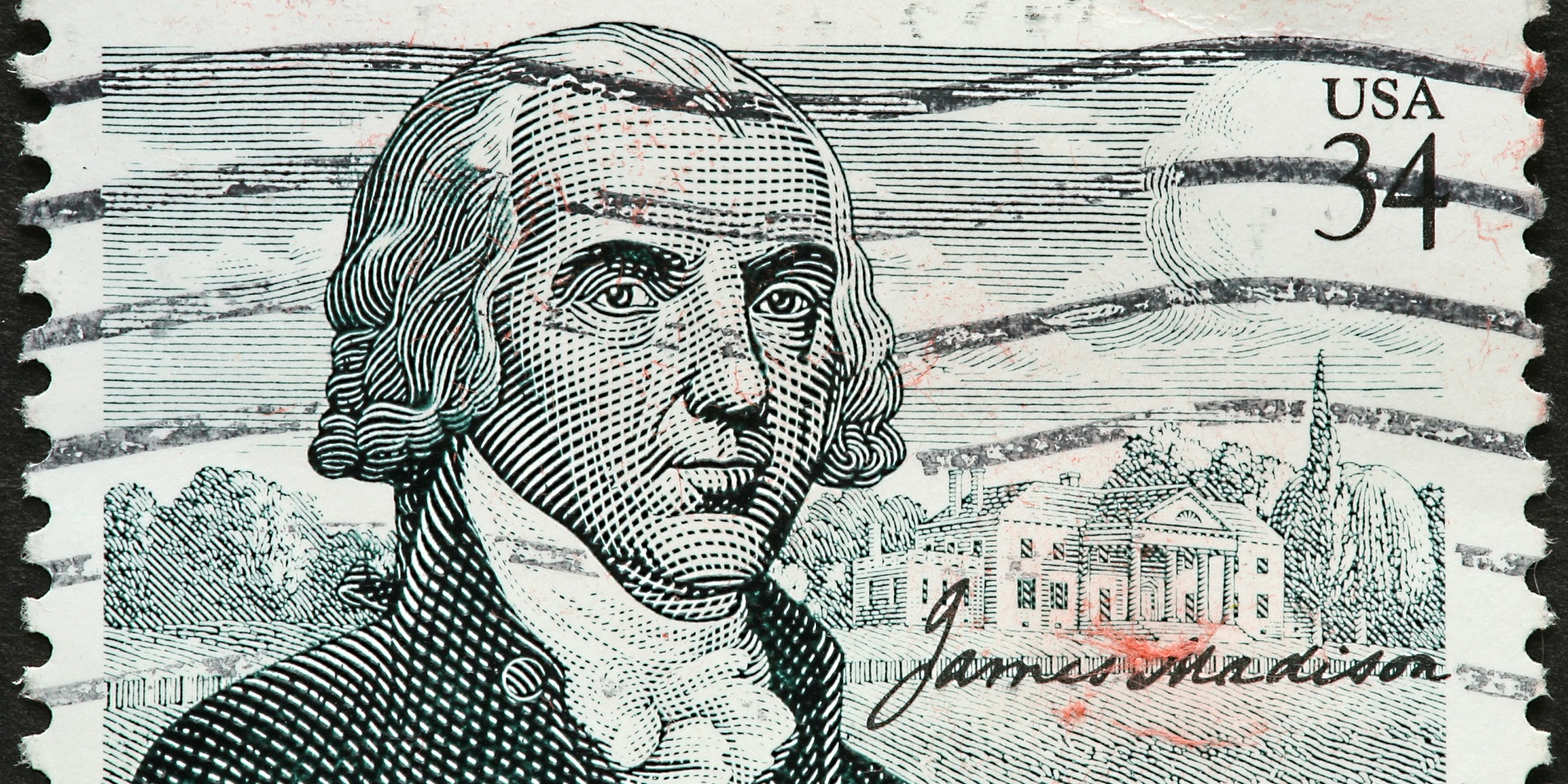
Influenced by the Calvinist Presbyterian John Witherspoon, James Madison, an Anglican, collaborated with Virginia’s persecuted Baptists to establish the concept of religious freedom and freedom of conscience that changed America and the world forever.
In 1740, Virginia was the home of an aristocracy that owned plantations, slaves, and servants among the British Crown’s American colonies. Religion and civil administration worked hand in hand, and social order depended on the uniformity and permanence of the officially established Church of England. Consequently, religious dissent was considered a crime, and its public punishment, though it may seem dystopian today, was deemed necessary to maintain social order.
Religious dissent and the yearning for the Word
According to church law, individuals were bound to their own parish and could not attend services led by a priest or preacher from another parish, even if the one to whom they belonged was of questionable moral character or lacked the grace of ministry. Unauthorised religious gatherings were prohibited, and those who practised them suffered the consequences. Even the aristocratic elite were legally required to attend weekly services, which were often euphemistically described as “a realm of lethargy” and lacked the substance of the Gospel. The dominant tone was one of state-enforced formalism.
The need for practical knowledge of the Bible was great. When the written sermons of the English revivalist George Whitefield fell into the hands of the bricklayer Samuel Morris in Hanover, his house was filled to the brim with people coming to hear them read. He was also called upon to read them in other people’s homes. However, simply participating in the public reading of a sermon was dangerously close to clandestinity and dissent. This could have resulted in one being the subject of scathing newspaper satire, public mockery or, worse, having one’s worship services violently disrupted, being pelted with mud, or being arrested for subversive activities against the Crown.
This led Presbyterians to turn to the clergy licensing system. However, Baptists rejected such associations, believing that civil authorities had no right to interfere in religious matters. For them, the formalities required to obtain a clergy licence were a fundamental compromise.
A young Anglican at a Presbyterian school
When James Madison Sr., an Anglican, chose the Presbyterian college in New Jersey (now known as Princeton University) for his son, he could hardly have imagined the influence this institution would have on him. The college president, John Witherspoon, who had been recruited by the energetic defender of religious freedom Samuel Davies, held a critical view of armchair Christianity and its adherents. Madison was influenced by Witherspoon’s anti-establishment views.
The study of the Holy Scriptures also impacted Madison, as revealed in his correspondence with former classmates. For instance, when William Bradford told Madison that he was considering a career in law, Madison responded by emphasising the importance of keeping the perspective of service in mind, regardless of the chosen profession.
He also movingly emphasised the need that a “watchful eye must be kept on ourselves lest, while we are building ideal monuments of renown and bliss here, we neglect to have our names enrolled in the Annals of Heaven.” Madison believed that the best testimony in favour of religion and against fleeting distractions was for the most rational and honourable people, elevated in status and wealth, to declare that all these things offer less fulfilment than fervently supporting Christ’s cause.[1]
Although Madison’s vision was deeply rooted in serving his fellow man, he did not see himself becoming involved in politics. However, confronting abuses against religious dissenters would irrevocably ignite his passion and give him a cause for which to fight.
A fighter for the freedom of others
In April 1776, Madison, aged 25, was elected to the Virginia Convention, becoming one of the legislature’s youngest members. The following month, the Convention took the important step of appointing delegates to the Continental Congress, which was meeting in Philadelphia and set to introduce a resolution calling for independence from Great Britain. This would result in the Declaration of Independence on July 4th of that same year.
At the same time, Congress appointed a committee to draft a bill of rights intended “to secure substantial and equal liberty to the people”.[2] The bill, primarily drafted by George Mason, guaranteed freedom of religion in Article XVI. Madison amended the article to explicitly emphasise everyone’s right to freedom of religion. The Declaration was passed unanimously:
That religion, or the duty which we owe to our Creator and the manner of discharging it, can be directed only by reason and conviction, not by force or violence; and therefore, that all men are equally entitled to the free exercise of religion, according to the dictates of conscience; and that it is the mutual duty of all to practise Christian forbearance, love, and charity, towards one another.[3]
Although the Virginia legislature had taken an important step, the process was not yet complete. Full freedom for all denominations and their separation from civil authority required equal rights and privileges for all. The prospect of losing financial support led both the Anglican and Presbyterian Churches to continue seeking minimal financial support for religious groups, as well as minimal oversight of religious groups by civil authorities, effectively maintaining a moderate form of licensing for pastoral and religious services.
Although the bill should have sparked opposition from dissidents, the easing of persecution meant that they were less vigorous in petitioning the legislature against it. The only thing that all the bill’s opponents, including Madison, could achieve was to postpone the vote on the bill until 1785. In preparation for the vote, Madison worked on two fronts: the theoretical and the civil. Theoretically, he made a substantial contribution to an anonymous document titled “A Memorial and Remonstrance”, which was intended to educate the public on the arguments against the bill. Civically, he encouraged dissident Baptists to petition the legislature.
The text “A Memorial and Remonstrance” was influential. Numerous petitions addressed to the legislature echoed the text’s arguments, protesting against state interference in church affairs and the clergy support tax. They asserted that the progress of the Gospel depended on the power of God and the spiritual calling of ministers, not financial support from the authorities. Previous supporters hesitated to resume discussion of the bill, which was effectively rejected.
Seizing the moment, Madison presented the bill on religious freedom, drafted by Jefferson, to the legislature, and it was adopted without much effort. This led to full religious freedom in Virginia—a victory for the devout petitioners throughout the territory and for the common people against the elites who sought to maintain a monopoly even over the Word of God. It was a victory that restored the free spirit of the Gospel.
In the summer of 1787, Madison and the other delegates to the Constitutional Convention in Philadelphia began drafting the Constitution. Recognising the disparity in rights granted to people in different states, and the desire of George Mason and Patrick Henry to enshrine these rights in the federal Constitution, Madison advocated for a Bill of Rights.
The process of each state ratifying and amending the Constitution, as well as drafting the amendments, ensured that the Bill of Rights was incorporated into the Constitution—one of the founding documents of the United States of America—constituting a huge victory for the cause of religious freedom in the New World.
Chronicle of a historic life
Of the Founding Fathers of the United States, James Madison stood at 5’6″, lacking the stature of George Washington or the eloquence of Thomas Jefferson. However, the rigour of his mind, his thirst for knowledge, his tireless work ethic and, later, his ability to govern the Union meant that his performance as the fourth President of the United States surpassed that of his predecessors.[4] He is nicknamed the “Father of the Constitution”. He can certainly also be called the father of modern religious freedom.