











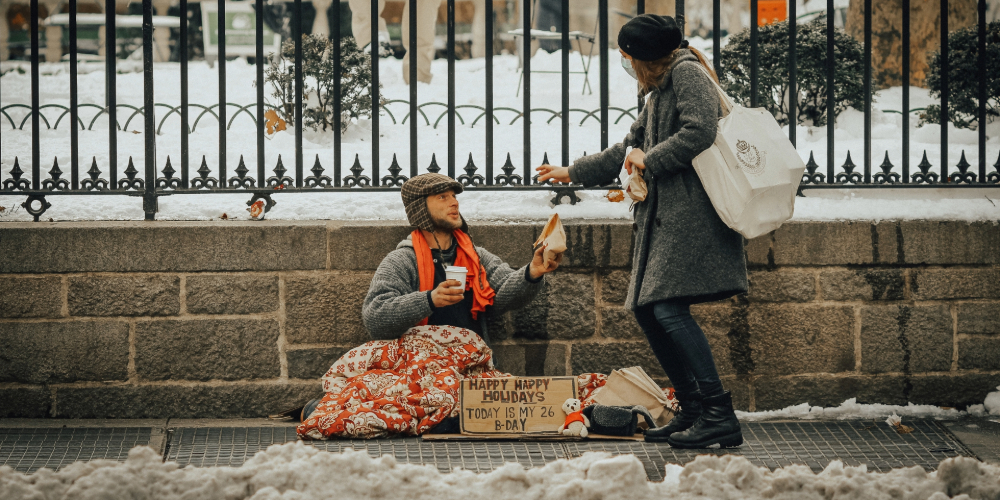
Those familiar with the Bible know the story of the Good Samaritan, who helped a Jewish man who had been robbed by giving him first aid and paying for his recovery.
However, very few people know that there are still Samaritans in the world today, forming one of the world’s smallest and oldest religious communities.
When Jesus Christ told the parable of the Good Samaritan—or revealed Himself as the Messiah to the Samaritan woman at Jacob’s Well—relations between Jews and Samaritans were far from cordial. “Jews do not associate with Samaritans” are the Samaritan woman’s words, as recorded in the Gospel of John.
There was a long history of tension between the two groups, characterised by political and religious differences—the Samaritans’ religious syncretism made them unwelcome to the Jews.
Where do the Samaritans come from?
In 930 BC, the Kingdom of Israel split into the Northern Kingdom, known as Israel, and the Southern Kingdom, known as Judah. Over time, animosity and even wars arose between the two. After King Omri of Israel built the city of Samaria on a mountain, the surrounding region took the city’s name.
Samaria was conquered in 722 BC when King Shalmaneser of Assyria deported the region’s elite to Assyria. His successor subsequently brought Babylonian and other settlers to Samaria, who intermingled with the indigenous population. The religious beliefs of the newcomers merged with those of the Samaritans, resulting in a religious amalgamation that retained belief in Yahweh and the laws given through Moses, whilst also adopting other deities.
The Samaritans built their own temple, erected on Mount Gerizim, in competition with the one in Jerusalem. Animosity between the Jews and Samaritans grew over the centuries. During Jesus’s lifetime, although Samaria formed a link between the two Jewish provinces of Galilee and Judea, Jews preferred to take a detour through the desert rather than travel through Samaria, lest they defile themselves by making contact with Samaritans. If they had to pass through Samaria, they would shake the dust from their sandals upon emerging from the territory, so as not to carry it onto the land they considered holy in their own country.
Jesus’s decision to preach to the Samaritans and heal them (like He did the Samaritan leper) caused outrage amongst the Jews of his time, who believed that they were the chosen people and that the rest of the world was inferior.
In search of today’s Samaritans
According to the historian Benyamim Tsedaka, there were 1.5 million Samaritans in the 6th century AD. Following waves of persecution, particularly after their conquest by Muslims, the Samaritans almost disappeared. By 1919, only 141 remained.
Today, they number around 800, living in two communities of roughly equal size: one in the Palestinian village of Kiryat Luza on Mount Gerizim near Nablus, and one in Holon, near Tel Aviv, in Israel.
Journalist Judith Fein wrote an article for the BBC about her trips to Kiryat Luza and Holon to meet members of the community and document their way of life. The Samaritans in Palestine take great care to preserve their history and have even established a small religious museum where visitors can find a diorama displaying ancient priestly robes, unleavened bread, and a seven-branched candelabrum, or menorah.
Fein also visited the Samaritans’ three sacred sites: the place where Abraham was about to sacrifice his son Isaac; the location of the twelve stones taken by Joshua from the River Jordan; and the site where the Israelites erected the Tabernacle when they entered the Promised Land.
The community observes the Sabbath according to strict rules: no cooking is permitted, telephones and electricity are not used, and men are required to attend the synagogue three times a day (the first time at 3:30 am and the last time at sunset), while women may do so if they wish to. Passover is celebrated by sacrificing lambs, which are then eaten with bitter herbs, in accordance with a ritual described in the Book of Exodus. The community even has a high priest, whom Fein met. He spoke to Fein about the genealogical line of the Samaritan priests, explaining that from the second son of Aaron, Moses’s brother, right down to him, there have been 130 priests.
New and old in a millennia-old community
In Samaritan communities, modern and traditional elements blend together in a unique way. Even relatively simple issues, such as the use of air conditioning, remain unresolved, with some agreeing to its use in the synagogue and others disagreeing.
In Holon, home to 80 Samaritan families, community members work as lawyers, teachers, bankers, and engineers. In Tel Aviv, many young Samaritans are employed by Google and Microsoft. However, there is not a single Samaritan doctor, as working on the Sabbath is strictly forbidden, explains Tsedaka.
To avoid compromising their religious beliefs, Samaritans have generally remained in closed communities. Over the last 30–40 years, only five members have left the community to marry outsiders, knowing they would no longer be welcomed back, explains Abdullah Cohen, a guide at the Kiryat Luza museum.
However, in recent years, the community has become more tolerant of marriages to non-Samaritans, given the very small number of women in the community. Currently, 15 Ukrainian women live in the village, married to Samaritan men. They are accepted on the condition that they practise the Samaritan faith and learn Ancient Hebrew, alongside modern Hebrew, which is the language spoken amongst the Samaritans.
Although they have televisions and use social media, the Samaritans do not physically attend university as living outside the community is not permitted. A Samaritan may travel outside their community, but they cannot be absent for more than one month. Cohen is dissatisfied with these restrictions, as they limit him to distance learning. However, he believes that some of these restrictions will be lifted in the future.
Messengers of peace in a conflict zone
The Samaritans occupy a unique position in a region torn apart by the Israeli–Palestinian conflict. All the Samaritans in the village near Nablus hold both Palestinian and Israeli passports, which is unusual and very useful as the three security zones (A: Palestinian control; B: joint control; and C: Israeli control) intersect in their vicinity.
Even the Samaritans’ names are sometimes a blend of Palestinian and Israeli names. This proved to be a lifesaver for Abdullah Cohen one day when he left one of his passports at home. Whilst Abdullah is a distinctly Arab name, Cohen is quintessentially Israeli. On the day he presented only his Palestinian passport in the Israeli-controlled zone, the Jewish surname caused the soldier to change his attitude, even making a conversation possible. During this conversation, which lasted a few minutes, the young man told the border guards a little about Samaritan traditions.
The Samaritans are situated on the border between two seemingly irreconcilable worlds. They face the challenge of “walking between the raindrops,” as historian Tsedaka, who is himself a Samaritan, explained to journalist Leon McCarron.
As they do not identify with either the Israelis or the Palestinians, yet have earned the trust of both sides, Tsedaka believes that the Samaritans could serve as “bridges of peace” in the region. McCarron points out that their desire to contribute to peace-building is the most important takeaway when encountering the exotic nature of this community: “In a region that can often seem impossibly divided, they bring something rare and wonderful: hope.”