














A brief history of van life
#vanlife . . . it’s the aesthetic trend we’ve seen sprawled across the internet in the past decade. The reservoir of photographs framed by flung-open doors or windows onto a glorious, unpeopled view has stirred many an individual’s curiosity.

Becoming a father in the second half of life
While the debate over the “ideal age” for fatherhood may go on endlessly, one fact is clear: the average age at which men in modern society become fathers has steadily increased in recent decades. Behind the polished statistics lie moving personal stories about what it means to embrace fatherhood at an age when youth is little more than a distant memory.

The Waldenses | The poor of Christ
The “poor of Christ”, the “poor of Lyon” or, simply, the “brothers” never called themselves “Waldenses” until they joined the Reformation. The derisive appellative was given to them by their persecutors, after the name of the man who consolidated the doctrine of the community.

The incomplete revelation
Are there subjects that even Holy Scripture does not fully explain? If so, why does God allow this?

Two false oppositions: reason vs. faith and science vs. religion
"Intelligent, scientifically trained people no longer believe (or can no longer believe) in God."
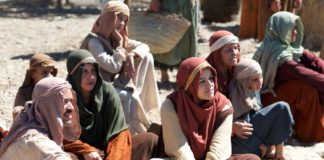
The stylistics of Jesus’s speech
Today's increasingly politically correct and very denotative way of transmitting messages of public interest tends to distort the reception of speeches that have rhetorical and expressive nuances. In this context, how do we evaluate the cryptic nature of Jesus's words?

Symptoms of a failing marriage
The prelude to a divorce often comprises highly destructive behaviours, which can prevent a couple from keeping their enthusiastic promise of staying together "for better or for worse until death do us part," says American psychologist Dr John Gottman.

The secularization of Christmas
Although the holiday of Christmas does not have a biblical origin and did not exist in the days of the early church, most Christians around the world keep it as a reminder of the miracle of Jesus Christ’s birth. However, the religious significance of the holiday is waning in the Western world, as the number of church members decreases and Bible illiteracy increases.

What to tell your children about Santa Claus
I’m not sure if there was ever a time when I thought Santa Claus really existed. I never came across him directly during my childhood. However, I remember wondering, while looking at the pictures from my brothers’ Christmas parties, whether any of the children, smiling at the photographer from Santa’s lap, ever wondered how real his story was, with so many incongruous and...

From rancour to forgiveness: How do Christians manage conflict?
A lack of conflict is not necessarily a sign of spiritual maturity, as some Christians might be tempted to believe. The way in which we manage conflict says a lot about how we understand the role of grace, forgiveness and reconciliation in a sinful world.

Sexual abstinence: absurd, an option, or a necessity?
It was 1984 when hospitals in southern China were besieged by young people in a state of extreme agitation. Thousands of people, of both sexes, were suffering from panic attacks accompanied by fear of death because of the overwhelming belief that their sexual organs were retracting and disappearing, or that their nipples were retracting into their breasts.
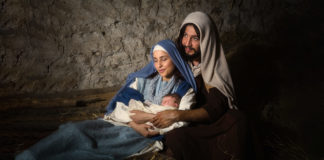
Joseph of Nazareth: The virgin’s husband and the Son’s father
He married a pregnant woman and accepted the responsibility of raising and educating a Son who was, because of His divine power, his Father. This was a mission full of risks and challenges for a humble carpenter from Nazareth, who has come to attract the attention and respect of generations.

A mind at war in peacetime
When you discover that the only thing you have left is faith in God, you fervently wish that your faith doesn't end up poisoning your soul.

What could console our terrible fear of death?
Along with the rising death toll due to coronavirus complications, a usually latent aspect of our fear becomes harder to ignore. Despite the fact that it is the only certainty we all share, realising that our own end is a reality we might need to confront sooner than we had thought leaves many of us fervently searching for consolation.

The conversion following conversion
This article tells the story of John Newton, the slave trader turned priest, who composed the most famous Christian hymn of all time: Amazing Grace