










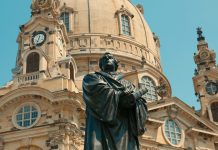



The Second Coming Files: A 2000-Year Inquiry | Part IV: The world in the 18th-19th centuries
In the first three articles in this series, we examined what Scripture says about the coming of Jesus, and also how the biblical books of Daniel and Revelation remain the foundations of understanding time.

Boredom: how many ways can you scratch an itch?
"All of humanity's problems stem from man's inability to sit quietly in a room alone" (Blaise Pascal).
Is the hero better than his God?
Its nomination for six Academy Awards and winning in two categories [1] confirmed the feeling of the public that they were dealing with a very good movie, in every way.
King, emperor, reformer
The Carolingian Renaissance must be understood as a "reform and reconfiguration of all peoples under the reign of Charles, with a view to creating a Christian territory in its institutional structures, moral conduct, and personal convictions."

Great expectations in friendship
How can we protect ourselves against expecting too much of our friendships? Can we do something to prepare for the disappointment? And what does one do to deal with it?

The Second Coming of Christ | Between curiosity and expectation
The Second Coming of Jesus Christ is a cardinal doctrine of the Bible. Daniel, Revelation, and the eschatological passages in the Gospels are the main sources of Christian eschatology. The theological world is divided into several schools of interpretation, and eschatology remains fascinating because of the uncertainty it generates.

Moesha Johnson’s Olympic miracle
In the choppy waters of Port Doha, Qatar, things weren’t looking good. Moesha was midway through a 10-kilometre open water race in the World Championships. This was her chance to qualify for the Olympics. But she was trailing behind a pack of thirty girls and had been for much of the race.

COVID-19: Those who “would have died anyway”. How much is a human life worth?
Discussions about the reasonable number of deaths in a pandemic, about whether or not the price for saving people is killing the economy and, ultimately, debates on a life’s value were brought to the fore by the COVID-19 pandemic.

“Honour your father and your mother”
I once heard on the radio a recommendation to help us understand the elderly: to attach some weights to our backs, hands and feet, put some blurred glasses on our noses, cotton wool in our ears, and then go to the market...

Mind over matter
I was a sickly child. If I wasn’t catching a humble cold, it was something more exotic, like whooping cough or bronchitis.

Prodigal sons and abiding sons | How to help children stay close to God
“Children cannot live according to God’s ways if they do not know God’s Words.” This is a truth in which Christian parents can ground their efforts to help their children build their faith in God, in order to later avoid the path of prodigal sons.

Is Christianity merely an emotional experience?
"Yes, we eat grass and we're proud of it because it demonstrates that, with God's power, we can do anything," is the statement and belief of young Rosemary Phetha as reported in TimesLIVE.

People get ready
The song, “People Get Ready” was inspired by Martin Luther King Jr’s march on Washington and his “I have a dream” speech. In writing it the following year (1964), Curtis Mayfield not only captured the spirit of the march but created a song that caught the mood of the times and injected hope: “There’s a train a-comin’… . You don’t need no ticket,...

Solving the World Cup puzzle
If there was a theme that could be attributed to the 2022 World Cup more than any other, it’s “murky ethics”. If you’ve got mixed feelings about this year’s edition of the prestigious 92-year-old tournament, you’re likely not alone.

The inexhaustible Jesus
I am captivated and deeply impressed by Jesus's perspective on life and the world. He did not seek popularity, did not pursue power, and did not promote revolution. He did not rely on strategies and did not do politics. He did not come to criticize, He did not build His authority on the backs of other people's weaknesses, and He did not come...