













Christians who don’t fear old age
“Even to your old age and gray hairs I am he, I am he who will sustain you” (Isaiah 46:4).

What love looks like
For anyone who has spent any time in a church context or has encountered some form of Christianity, the significance of the story of Jesus is often assumed and then summarised in the single best-known Bible verse: “For this is how God loved the world: He gave his one and only Son, so that everyone who believes in him will not perish but...

What organic labels do and don’t say
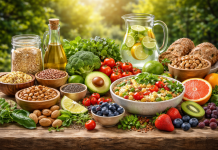
The production of organic food has gained increasing importance worldwide, driven largely by consumer concerns over the potential negative health effects of foods grown through intensive, conventional farming methods (Brantsæter, Ydersbond et al. 2017).

Most wanted words | Friendship and edifying conversations
The face muscles relax, and the eyes become empty before boredom urges them to seek another centre of interest. The restlessness culminates with some leaving and others immersing themselves in the exploration of their phones. Others seek to divert the discussion with a joke or hasten its end through a detached or ostentatious silence.

Worse than death: depression; worse than depression: being judged for it
The latest global statistics on the incidence of depression indicate that more than 300 million people of all ages suffer from this disorder, out of the 7.6 billion people on the planet. This means that about 4% of the world’s population suffers from depression.

Staring loss in the eye | Lessons from life’s disasters
In the aftermath of Hurricane Harvey, Max Lucado wrote an article summarising the spiritual lessons we can learn from an event that the news described as a "once in a thousand year flood".

God’s children… and “grandchildren”
I once heard a Christian warn his community: "God only has children, He does not have grandchildren!" In the postmodern context of relativising values and truths, diverse, strange or syncretic religious forms have emerged and continue to emerge. This is happening to a large extent within Christianity.

Recognition of dignity
Although the concept of human dignity may appear relatively recent from a historical perspective, the notion of human worth has a long history, as evidenced by accounts in the Book of Genesis, Cicero, and Kant, among others.

The spiritual community of readers
For almost six years, I relentlessly pursued Dr. Bill Knott to interview him for the programme Starting Point. He had been editor-in-chief of the Seventh-day Adventist Church's official publication, Adventist Review, for a decade. Finally, in early 2016, we sat down for an interview in which we discussed how he developed his talent as a writer and the current significance of the Adventist...

Do you have a Vitamin D deficiency?
Studies have increasingly shown that vitamin D, also known as the sun vitamin, plays a vital role in protecting the body from a number of chronic illnesses. It is important to know both the symptoms of a deficiency in vitamin D, and the valuable sources that can provide us with a daily healthy dose.

Kindness: a social act
One of the small joys of my childhood was to visit my maternal grandmother at the house on the hill.

Hope in the storm
This coronavirus crisis has, for me, some perplexing parallels with a well-known incident narrated in the Gospel of Matthew (14:22-33). The disciples are confined in a little boat in the middle of a terrible storm, almost as we are confined at home today by the emergency laws of our countries.

How to strengthen your willpower to make the best decisions
To have willpower does not mean saying you want to do something, it means to actually be doing it—André Maurois

The faith that instills certainty
I had a ringing in my ears due to that unusual inner silence which I was paradoxically experiencing at the same time as a thought-storm that made me scream on the inside.

Perceptions of balanced nutrition in the digital age
Attitudes toward food form a complex mosaic shaped by factors such as nutritional needs, hunger, taste preferences, socioeconomic status, demographic and emotional influences, as well as ethical, cultural, and religious values. Equally important is the level of education on nutrition (Gahagan, 2012). This plurality of factors helps explain the global diversity of dietary habits.