










Food for life
A lot is said and written about food, and a fair share of the promises we make are related to it. We might decide to eat more healthfully or perhaps we wish to diminish food waste. Unfortunately, our promises are often quickly forgotten, because destructive habits are hard to forsake. There are, however, people who have found ways to transform not just their...

Insomnia and God’s bird
Carolynn Yakush inherited her taste for the good life from her Czech grandparents, and her interest in faith from her mother and the Christian schools she went to. For many years, the desire for money and a life of luxury overshadowed her spiritual and religious concerns. One day, almost without thinking about it, she entered a church again, and was amazed at the...

Why you should make your bed in the morning | Daily routine and its benefits
A daily routine can be an ace in the hole in the time crunch that modern people complain about. But our efforts to organise our time are rewarded with a host of benefits, including those related to our mental health.

Hudson Taylor | When the mountains move aside
Hudson Taylor undertook eleven journeys between Europe and China, and his mission prospered. He had one of the most complex and successful visions for evangelism.

I love you for your flaws too
Love is the most beautiful and perhaps the most incomprehensible thing in the world. We find it in movies, in books, in the strength of a "yes" declared before the civil authorities, and in the embrace that binds spouses at the end of a hard day's work.

Religion is harmful. True or false?
The idea that religion is harmful to the process of human development has no scientific support, but religious conviction has been associated with a number of tragic experiences within families.

Why we think things are worse than they are
In the age of the internet and the “global village,” an irrational fear taking hold in a small American town can easily go viral, reaching and affecting us all. Once online, news—whether true or false—can have a corrosive effect, leading us to feel cynical about the future and to hold low expectations for our leaders.
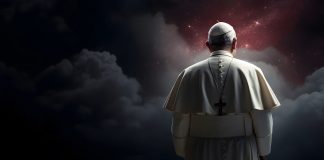
What happens if the pope dies?
Images of Pope Francis have recently been released by the Vatican for the first time after he was admitted to hospital in a critical condition for pneumonia following a complex lung infection. Given his advanced age and frailty, many have wondered whether the pope is close to death.

“Divine Providence: God’s Love and Human Freedom” | Book review
Bruce Reichenbach's book, Divine Providence: God’s Love and Human Freedom is impressive first of all due to the author’s total disinterest in impressing his readers. Instead, he has a legacy to pass on.
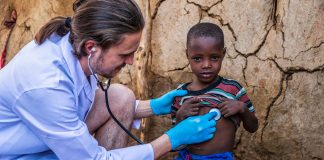
The doctor of the forgotten world
Doctor Roland Hermann knows what he wants to do with his life. This is the explanation that best describes his decisive yet relaxed and simple answers. For years, the 45-year-old dentist from Mediaș, Romania, has been travelling to forgotten places to treat hundreds and thousands of disadvantaged patients.
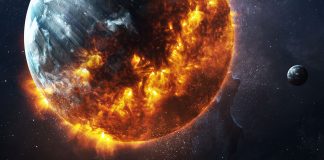
Camping at the end of the world
I still remember May 21, 2011, like it was yesterday. Thousands of kilometres away in Boulder, USA, an evangelist named Harold Camping, president of the popular ministry Family Radio, was in the news spotlight. He had predicted that on May 21, more than 200 million Christians all around the world would be raptured away to heaven and that five months later, the world would end.
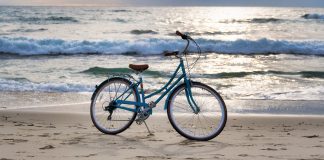
14 reasons why cycling is good for you
Could jumping on a bike enrich your life? Here are some reasons you should consider giving it a go.
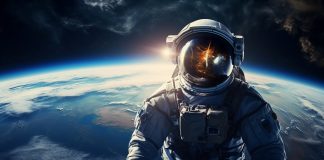
Remembering the Earth landing
In 2019 we celebrated the 50th anniversary of the “great leap for mankind” Moon landing. It was an exciting, significant time in the history of our planet.

Taste and health in moderation
Salt is essential for bodily functions, but it should be consumed in moderation.

Slippery slopes and anxious feet
The fact that we are able to anticipate most of the consequences of our actions is undoubtedly a blessing. However, we can also allow fear or over-cautiousness to make us anticipate events that are not likely to follow. This edges us toward a common error of judgement: the slippery slope.