







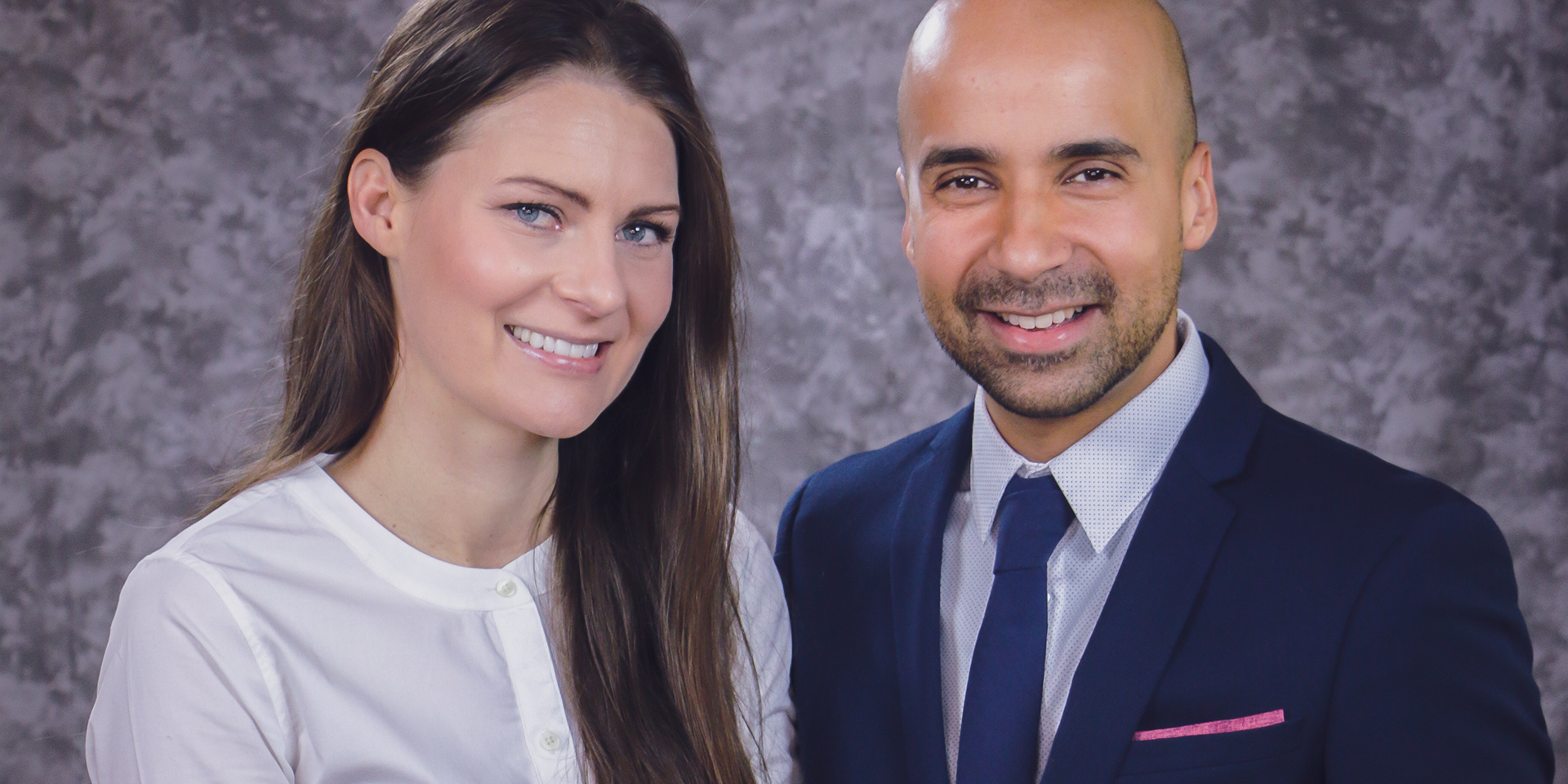
Daniel Bruneau’s parents, who hail from Mauritius and the Seychelles respectively, met in England. When Daniel came to Atlanta to teach at the university, he wanted to deepen his relationship with God.
He met Sierra on his first Sabbath, and the two were married a few years later. Sierra specialises in finance, and Daniel worked for major companies such as AT&T and Delta Air Lines before facing serious health issues that continue to this day. This interview is a discussion about his experience of illness and its impact. Earlier this year, Daniel and Sierra became parents, and I recently had the pleasure of meeting their daughter, Adelaide. Daniel is currently part of the editorial team at Adventist Review.
Sierra, you grew up in a family that was divided by religion. You had to choose between two paths quite early in life.
SB: My mum always took us kids to church, where we’d spend all day, which made Sabbaths interesting because we couldn’t spend them as a family.
But didn’t your dad try to stop you from going to church?
SB: Not at all. I think that when my parents got married, they made an agreement. I was even able to attend Adventist schools. I enjoyed that and was always very involved in school activities. Because of my personality, I was drawn to sports and charitable activities, so I found school much more enjoyable. I made many good friends and I’m still in touch with many of them.
DB: That enriched my life too because I ended up doing lots of sports with Sierra and her family, who are very adventurous.
What were your career plans back then?
SB: At one point, I wanted to become President of the United States.
Really?! There’s an election this year. Are you running? I don’t think I’ve ever met anyone who’s thought about doing something like that before. How did you come up with the idea?
SB: That was a long time ago! It was more of a desire to help people lead better lives. It bothered me to see injustice. Another thing that probably motivated me back then was ambition: I was going to be the first female president! Looking back, I was pretty young and naive.
I assume you talked to your parents. Or was it your little secret?
SB: I’m sure I talked to them. In fact, I clearly remember my dad telling me, “Go for it!” Over time, I came to understand the complexities of life and the limitations of politics better, so I gave it up.
Daniel, you grew up in an Adventist family. What was your teenage experience like?
DB: Spiritually speaking, my teenage years weren’t difficult, but looking back, I realise that I was just maintaining the status quo. I attended church on the Sabbath and was baptised at around the age of 11. Although I didn’t experience any major crises of faith during my teens, by the time I was 18 or 19, I remember I had drifted away from God. This was a period of transition for me, moving from the faith I’d inherited from my parents to a faith formed through my own experiences with God.
At around the age of 25, I realised that I wanted to spend more time with other young people at church. That’s when I received an offer to come to the US to teach at a university in Atlanta and conduct research. I looked for a church with young members, thinking that maybe it would bring me back to church. Even though I wasn’t going to church anymore, I knew deep down that I had to. Here, I found people my own age with whom I could discuss spiritual topics.
I had just begun to develop a stronger faith in Christ when I was asked to give some evangelistic talks. This was a turning point in my spiritual life, as I came to understand the Bible in its proper context, gaining a new perspective on God in the process. I prepared a programme lasting a week or two, during which I delivered sermons and helped people to redefine their image of God and understand that God loves them very much. Once you begin to see God in the right light, everything else falls into place. This was the defining moment in my spiritual journey.
Our readers may not know this, but I invited you several times over a period of two or three years to appear on my show. Each time, health issues got in the way. Later, I realised it was something serious. What happened?
DB: I had just started working at Delta Air Lines. I was busy; I was working a lot. Three years ago, I was in an important meeting. About halfway through, I started feeling unwell, but I managed to see it through to the end. I made it to my office, but I was so dizzy that I couldn’t stand up. To stop myself from falling, I lay down on the floor. Somehow, I made it to my car in the car park, called Sierra and told her, “I think I can drive.” She said, “No way.” She said I was slurring my words.
Do you remember? What was it like to hear something like that?
SB: He told me he was feeling very dizzy. The situation hit me hard because my dad had died from a brain aneurysm.
Seriously?!
SB: Yes, you can imagine. Daniel was feeling sick and throwing up. He was dizzy and I could hear him slurring his words on the phone. I instantly thought of my dad. I wondered if I should call an ambulance. I told him to wait for me so that I could drive him to the hospital. He must have found it frustrating, because I called him several times on the way and kept asking, “Do you have a headache?” He told me he wasn’t in any pain. I took him to A&E anyway. When we arrived, he was slightly incoherent. He was conscious, but what he was saying didn’t make much sense. I got pretty scared.
DB: The doctors discovered that I had an inflamed nerve. This condition is called vestibular neuritis. As a result, I lost most of my hearing in that ear. My vestibular system — and thus my balance — was also affected. For a long time, I experienced ringing in my ear, dizziness, and difficulty walking.
I remember seeing you with a walking stick and being shocked.
DB: Yes. That was later though. What I told you about was the beginning of my health problems. After a week, I went back to the office. Since I had just started working there and had put together a team and taken on some important projects, I felt pressured to return to work.
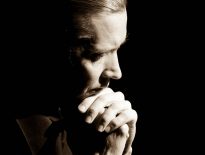
One day, when I got home, I told Sierra about the ringing in my ear. I felt terrible and remember getting down on my knees and crying and praying with Sierra. I couldn’t sleep and said to God, “God, You know the noise is louder now and I can hardly sleep at all. Why do I hear this noise? I’d rather have any other problem. Give me any other problem, but let me be able to sleep.”
I forced myself to go back to work, and a year later my wrists started swelling — that’s when you saw me with the cane. I didn’t know what was causing it. It was probably another sign that my body was in distress. In autumn 2016, I started to feel pain in my throat when I walked. A few months later, Sierra told me, “We need to go to the doctor.”
SB: We were on another hike when he said he had a pain in his throat and had to walk more slowly. When he slowed down, the pain subsided. I told him, “This isn’t normal. We need to get it checked out.” We went to our GP, who was a woman, and described his symptoms to her. She said that, in her opinion, he had angina. We said, “That’s impossible! Look at him — he’s healthy and young.”
But she said she would call a cardiologist. I overheard part of their conversation: “I just told them it’s a heart issue, and they seem calm.” I wondered why we shouldn’t be calm. We were sure there was nothing wrong with his heart. We went to the cardiologist and he underwent a stress test. The results came back abnormal. He then had a cardiac catheterisation and they discovered four arteries with severe blockages around his heart. Two were 80% blocked and two were 90% blocked.
90%!
SB: Yes. The doctor told us that his condition is genetic and usually doesn’t produce symptoms, so the first symptom is often a heart attack, which can be fatal. However, in his case, the disease had produced symptoms, so we were able to intervene in time and make the necessary changes. We realised that only God had saved him.
At that moment, you also made another connection. One of your close acquaintances . . .
SB: About a week earlier, we found out that a friend of mine had suddenly lost her husband to a heart attack. He was also very young, in his early 20s.
DB: I was on a lot of medication, and one of the drugs gave me the hiccups. It might sound silly, but they lasted five days. You reach a point where you don’t know what to do anymore.
SB: That was the first time I burst into tears when I saw him. He couldn’t sleep day or night and the hiccups had turned into violent spasms. You could tell they were painful and couldn’t be stopped no matter what. It was a turning point because we couldn’t control anything and had to rely solely on God for comfort. The doctors could tell us what was happening, but not what was causing it.
Do you now know if there are any genetic causes, or if it’s an acquired condition?
DB: There is a genetic component to my condition that has been identified, but not much is known about it yet as research is still ongoing. There is no specific medication for this problem. We were presented with several options, including surgery and other treatments, but we were told that our only hope now is to prolong life and find a temporary solution. If we can buy some time, perhaps a treatment will be developed. In the meantime, I’ve visited the Mayo Clinic and the Cleveland Clinic, and I’ve become a vegetarian and I don’t eat any fatty foods.
SB: You exercise.
DB: Yes, to stay in shape. Sometimes, I struggle and I don’t feel well but I don’t want people to see that. I don’t want it to stop me, but it does prevent me from doing certain things I’d like to do.
Like what?
SB: Before all this, we used to do lots of outdoor activities. He was very energetic.
DB: I think my energy levels have dropped the most, which has made me take things more easily. When you have little energy, you sometimes feel sad and down. Then, I get upset that I’m feeling down.
It’s a downward spiral.
DB: I want to be honest with you, because I know there are people in much worse situations. But in the midst of my struggles, I sometimes manage to open up and talk about our perception of God. I’m going to share something with you.
I remember we went to see a pulmonologist because I have breathing difficulties too — I don’t know why, but that’s another story. I was discouraged because I wasn’t getting any good news. The doctor told me to schedule my next appointment. There were three ladies in the office. I went up to the one in the middle. As I said, I was feeling down. I told her, “I’m here to make an appointment.” She replied, “Sure, I’d be happy to,” and started writing. I saw a Bible next to her computer. I felt compelled to say to her, “I see you have a Bible. Are you reading anything in particular?” She looked at me, showed me a note and said, “I’m trying to write something to encourage my son, who’s addicted to drugs and going back to rehab. I’m trying to help him understand that everything will be OK. But I can’t find the right verse. It’s from Philippians.”
“Is it Philippians 4:19?” I asked. “And my God will meet all your needs according to the riches of his glory in Christ Jesus”? She looked at me and started crying. I started crying too because she was crying. Sierra wasn’t standing next to me; she had gone to the bathroom. When she came back and saw us, she started crying too.
SB: I didn’t know what was going on, but they were crying, so I just started crying too.
DB: Even when you’re in pain and going through a difficult time, you can see God working in this way, telling you: “I’m protecting you, and the miracle won’t necessarily be your healing, but the way I’ll show you that I’m right there with you. I’ll show you that you can help someone else.” That was one of the things that had the greatest impact on me during this experience.
SB: What he said is true, and I think this whole experience helped us to grow.
We also began to understand the struggles and development of the biblical characters. It forced us to either give up or grow.
We’re so used to Bible stories that we end up reading them without feeling much, because we know the outcome and all the interpretations and analyses. It’s a theoretical approach. But when you find yourself in a similar situation, it’s a completely different experience.
At one point, you wrote an article for Adventist Review in which you described your feelings and thoughts.
SB: Yes. I wrote about a plane trip I took during which we had to fly through or around a hurricane. I usually feel relaxed during flights; I like to fly. But that flight felt more like a fall than a flight to me. I was exhausted and really wanted to sleep, so I settled in and prayed. In the midst of my prayer, the story of the storm came to mind. The disciples were in the boat and Christ was sleeping. I heard God speaking directly to me during my prayer. Christ was sleeping during the storm because He had such great faith in His Father, but the disciples were panicking. I was acting just like them. When He woke up, He asked them, “Why are you still afraid?”
Throughout the storm, the health crisis, and the loss of my job, I felt God speaking directly to me. We had witnessed Christ guiding us through so many situations. One of the things I’m passionate about is testifying about Him while I’m still under pressure from the trial.
We often hear people’s testimonies after they have overcome their trials. These are amazing and inspire us. But what about those who are still going through trials? You can look back and see how Christ guided you through the trial.
Without knowing how it will turn out.
SB: Yes, we don’t know yet.
Daniel, I’ve heard you preach on occasion. Let me ask you something. In both the New and Old Testaments of the Bible, there are many miracles of healing. You’ve probably preached about them from time to time. Given your current condition, do you still preach about them? Or do you avoid them since you’re obviously not healed?
DB: I still preach about them. I think of Paul, who talks about the thorn in his flesh — a problem that never went away. My conversation with the person from the appointment desk shows how God works. Healing doesn’t always mean physical healing. Perhaps He is healing me in a different way, in terms of my spiritual life. Healing isn’t just about the physical, but the spiritual too.
When I preach about these things, I emphasise that God is fully aware of all suffering, and not only guides us, but also understands us in a way that we cannot. Illness has a physical component, but what I desire more than anything else is spiritual healing and a stronger spiritual connection.
When my health issue began, we had to move out of our home immediately and lost our jobs. We both lost them three weeks apart.
That was a storm, and that’s when the health issue arose. We lost everything that normal people rely on for security: health, a home, and a job. There were times when I got down on my knees and cried. I still sometimes have to get down on my knees because I’m troubled. But looking back, I realise that it’s all part of an experience that has strengthened me and allowed me to gain a deeper understanding of God.