






COVID-19: Second thoughts on Doomsday
Although they are constantly improving their preparedness for crises and disasters, modern societies find themselves powerless in the face of a growing threat: transnational crises.

COVID-19: Rehearsal for the big surprise
There has been a lot of speculation in the online environment about COVID-19 and the end of the world, but the connection between the two is more subtle than it first appears. It has been suggested that the pandemic is only the tip of the iceberg, that it is one of the seven last plagues of Revelation, or that it is the fourth...

COVID-19: Is there an essence of Christianity that needs to be manifested in times of crisis?
The headline of this article is actually a combination of two important questions. First, we can ask if there is such an essence of Christianity, and if so, what it is. The second question is what elements of Christianity are essential or even necessary in times of crisis.

God’s providence in times of crisis
Regardless of the form they take, crises give rise to legitimate questions about God's providence: Where is God when we suffer? Has He forgotten us? Is He punishing us? Does He still have things under control?

COVID-19: Helping children (and others) with viral anxiety
Even in difficult times there are many things we can do at home to help children as well as teenagers to feel less worried.
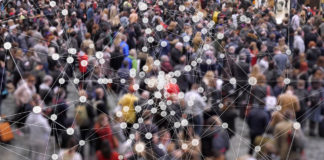
How lethal is COVID-19, and other (un)answered questions
There have now been over 12 million cases of COVID-19 infection globally, and half a million deaths. Researchers are constantly looking for new and better information to reduce the uncertainty around the virus.

COVID-19 prevention series: An introduction
“A healthy lifestyle has been an important part of the beliefs of the Adventist Church since its early years and remains so. We are still committed to live, share, and promote healthy living as expressed by the holistic Adventist health message entrusted to the Church. The Adventist health studies have confirmed the unequivocal benefits of increased longevity and quality of life through implementing...

COVID-19: What have we learned about ourselves?
Courage is not the opposite of fear, nor of caution. True courage is what you do right in the midst of fear.

COVID-19: Excerpt from a diary on the Great Britain front
Noemina is a graduate of the University of Hertfordshire, UK, where she majored in health care. She is working in her field as of 2012. The journal excerpt she sent to us reflects her week-long experience at the epicentre of the battle with the new coronavirus in the intensive care unit, where serious cases are admitted.

COVID-19: How does anxiety affect us?
A global crisis situation, such as that generated by the current pandemic, is a complex picture with many variables bringing high levels of emotional distress. During a pandemic, many people will face a wide range of reactions and emotions, and the psychological impact will often be greater than the medical one.

COVID-19 and the great question: Why?
The danger of the novel coronavirus has given us pause to reflect. As Christian believers, apart from praying, we are expected to examine and question our beliefs in this time, and to seek answers which are rooted in the perspective of the Holy Scriptures.
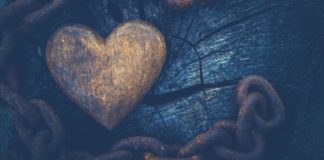
COVID-19: Hope ordinances and a divine governance
Fines, military ordinances, police and army patrolling the streets – this is the reality we have suddenly found ourselves living in. It is a tightening reality, a rigid corset-like structure of rules.

COVID-19: Recurrent revelations
Any large-scale phenomenon, such as a pandemic, activates our instinct to preserve our state of being—especially when we feel like we are losing it.
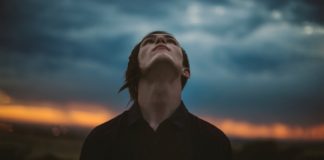
COVID-19: Crisis prayer and the crisis of our prayers
I was descending from Omu Peak, in the Bucegi Mountains, with a few dozen young people. It had not been an ideal hike, and we were behind schedule. The forest made the darkness even thicker as it began to cover the mountain, and slowly, our minds as well.
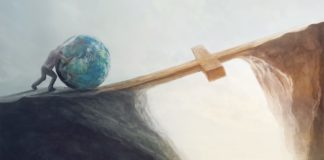
COVID-19: Could giving up ever be the key to success?
Pray! If not to God, then to a god. Admit that we are defeated, because this is the first step towards victory.