











Good luck, bad luck…and cancer
Many had not yet finished clearing away the leftovers from the New Year's Eve table, almost no one had returned to work, politics was still numb and journalists yawned with boredom because almost nothing of interest had happened on 2 January 2015.

COVID-19: Should we care about the environment in the midst of an economic crisis?
Our planet may be fittingly compared to the 1994 film, Speed: A bomb is planted on a bus and rigged to explode when the bus slows to less than 80 kilometres per hour. The bus barrels through Los Angeles, hitting obstacles and endangering the lives of passengers and pedestrians until a solution is found.
COVID-19: How has it affected young people?
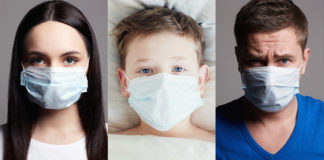
Early reports out of China showed that elderly people and the chronically ill were most vulnerable to Covid-19. Yet an alarming number of young people in the United States have been hospitalized with severe infections. According to the Centers for Disease Control and Prevention, nearly 40% of American Covid-19 patients who were hospitalized were under 55 – and 20% were between ages 20...
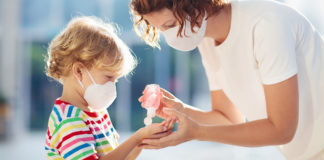
Under the shadow of the pandemic: was 2020 really the worst year in history?
Peering through the dust settling from the chaos of last year, we are trying to see into the unknown of the coming year, hoping for the best. Irrespective of what our hopes for 2020 were, our expectations for 2021 seem to centre on things going back to normal.
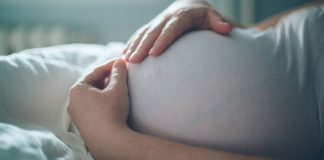
COVID-19 vaccines and pregnancy: What do we need to know?
When analysing the potential impact of COVID-19 vaccines in pregnancy, first of all, we must observe that several studies have shown that, in pregnant women, SARS-CoV-2 infection can have significant negative consequences.

COVID-19: Beyond coincidence and bad luck: causes of animal to human virus transmission
In the midst of the COVID-19 pandemic, there are specialists who are not surprised by this crisis, and believe that in the future we could be facing other pandemics if we fail to fix the mistakes that led to an increase of animal to human pathogen transmission.

From the duty to remember to the right to forget
What if we could modify or even completely erase painful, sad, or traumatic memories? While this concept currently belongs to the realm of science fiction, advances in science may soon make memory modification possible. Yet, experts remain divided on one fundamental question: could the potential benefits of altering memories outweigh the risks involved?

Our daily E-numbers: an epidemic of suspicion (Part II)
The first part of this discussion essentially highlighted that, despite the alarming and catastrophic claims surrounding E-numbers, these substances are generally far less harmful than many believe. In the following section, we will examine some of the most criticised and controversial E-numbers in Romanian public discourse. Let’s begin with the one often described as “the most TOXIC/CARCINOGENIC additive”: E330.
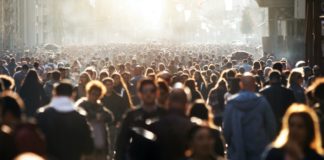
COVID-19: Let’s not go back to normal
Let’s not go back to the abnormality of before! This is one of the messages which the French hung from their balconies on May 1, when the activities that would usually happen on this national public holiday could not take place. What can we change and what is worth changing after COVID-19?

Why do phones make us tired and ruin our mood?
The phenomenon of technoference (that is, the daily disturbance people experience due to the use of mobile phones) is becoming more and more prevalent, and researchers at the University of Technology in Queensland warn that as we become more dependent on these devices, we become more tired, more unproductive and unwell.

COVID-19: What I have learned from my Italian friends
Antonio is a grandfather of 69 years old. For 40 years, he has worked as an internist. Just a few days ago, his plans for a quiet retirement suddenly changed. Out of his own free will, Antonio decided to return to work as a doctor in order to help patients suffering from COVID-19.

COVID-19: Hope overcomes the fear of the unknown
In the spring of 1936, the members of the Lykov family made a decision that would change their lives forever: they disappeared into the Siberian taiga, completely isolating themselves from the world for the next 40 years.

Vitamins, explained from A to K
We all know that vitamins are good for us. Many of us take supplements to boost the supply of vitamins in our bodies. However, it wasn’t until 1912 that Polish biochemist Casimir Funk actually came up with the concept of vitamins, which he called "vital amines."
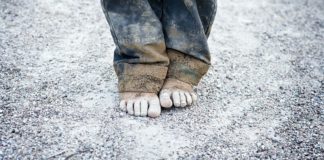
”The coronavirus has been anything but a great equalizer.” The impact of COVID-19 on the world’s poor
A famine of biblical scale is already looming on the horizon, says David Beasley, director of the World Food Program. More than 30 developing countries could be affected by the scourge – 1 million people are already affected. It's not just people going to bed hungry, Beasley insists, explaining that it's a state of emergency where outside help is the only hope.
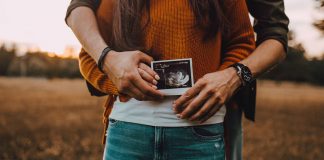
Under pressure
While for many the experience of pregnancy is full of excitement, for some first-time mothers, it can be a struggle with the unknown. For newlywed Shannon Toledo, her complicated health issues were adding another variable to the morning sickness, mood swings and the uncertainty with her job during the peak of Covid-19. A part-time martial arts instructor with a third-degree black belt in Taekwondo...