











The story of blessed Ayyub
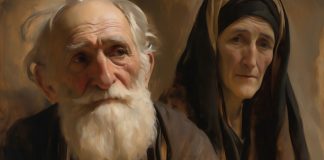
During the time when the people of Israel were enslaved in Ta Kemet (the Black Land), and Prince Moses, the great scribe, had taken refuge among the northern Arabian tribe of Midian, a captivating story shared by the campfire caught his attention. It was the tale of another prince who, like him, had suddenly lost everything.

The goal that appears when you reach it
I like to look back. When I am climbing a mountain, it is an excuse to rest. But I also do it for another reason—to see how far I have climbed.
The prophecy of the Messiah
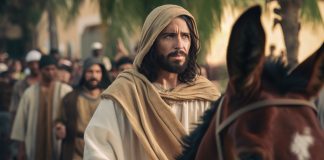
Daniel chapter 9 contains what many consider to be the most sublime prophecy of the Old Testament—a prophecy of the Messiah, Jesus Christ. Amazingly, not only did this prophecy reveal the purpose of His incarnation as a child, but it also specified when His ministry would begin and when He would die.

“I remember when I died” | Interview with Ruth Frikart-Moor
"On the 5th of March 1986, life left me! I was in the process of moving and that evening I felt terribly tired and cold..." (Ruth Frikart-Moor)

How to befriend the future
What is the future? The question may seem trivial. But when you think about it, you understand better what St Augustine confessed: "What then is time? If no one asks me, I know; if I want to explain it to a questioner, I do not know".

The noble torment of forgiveness
We know that authentic forgiveness is Christian and desirable. And we also know it feels good to receive genuine forgiveness. But does God ask us to forgive under all circumstances? We often try to discover the answer to such uncomfortable questions about God by looking at those who say they know Him. And, sometimes, we have something to gain by doing so.

Strong prayers to the hidden God
No one has ever seen God, but the One who knew Him before He was born on this earth taught us all to address Him in prayer.

How does the calming prayer help us manage volcanic emotions?
“I live in a high and holy place, but also with the one who is contrite and lowly in spirit, to revive the spirit of the lowly and to revive the heart of the contrite" (Isaiah 57:15).

What does the Bible say about climate change?
During the COVID-19 lockdown last year, I lived with some messy people. I’d moved into a house that I shared with a wonderful couple of brothers. They were almost everything you could ask for in a set of housemates. Friendly, funny, respectful of your privacy . . . genuinely great people in almost every respect.

To be or to become? That is the question
“The Christ of Nicea is obviously a far cry from the historical Jesus of Nazareth, an itinerant apocalyptic preacher in the backwaters of rural Galilee, who offended the authorities and was unceremoniously crucified for crimes against the state. Whatever he may have been in real life, Jesus had now become fully God.”

Teaching children how to pray
In talking to pastor Cristian Modan, the religion teacher and chaplain at Mihai Ionescu School in Bucharest, I wanted to find out how we should teach children to communicate with God.

The end of the world: on the list of convictions that frighten us
A good survey of people's thoughts on the end times would not seek to find out whether people believe the world will end or not. Rather, it would seek to know what their thoughts are on when and how the end will come. Regardless of the source of their belief—religious or secular—most people have come to see the idea of the end of...

The face that transforms me
Every time I look through the lens of a microscope, I am struck by the realisation that beyond what the naked eye can see lies a universe far deeper and richer.

The source of motivation
Motivation is more than simply having the desire to wake up each morning with enthusiasm and a zest for life.

Practical tips for memorising the Bible
"When your words came, I ate them; they were my joy and my heart’s delight" (Jeremiah 15:16).