








Trust in God and the great small step
Trust in God gives clarity to our thinking, so God asks us not to be obsessed with justice, but to be concerned with and delighted by grace.

Jim Ayer | Forever a fisherman
Jim Ayer was, for most of his life, a slave to his own dreams—a fisherman of thrills and addictions. From when he was a child, he attached a ball and chain to each ankle, closed himself up in his own world, and threw away the key.
They took up the cross and killed
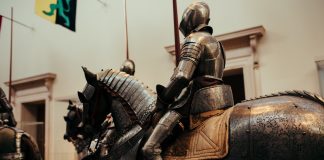
The first eight days of the Council of Clermont were difficult. Although the participants were apparently discussing the reform of the clergy, or the excommunication of King Philip for adultery, the real focus of attention was the announced speech of "general interest" by Pope Urban II. Little did the prelates and important Frankish nobles present know that they were about to witness one...
The wounds of believers that hurt the churches
“I’ve left the church, but not my faith.” This phrase has become increasingly common in today’s secularised society. Millennials are often the first to express this sentiment, but they are not the only ones. A letter sent to a church that someone has abandoned is both poignant and powerful, serving as a heartfelt plea for churches everywhere to take this message seriously.
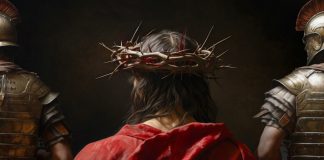
Silence of the Lamb
Slapped, spat in the face, insulted, falsely accused, lashed, ridiculed with a crown of thorns, passed from judge to judge and booed by the crowd, the Son of God chose the most unusual form of defence. Silence.
Interpreting Bible prophecy
How can we correctly interpret Bible prophecy? What safety criteria can we use to avoid falling into the trap of hasty and erroneous interpretations?
Living Biblically?
Many Christians say they take the Bible literally. They regularly spend time reading this Book they believe to be inspired by God and seek to understand how to apply it to their lives.
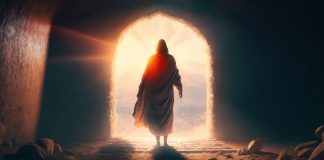
What did Jesus think about Himself?
Jesus Christ is certainly the most fascinating and controversial person in human history, if we look at how He has been understood throughout the history of Christian thought. But how did Jesus understand Himself?

Misleading bridges, and better prayers
Bridges seem to be the emblem of existential stress for Romanians. In the face of a difficult situation, even Romanian folk wisdom recommends: "Make a pact with the devil until you have crossed the bridge."

The golden handcuffs and the new religion of work
An old Romanian proverb states that craft is like a golden bracelet. But the way we relate to this type of jewellery seems to suggest that these golden bracelets are more like some socially acceptable handcuffs, which we fooled ourselves into wearing with pride.
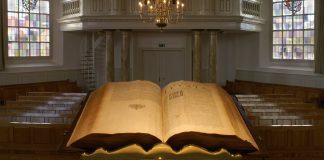
The Ecumenism Files III: From the Reformation to Postmodernity
The dialectical spirit of ecumenism gives rise, among other things, to a question whose full answer is still awaited: How is it that the critical spirit and rationalism of Enlightenment origin, combined with making the Bible available to ordinary people, has led to so many schisms?
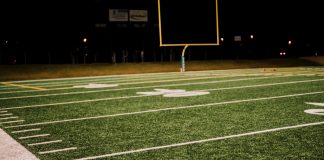
The rule of law
For the average punter, rugby league had its beginnings in a school at Rugby, England, when one William Webb Ellis, “with fine disregard for the rules of football as played in his time at Rugby school, first took the ball in his arms and ran with it, thus originating the distinctive feature of the rugby game.”
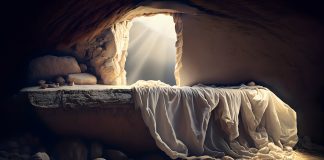
The death of Death: Easter and eternal life
Ultra-rich Silicon Valley tech magnate Bryan Johnson has been regularly having transfusions of his own son’s blood plasma in an effort to live longer. The treatments are expensive and are essentially still being trialled.

Life in chains: Is there a purpose to human suffering?
The question of human suffering concerns atheists and believers alike. For the former, the search for an answer drives them to the heights of despair. For the latter, suffering inevitably poses a dilemma: why is there so much suffering in the world if the God who created it is loving and omnipotent?
Paradise seen from the outside
In wisdom you made them all; the earth is full of your creatures – Psalm 104:24