











Clash of sexual cultures (II)
Jessica was 19 when she had to tell her parents, both practicing Christians, that she was pregnant. That moment generated a real earthquake in the young woman’s family who, together with her boyfriend at the time, had been strongly involved in the purity movement, an ideology that promotes sexual abstinence until marriage, for religious reasons.

Excellence and modesty | An interview with Dr Bert B. Beach
His name is Bert B. Beach. Until his retirement in July 1995, he was director of the Public Affairs and Religious Liberty Department (PARL) of the General Conference of the Seventh-day Adventist Church.

Born in Bethlehem, adopted by Hollywood
Born of a virgin, brought up in humble conditions with phenomenal dignity, poor all throughout his life but desired as king by thousands, famous for healing the sick and raising the dead, the target of conspiracies of the highest officials, killed by crucifixion and resurrected after three days—Jesus Christ is at the centre of the most fabulous script ever to fall into the...
The portrait of religion, in scientific colours
More than a century ago, when the social sciences were just beginning to study the relationship between religion and health, elite scholars such as sociologist Émile Durkheim, Sigmund Freud, the father of psychoanalysis, and philosopher Friedrich Nietzsche repudiated religion consonantly, claiming that it had a toxic effect on individuals.
The little giant
“Born in a home where the scant necessities of life were luxuries, when he left the world for heavenly scenes of labour, he bequeathed it his possessions–two silver spoons, a silver teapot, a well-worn frock coat the Methodist Church”[1] Basil Miller

Instant regrets, memory wipes & free will
Have you ever done something you immediately regret? Perhaps you’ve let your emotions get the better of you, lost control and said something particularly harsh to a friend in the heat of a moment—you wish you could take the words back the moment they left your lips.

Conversion of an atheist
"God has guided my steps in life, saved me from some wrong decisions, and when I have made mistakes, He has helped me to admit my mistakes and learn from them." (Dumitru Borţun)
Reformation: The real face of Christianity
The Great Reformation was not a simple schism within Western Christianity. It was not just a religious and political movement. The Protestant Reformation, with its particular spirit and principles, was, first and foremost, a return to the true source and values of Christianity—an attempt to restore.
Does life have meaning, or not?
When I ponder the statement, “Life holds potential meaning under any condition, even the most miserable,” the story of an anonymous woman comes to my mind. She made a deep impression on me and taught me about two existential states: having, and being.

Jesus: Where two worlds meet
Un hombre pasa con un pan al hombro.../Otro busca en el fango huesos, cáscaras/¿Cómo escribir después del infinito?

The essence of Christmas
A magical Christmas, a magical evening, magical touch, magical love – people talk about magic when they experience special emotions that they cannot or would rather not explain. "Bring a little magic into your life". This is a saying that resonates extremely well with the expectations of an entire generation.

“All the places to go… How will you know?” | Book review
The book written by John Ortberg, All the Places to Go... How Will You Know? invites us to reflect on the discerning of God’s will for our lives.
The wounds of believers that hurt the churches
“I’ve left the church, but not my faith.” This phrase has become increasingly common in today’s secularised society. Millennials are often the first to express this sentiment, but they are not the only ones. A letter sent to a church that someone has abandoned is both poignant and powerful, serving as a heartfelt plea for churches everywhere to take this message seriously.
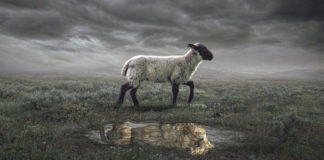
The hour of His judgment
The judgment of God is the greatest demonstration of His justice in the universe—the other side of the coin bearing the image of the Cross. In God, love and faithfulness meet together; righteousness and peace kiss each other (Psalm 85:10).

What does the Bible say about climate change?
During the COVID-19 lockdown last year, I lived with some messy people. I’d moved into a house that I shared with a wonderful couple of brothers. They were almost everything you could ask for in a set of housemates. Friendly, funny, respectful of your privacy . . . genuinely great people in almost every respect.