









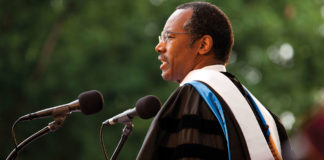
On the side of God and logic: An interview with Dr Ben Carson
Benjamin Solomon Carson is the famous American neurosurgeon who, in 1987, became the first to successfully separate twins conjoined at the head.

Rest and leisure: no one excuses distraction anymore
Nearly four millennia after the stone ratification of the law on weekly rest, the Universal Declaration of Human Rights (1948) reiterates the right of every person to rest and leisure.[1]
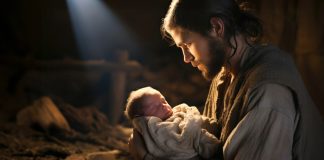
Becoming the father of the Son of God
In the history of salvation, few people have received a more unsettling calling than Joseph of Nazareth. After overcoming his initial hesitation, he made a series of decisions born of obedience. He remains a model of mature faith and authentic manhood.

Ice cemeteries: A market for resurrection, from metaphysics to physics
"Most of us now living have a chance for personal, physical immortality." This is the sentence French biologist and philosopher Jean Rostand (son of the writer Edmond de Rostand) used to begin the preface of a book on cryonics, The Prospect of Immortality, by the physics professor and science fiction writer Robert C. W. Ettinger.

A song of hope
Of the hundreds of carols composed and sung at Christmas, one has managed not only to survive for more than two centuries, but also to spread its message of hope to all corners of the world.
1,000 years later
Christianity is fundamentally built on the belief that the life and mission of Jesus Christ on earth were a continuation and fulfilment of God’s earlier revelation, known as the Old Testament.

The road forwards that actually goes backwards
I am visiting two sick people who share the same terminal illness. Their suffering is increased by the fact that they are brothers and that a mother’s broken heart lies at the core of it all. One of them is a businessman. The other, a servant of the altar. Their mother’s greatest frustration is that her wish to take some of the suffering...
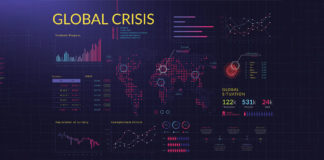
Breaking the crisis cycle
In 1991, authors William Strauss and Neil Howe published Generations, theorising that every 80 years (one generation cycle) would consist of four “turnings”. Beginning after a crisis, the first turning would involve a feeling of recovery, or “high”. The second would be a spiritual awakening, while the third would see the dissolution of institutions and the rise of individualism. And finally, a crisis...

Born in Bethlehem, adopted by Hollywood
Born of a virgin, brought up in humble conditions with phenomenal dignity, poor all throughout his life but desired as king by thousands, famous for healing the sick and raising the dead, the target of conspiracies of the highest officials, killed by crucifixion and resurrected after three days—Jesus Christ is at the centre of the most fabulous script ever to fall into the...
COVID-19: Crisis prayer and the crisis of our prayers
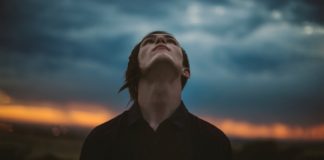
I was descending from Omu Peak, in the Bucegi Mountains, with a few dozen young people. It had not been an ideal hike, and we were behind schedule. The forest made the darkness even thicker as it began to cover the mountain, and slowly, our minds as well.

COVID-19: Rehearsal for the big surprise
There has been a lot of speculation in the online environment about COVID-19 and the end of the world, but the connection between the two is more subtle than it first appears. It has been suggested that the pandemic is only the tip of the iceberg, that it is one of the seven last plagues of Revelation, or that it is the fourth...
The teachings of John Calvin | Calvinism
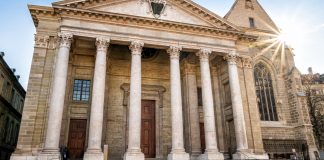
In 2017, on the occasion of the 500th anniversary of the Reformation, the French publication La Reforme conducted a survey to find out what people knew about two famous personalities of Protestantism: the German Luther and the Frenchman Calvin. To the amazement of the initiators, the study showed that Luther’s name was much more familiar to the French than that of their compatriot,...
The Edict of Milan
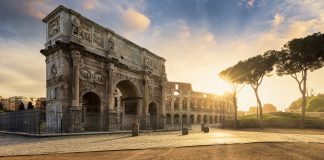
In Milan, in 313, Constantine participated in his sister’s wedding to Licinius, where he also signed the Edict of Milan. This decree, which officially recognised and legalised Christianity, marked the symbolic end of Diocletian’s era of persecution while defining Constantin’s religious policies.

Celebrating transformative faith
I don’t remember ever doubting that, beyond the limits of the ensnaring, visible world, there is another reality that can only be accessed by those who speak the language of faith.

How did Jesus view the Scriptures?
Jesus had the highest regard for the Scriptures. The Gospels show that He was familiar with the content of the Scriptures, which He saw as the final authority for establishing truth, rejecting temptation, and choosing the way forward in the present and the future.