














There is no hell
“You’re going to hell!” The words dripped with a violence, barely contained. “Repent of your wickedness,” a voice called again from the middle of a mob holding placards. I didn’t appreciate these words being directed at my wife and me.

The first Christmas gift-giver
In writing this article, I asked a handful of people what the worst thing they had ever received for Christmas was. The answers I received were interesting, to say the least.
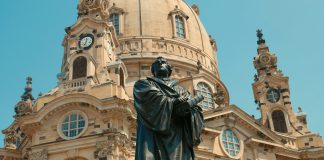
Martin Luther
Martin Luther is one of the most famous figures in history. Of those born in Germany, only Einstein, Bach, and Beethoven are more famous. He is better known than the father of Communism, Karl Marx, the literary genius, Johann Wolfgang von Goethe, the artist, Albrecht Dürer, and the inventor of the printing press, Johannes Gutenberg. [1]

The love that fills the moments | A day at work with God
There is a subtlety in the way God’s love changes our lives, especially on those days that seem ordinary. Amid the bustle of the modern world, it offers an inner peace that redefines the meaning of every gesture—from the way we work to the way we choose to stop.

Does prayer work?
As a book editor who works in a Christian publishing house, I know prayer works from a sales perspective. Books on the topic of prayer are consistently among our best sellers. It seems that many of our customers and readers—mostly people of faith, but including people who are interested but uncertain about faith—are keen to be reassured that prayer works and to find...

Puritanism in the Protestant Reformation
Less than 50 years after the supporters of Martin Luther’s ideas in Germany were mockingly called “Lutherans,” England was in its turn discovering a derogative nickname—“Puritans”—which it applied to a category of Christians who disturbed the ordinary life of the English church and society.[1]

Does God give signs?
In ancient Israel, the high priests wore a vest that had two stones on it called the Urim and Thummim. Whenever a question about God’s will was brought to the priest, he would ask God to give the answer. If the stone on the left glowed, it indicated divine approval. If the stone on the right glowed instead, it indicated God’s disapproval.
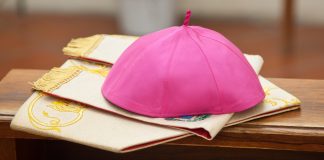
Gregory the Great: the first great medieval pope
Regarded as a saint and one of the six Western Fathers of the Church, Gregory the Great (590–604) is often considered the first great pope. He was the first monk to become pope, and is considered one of the most important. He is also known for sending diplomats (missionaries) who persuaded kings to fight against the pagans and heretics of the West.

Case closed…32 years later
"Even if you're imprisoned for life, that's still a short time. After that, Jesus will come back. All you have to do is try to make the best of the situation you're in' (Lindy Chamberlain).

Brethren Assemblies | The history of the Brethren
The history of Brethren Assemblies begins in the 19th century, when groups of British believers began to be dissatisfied with the Anglican Church, which they saw as enslaved to the state and which they considered to be abandoning the fundamental principles of Christianity.

The Second Coming Files: A 2000-Year Investigation | Part VII: Adventism After the Great Disappointment
At the end of a journey tracing how the belief and hope in the Second Coming of Jesus have manifested themselves in the two-thousand-year history of Christianity, the final part of The Second Coming Files presents the remaining elements that link that history to the present day: the Millerite movement and Adventism.

Why we shouldn’t neglect the mealtime prayer
It could be a perfunctory ritual, passed down through generations; a mechanically recited poem. But equally, the mealtime prayer can be a genuine spiritual exercise.

How to grow together with God
We’d been married only a few weeks when we discovered that growing our spirituality as a couple was going to be much more complicated than the instructions on the packet suggested.
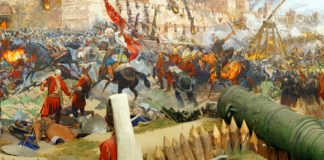
Fighting over the West: Orthodoxy, Protestant Reformation, and Catholicism
At the beginning of the 15th century, the threat of the Ottoman Empire to Eastern Europe was a painful certainty. The last Byzantines, aware of the ensuing disaster, called on Western aid, seeking political union with the Roman Catholic Church.

Jesus and the Goddess of Reason | Thomas Paine and the trap of contemporary deism
"I believe in one God, and no more; and I hope for happiness beyond this life." This is how one of the most famous leaders of the American Revolution and an influential political writer of the late 18th century-Thomas Paine (1737-1809)-begins his testimony of faith. A few lines later in the same book, The Age of Reason, after vehemently rejecting the creed of...