



Why I believe in God
If I could turn back time and return to my friend’s living room that day, when she was telling me with tears in her eyes that she wished she could believe, that she tries but is not able, I would probably find more appropriate words than I did then.
“He wrote our story”—but not in the way they had hoped
Their third wedding anniversary was just around the corner, but doctors had given Magda, belatedly diagnosed with Ewing's sarcoma, a malignant bone tumour, no chance of recovery. Yet her husband Daniel continued to believe that God still had the last word.

The inexhaustible Jesus
I am captivated and deeply impressed by Jesus's perspective on life and the world. He did not seek popularity, did not pursue power, and did not promote revolution. He did not rely on strategies and did not do politics. He did not come to criticize, He did not build His authority on the backs of other people's weaknesses, and He did not come...
Our inevitable failures
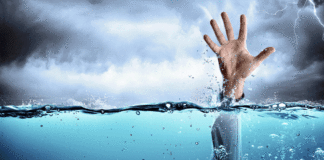
Economic capitalism has a psychological twin, one that is not as bold and brash as its profit-obsessed counterpart, but if we look into the subtle details of our interior universe we find it hidden there.
The ties of love
“Truly I tell you, if you have faith as small as a mustard seed, you can say to this mountain, ‘Move from here to there,’ and it will move. Nothing will be impossible for you” (Matthew 17:20).
I wish I had known that there was a divine plan for me
At the age of 20, I graduated from the Orthodox Theological Seminary. I thought I was talented, I was confident, and I had a very clear idea of the path I wanted to take in life. I had all the answers. Or perhaps I hadn't asked myself enough questions.
The noble torment of forgiveness
We know that authentic forgiveness is Christian and desirable. And we also know it feels good to receive genuine forgiveness. But does God ask us to forgive under all circumstances? We often try to discover the answer to such uncomfortable questions about God by looking at those who say they know Him. And, sometimes, we have something to gain by doing so.

COVID-19: Recurrent revelations
Any large-scale phenomenon, such as a pandemic, activates our instinct to preserve our state of being—especially when we feel like we are losing it.
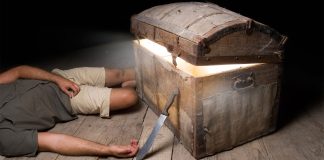
The surprise of this very night
''The ground of a certain rich man yielded an abundant harvest. He thought to himself, ‘What shall I do? I have no place to store my crops.’ Then he said, ‘This is what I’ll do. I will tear down my barns and build bigger ones, and there I will store my surplus grain. And I’ll say to myself, 'You have plenty of grain...
To be or to become? That is the question
“The Christ of Nicea is obviously a far cry from the historical Jesus of Nazareth, an itinerant apocalyptic preacher in the backwaters of rural Galilee, who offended the authorities and was unceremoniously crucified for crimes against the state. Whatever he may have been in real life, Jesus had now become fully God.”
We are more than we can easily explain
Suppose I leave the window open then leave home. A stack of banknotes can be seen on the table through the open window. An individual walking down the street notices the opportunity, thinks for a while, but decides to move on. Why would a man who has the opportunity to steal decide not to?
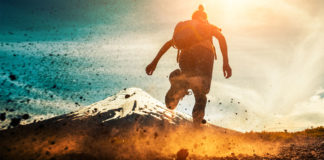
The goal that appears when you reach it
I like to look back. When I am climbing a mountain, it is an excuse to rest. But I also do it for another reason—to see how far I have climbed.
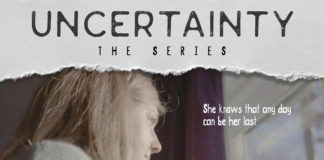
“Uncertainty: the series.” First episode of the international documentary online today
Live every day like it is your our last! Many use these phrase as a prop for their riskiest decision, or simply to justify a recklessly extravagant lifestyle. But what would our lives look like if we were to really live each day fully aware that it might be our last?
Biography of a dilemma
"If anyone, then, knows the good they ought to do and doesn’t do it, it is sin for them" (James 4:17).
COVID-19: Crisis prayer
A major crisis pushes us to re-evaluate the way we see and do things in the fields of health, finance, and social interaction. But how does this crisis affect our religious practices—especially the most common of these, prayer?