












The accuracy of biblical manuscripts
What guarantees do we have that the texts from which modern translations of the Bible were made reflect the original?

“You can beat this!” | Milestones on the road from fear to success
He was born in 1935 in Narvik, Norway, beyond the Arctic Circle, at a time when the clouds of war were gathering. In 1940, in the space of a few months, Narvik was controlled by Germany, conquered by the Allies, and then left to the Germans.

What the “miracle of the resurrection” means to Christians
"We cry out to the dry bones, 'Come alive! Come to life!' / We cry out to the dead hearts: 'Rise up! Come to life! Let us see an army rise from the ashes'". The song from which I extracted these verses is so rich in literary devices that, probably, if we randomly chose a person and had them listen to it, they...

Friedrich Nietzsche, Christianity, and Jesus of Nazareth
“I condemn Christianity; I bring against the Christian church the most terrible of all the accusations that an accuser has ever had in his mouth... The Christian church has left nothing untouched by its depravity; it has turned every value into worthlessness, and every truth into a lie, and every integrity into baseness of soul... the cross as the distinguishing mark of the...

Shutters down all over Europe: life in the time of the new coronavirus
These days we all need to hear good news—that life will soon return to normal and that we will be able to return to the troubles of yesterday, which now seem small to us. In the meantime, our lifestyle has seen changes that we could not have imagined just a few weeks ago.

Is Jesus Christ the only Saviour of the world?
How can salvation be real and certain only through Jesus Christ when countless people have never even heard His name? If billions of people have no knowledge of Him, isn’t the role of Jesus Christ as the Saviour of the world exaggerated? And are there no other ways of salvation besides Him?

Steps towards a transforming prayer life
Whenever we acknowledge that our prayers have become a boring exercise rather than a real conversation with a real person, it’s time to explore creative, tried and tested methods to rebuild a meaningful, enthusiastic and transforming prayer life.

Into the wilderness with God
This year marks the 58th anniversary of Time magazine's controversial cover question: Is God Dead?

The last days of Jesus in Bible prophecy
The story of Jesus's first coming to earth is remarkable, not only because it was foretold thousands of years in advance, but also because the prophesied details of His passion and death were exactly fulfilled.

Divergence and confluence
My daughter recently posted on our family website a photo of our niece celebrating while holding a beautiful fresh rose, tall and slim, just like her. I looked at the photo for a long time then wrote under it: "Two vines." I pondered some more then wrote, "One of these vines knows why it is here on Earth, but I wonder if the...

Jesus: Where two worlds meet
Un hombre pasa con un pan al hombro.../Otro busca en el fango huesos, cáscaras/¿Cómo escribir después del infinito?

Understanding suffering better
"And we know that in all things God works for the good of those who love Him" (Romans 8:28).
Jesus: a detailed portrait | A review of The Desire of Ages by Ellen G. White
During her lifetime, the Christian author Ellen White published over 5,000 articles and 40 books. Today, over 100 titles comprising the author’s 50,000 manuscript pages are available in English.
The courage to believe
Who was Jesus really? While His historical existence is no longer questioned, many people believe that He was at best an exceptional personality of His time, a reformer whom His disciples later transformed into a deity. Why is neo-atheism concerned with promoting such a Jesus, and why is He nothing more than a new form of doubt?
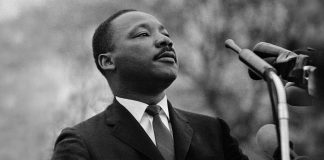
Martin Luther King, Jr. | What have we to do with heroes?
On August 28, 2011, when the Martin Luther King, Jr. Memorial was opened to the public in Washington D.C., 48 years had passed since the famous “I have a dream” speech by the young African-American Baptist pastor.