












The man who opened the windows of heaven
"Who were the two artists of ancient times who competed to see who could paint the visible world most faithfully? 'Now I shall prove to you that I am the best,' said the first, showing the other a curtain which he had painted. 'Well, draw back the curtain,' said the adversary, 'and let us see the picture.' 'The curtain is the picture,' replied...

The written revelation
Why did God choose to reveal Himself through a sacred text? Were there no other ways? Does God still inspire scriptures today?

Ice cemeteries: A market for resurrection, from metaphysics to physics
"Most of us now living have a chance for personal, physical immortality." This is the sentence French biologist and philosopher Jean Rostand (son of the writer Edmond de Rostand) used to begin the preface of a book on cryonics, The Prospect of Immortality, by the physics professor and science fiction writer Robert C. W. Ettinger.

Knowledge sharing in Christian communities
Whether we are cooking, repairing things, or solving life's problems, we are always learning from each other. However, when it comes to certain areas, including church life, the interchange of experiences is lacking. Communities often keep their ideas, and especially their mistakes, to themselves. Can we rediscover the deeply biblical nature of knowledge sharing?

The meaning you find on your way back
In Western tradition, starting with Thales of Miletus, philosophers have always sought answers to questions that transcend the material, tangible world. One of the most burning questions that has lasted for centuries and has troubled many enlightened minds is the dilemma of the meaning of life.
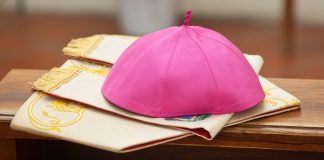
Gregory the Great: the first great medieval pope
Regarded as a saint and one of the six Western Fathers of the Church, Gregory the Great (590–604) is often considered the first great pope. He was the first monk to become pope, and is considered one of the most important. He is also known for sending diplomats (missionaries) who persuaded kings to fight against the pagans and heretics of the West.

How to find hope in grief
In grief, acceptance and rebellion intertwine, and meaning emerges from tears, faith, and the hope that death does not have the last word.

On the side of God and logic
Benjamin Solomon Carson is the famous American neurosurgeon who was the first to successfully separate conjoined twins in 1987.

“Teach us to pray!”
Many people know the Lord’s Prayer, having learned it from a parent or grandparent. But few know that it was given as a response to the disciples’ request for Jesus to teach them how to pray.

Understanding suffering better
"And we know that in all things God works for the good of those who love Him" (Romans 8:28).

Love does not give up
We love people for who they are. But there is a kind of love that is too high for us to truly comprehend in all its nuances, a love that manifests itself towards people no matter who they are or what they become. We find a love such as this in the beautiful story of Ian and Larissa.
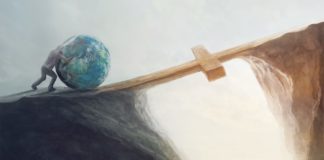
COVID-19: Could giving up ever be the key to success?
Pray! If not to God, then to a god. Admit that we are defeated, because this is the first step towards victory.

In search of the real Jesus
The tempest in our teacup, the controversy over religious education, has stirred up anger and debate not only about the fairness of filling in a form, but also about the role and purpose of religion in children's lives.
COVID-19: The pandemic that transforms us into different people
In Europe, one in twenty people suffer from depression, and one in four will experience depression during their lifetime. In the United States, major depressive disorder affects about five percent of the population.
Gold medal for fourth place
The Parable of the Sower appears to be the key to understanding all the other parables told by Jesus. It is neither mysterious nor cryptic; it simply provides a starting point. The apostles and all those who read the parable today are asked by Jesus Christ: "Don't you understand this parable? How then will you understand any parable?" (Mark 4:13). The logical conclusion...