











Change and stability in religion
Professor Bailey V. Gillespie, from La Sierra University's Department of Theology and Christian Character in California, impressed me with both the diversity of his interests and his prestigious achievements, particularly in the field of young people's religious experience.

Patience and resilience
When I think of patience and resilience, many inspiring life stories and names come to mind. Among them, one shines with particular intensity: Anne Frank.
COVID-19: Crisis prayer and the crisis of our prayers
I was descending from Omu Peak, in the Bucegi Mountains, with a few dozen young people. It had not been an ideal hike, and we were behind schedule. The forest made the darkness even thicker as it began to cover the mountain, and slowly, our minds as well.
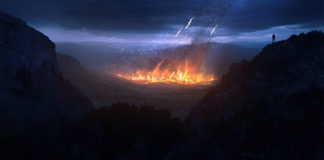
The end of the world according to Christianity
The idea of the end of the world refers to the end of the social order and humanity; the end of the planet as we know it. But according to the Bible, these will not all come at once.
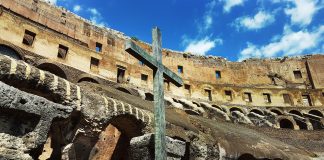
The great persecution
A movement so alive and distinct from the imperial cults, as Christianity was, could not fail to attract the attention of temple servants, intellectuals, and officials.
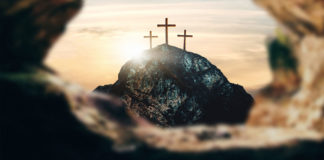
Suffering evil and loving your enemies
The greatest Teacher I have ever known is Jesus Christ, and one of His most profound teachings is 'Love your enemies'.
The stories that restore our future
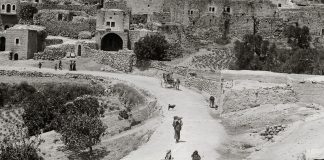
Among the words of Jesus, I was first fascinated by His surprising and enigmatic counter-questions, which generated real clashes among his tempters. In the face of the questions that were supposed to leave Him speechless, He always had a more comprehensive vision, from the perspective of which the traps were reduced to ridiculous, absurd obstacles.
Created with a need for rest
Work has been part of God's plan for mankind since creation, but so has rest. Setting wise boundaries between work and rest is not only a successful strategy for maintaining our productivity, it also reflects on the health of our relationship with God and our fellow people.
Pope Francis: What remains after his pontificate?
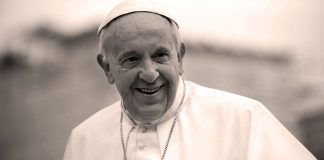
"Christ is risen! These words capture the whole meaning of our existence, for we were not made for death but for life". This was the message that Pope Francis gave to the faithful gathered in St Peter's Square on Easter Sunday, just one day before his death. It was a message of hope, but also a summary that reflected familiar themes of his...

Henry’s domino effect
In his desire to secure an heir to the throne, Henry VIII set off a domino effect that would ultimately change the face of America and the world.

COVID-19: A world beyond all human tragedies
Should we be optimistic or pessimistic about our future? This is a question even specialists are concerned with, and it cannot be answered easily. It is difficult to predict what the future holds.

What the “miracle of the resurrection” means to Christians
"We cry out to the dry bones, 'Come alive! Come to life!' / We cry out to the dead hearts: 'Rise up! Come to life! Let us see an army rise from the ashes'". The song from which I extracted these verses is so rich in literary devices that, probably, if we randomly chose a person and had them listen to it, they...

The break between the Old and New Testament and the dilemma of the unchanging God
My first Bible was given to me by Pastor Damian Zamfir in the winter of 1972. Pastor Zamfir, the man who led my first steps on the path to Christ, invited me to visit him in the parish house of the Adventist church on Rodnei Street in Targoviste.

The hopeless generation
I talked to Pastor Nicu Butoi about the role that religion could play in treating depression and hopelessness, at the end of a series of evangelistic presentations he gave to a full-house before the pandemic.