














The faith in our hearts
When I read “The Pitesti Phenomenon”, in my teens, I was bewildered by how cruel human nature can be. It was also then that I realized that being forced to renounce yourself, to bury your values and defining beliefs to become the reflection of a rotten system, to become inhuman is worse than being physically tortured.
Life in the vicinity of death
One night while checking on his patients in a palliative care centre, the therapist risked asking a confusing question to a person whose universe had shrunk to the size of his sickbed: “What brought you joy today?” The answer was immediate: “Being alive.”
God also has a mother’s heart
Some Christians venerate the Virgin Mary, multiplying her attributes and exaggerating her qualities to the point of deification. Other Christians go to the opposite extreme and trivialise Mary's personality and contribution, barely recognising her basic qualities.

An unexpected return, the premise for missing the meeting with Christ
How important is the second coming of Jesus Christ in traditional Christianity?
The teachings of John Calvin | Calvinism
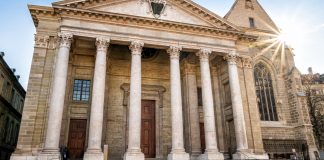
In 2017, on the occasion of the 500th anniversary of the Reformation, the French publication La Reforme conducted a survey to find out what people knew about two famous personalities of Protestantism: the German Luther and the Frenchman Calvin. To the amazement of the initiators, the study showed that Luther’s name was much more familiar to the French than that of their compatriot,...

“The woman with the book” | The weakness that unleashes the power of God
God uses the traits we dislike as well as our weaknesses to create something great, beyond our abilities and imagination. This is the message that pervades the pages of "The Woman with the Book", the biography of the missionary Gladys Aylward.

Deal with the devil
Among the many perplexing phenomena the internet offers, recent public statements by certain American artists stand out. These individuals, popular in various circles, openly admit to having made a deal with the devil—selling their souls and becoming his servants in exchange for career success, wealth, and fame.

Incognito faith and the failures of political correctness
John the Baptist's call—"Repent, for the kingdom of heaven has come near"—succeeded in bringing Jews "from Jerusalem and all Judea and the whole region of the Jordan" to the desert where the prophet preached, to confess their sins and be baptised. Two thousand years later, the exhortation to "repent" is buried under a mountain of pejorative associations.

What is prayer?
God reveals Himself through the Bible, the person of Jesus Christ, nature, and our conscience. Prayer is not revelatory. If it is neither revelatory for humans nor for God, what is prayer then?

Zechariah: From disbelief to praise
When prayers go unanswered, faith can turn to disbelief and hope to scepticism. On the other hand, God can intervene at unexpected moments, providing unexpected answers, as happened in Zechariah's life.

A tsunami put under a microscope
In 2004, we experienced firsthand one of the most devastating tsunamis of our century. It was early morning, on Boxing Day.

The dechristianisation of France | A history of failure
Thousands of street names changed because they referred to Christian saints, Catholic priests forced to marry, Jesus Christ described as a revolutionary—these are some of the stupefying details of the French Revolution.
Miracles or superstition? | An a posteriori response to the anti-supernaturalist assumption
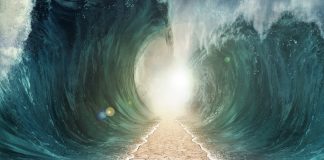
Up until the Enlightenment, the idea that the miracles recorded in the pages of the Bible happened as the biblical writers described them was widely accepted. With the rationalism of the seventeenth and eighteenth centuries, an alternative theory emerged: that miracles were not possible in naturalistic metaphysics.

Rest and leisure: no one excuses distraction anymore
Nearly four millennia after the stone ratification of the law on weekly rest, the Universal Declaration of Human Rights (1948) reiterates the right of every person to rest and leisure.[1]

COVID-19: What if we received bad news in a void?
What if there was no good news to give us confidence that we could get through the troubles facing us now? What if there was no good news to assure us that we are cherished, loved and supported, that we are not alone?