














What is the purpose of my life on Earth?
The unverified stories of children dying, due to severe emotional and sensorial deprivation, despite being fed and medically cared for, spread the theory that one can die because of lack of love, although being well taken care of. However, if we look more closely at the historical and personal human experience, we find that it is not necessarily the lack of love that...

What did Jesus believe about Creation?
Perhaps the greatest mystery for Christians is the incarnation of God, described in the words of the apostle John, an eyewitness to the life of Jesus: "The Word became flesh and made his dwelling among us. We have seen His glory, the glory of the only Son, who came from the Father, full of grace and truth" (John 1:14).

How did Jesus view the Scriptures?
Jesus had the highest regard for the Scriptures. The Gospels show that He was familiar with the content of the Scriptures, which He saw as the final authority for establishing truth, rejecting temptation, and choosing the way forward in the present and the future.

What did Jesus believe about hell?
In Dante Aligheri's Divine Comedy, written in the early 14th century, hell is described as a "city of woe" and a place of "eternal pain"—metaphors of endless suffering.
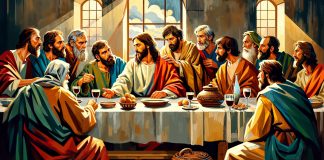
Paul’s savage class critique in 1 Corinthians
If you’ve ever been to a Christian church, there’s a good chance that you’ll have experienced a unique ritual involving bread and grape juice: the Lord’s Supper, or as we’ll refer to it, Communion. Depending on the denomination, your experience may vary wildly. You may be offered a cup that everyone collectively sips out of, accompanied by a piece of bread. Others will...


The allure of uncertainty
On June 23, 1863, in France, a book was published that would become the literary sensation of the century. Few could have foreseen the impact it would make. This was not a romance novel, thriller, or self-help guide; it was Vie de Jésus (The Life of Jesus) by Ernest Renan. In less than four months, over 60,000 copies were circulating—a record-breaking success in...
The One Who emptied Himself
Some moments in life fade quickly, like ephemeral portraits in the memory's archive. Others, though we have never witnessed them, haunt us and force us to reconsider our perception of life, time, and our shadow self.

My journey to Bethlehem
They say that "all roads lead to Rome". This famous saying originated in ancient times with the extensive network of roads built by the Romans to facilitate communication and travel throughout their empire.

Actors in a divine plan
At the appointed time in the plan of salvation, Christ was sent to us: "When the set time had fully come, God sent His Son, born of a woman, born under the law..." (Galatians 4:4).

God’s sacrifice and our own
For those who accept the biblical account of Jesus's life as true, the most important thing is deciding how to respond to the Savior’s act of offering His life. What does it mean to accept Jesus's sacrifice? How does it apply to us? How does it become part of our lives?

The origins of the doctrine of incarnation
Jesus of Nazareth feels, thinks, desires, and acts identically with the eternal Logos, but under the conditions, with the possibilities, and within the limitations of the earthly life that He has fully assumed, with all humility and responsibility.

Mary’s journey: from inner turmoil to unshakeable trust
Mary was an ordinary person, just like us. The Gospel does not suggest that she had any particular merit, yet her obedience played a pivotal role in a story that would change the world.
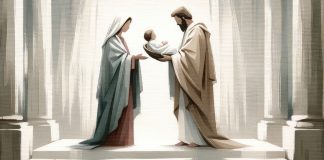
Simeon and Anna: From waiting to fulfilment
Some expectations dissolve into routine or turn into despair, while others invigorate life. The former are measured in deeds and desires, while the latter are measured in faithfulness and beliefs.

Does life have meaning, or not?
When I ponder the statement, “Life holds potential meaning under any condition, even the most miserable,” the story of an anonymous woman comes to my mind. She made a deep impression on me and taught me about two existential states: having, and being.