














Is sugar the most dangerous drug?
While few people can remember the details of their first hit, everyone can identify with the rush of satisfaction, the tingling delight that starts on the tip of your tongue and then courses through your entire body.
The risks of mRNA vaccines in the COVID-19 era: How we know they don’t alter our DNA
Risks of mRNA vaccines in the COVID-19 era: How we know they don't alter our DNA.
Gravitational waves and the inflation of certainty
On 17 March 2014, the science and technology blog of the prestigious newspaper The New Yorker announced, "A scientific breakthrough lets us see to the beginning of time". Lawrence M. Krauss, renowned physicist and author of "A Universe From Nothing: Why There is Something Rather than Nothing", commented in his article on the news that went around the world, heralding a landmark moment...
Non-functional DNA: the playground of evolution?
It is commonly assumed that at least 96% of the genome of a multicellular organism has no functional role. A junk-dominated genome is the ideal place for evolution to randomly explore new functions and characteristics of the species. After all, who would ever think that a wise and all-knowing Creator would use 96% informational junk to define a human being or a mollusc?

The greed for knowledge
If science were a religion, how violent would it be compared with Christianity?
Future technology and current concerns
"[B]ut test them all; hold on to what is good" (1 Thessalonians 5:21).

What does the Bible say about climate change?
During the COVID-19 lockdown last year, I lived with some messy people. I’d moved into a house that I shared with a wonderful couple of brothers. They were almost everything you could ask for in a set of housemates. Friendly, funny, respectful of your privacy . . . genuinely great people in almost every respect.

God and the onion test
Humans have only a fifth of the genetic material of an onion, and slightly more DNA than a mouse. Why would the Creator of life use five times more genetic information for an onion than for a human? And why would He create humans to be only slightly more genetically complex than mice? Aren't long and aimless evolutionary processes a better explanation for...
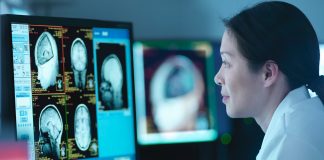
A new theory of evolution—or several complementary theories?
"Strange as it sounds, scientists still do not know the answers to some of the most basic questions about how life on Earth evolved. Take eyes, for instance. Where do they come from, exactly?" These are the words with which an extensive article published by The Guardian in June 2022 begins.

COVID-19: Should we care about the environment in the midst of an economic crisis?
Our planet may be fittingly compared to the 1994 film, Speed: A bomb is planted on a bus and rigged to explode when the bus slows to less than 80 kilometres per hour. The bus barrels through Los Angeles, hitting obstacles and endangering the lives of passengers and pedestrians until a solution is found.

Memories that shape the future
Out of the endless series of events we experience, some we remember, and others we do not. Some often come to mind and we relish recounting them, while others we wouldn’t reveal for anything in the world.

Antibiotics: Blind optimism is dangerous
The increased frequency with which doctors are encountering antibiotic-resistant bacteria is worrying. And it could affect an already precarious medical field—cancer treatment.

Hope, a legacy of another world
Hope can be palpable and elusive at the same time, both reasonable and independent of logic. Yet this independence from logic is not synonymous with indifference to reason, but a victory over it. Hope has its own logic, one that changes lives for the better.

Evolution before our very eyes | Part 1
Bacteria are becoming increasingly resistant to antibiotics; some butterflies and fish are developing new colours for better camouflage; and a series of laboratory experiments have revealed small but significant changes in various microorganisms. Are these phenomena conclusive evidence of evolution unfolding before our eyes?
A lesson in natural sciences
The red horizons are shattered. But much more subtle dangers loom for the present and the future. In most Christian countries, theology has declared a truce with evolutionary atheology and has devised a foolish and deadly compromise that is neither atheism nor true Christianity.