










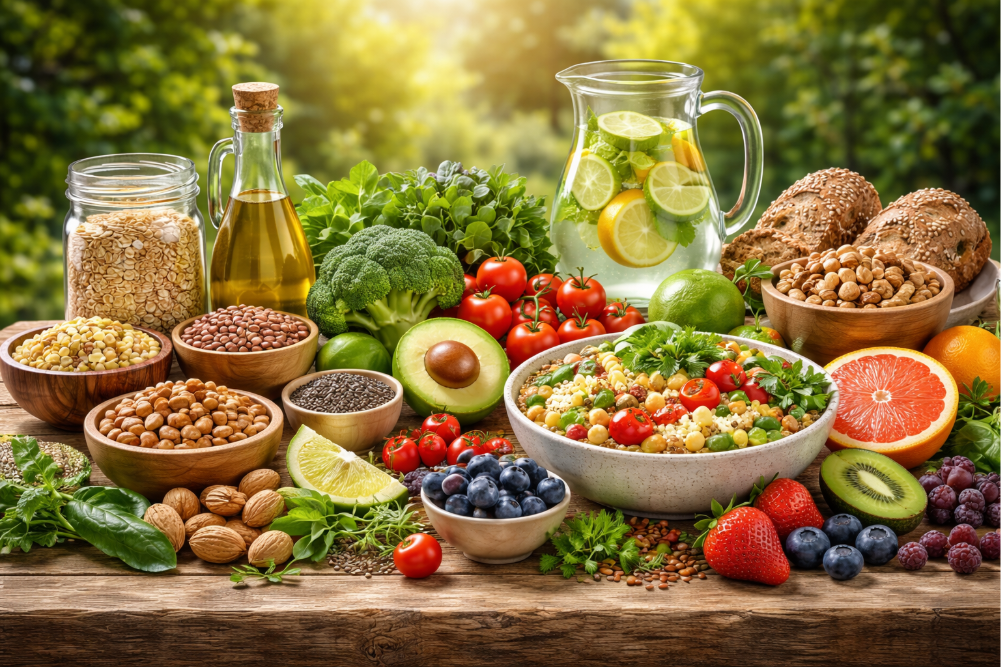
The importance of proper nutrition is often underestimated. The nutrients in food provide energy, contribute to tissue growth and repair, and regulate physiological processes. Nutritional needs vary depending on age and physical condition.
Nutrients are classified as either macronutrients or micronutrients. Macronutrients, which are required in large quantities, include carbohydrates, proteins, and fats. The body’s primary sources of energy, these nutrients provide 9 kcal/g for fats, and 4 kcal/g each for proteins and carbohydrates. Although water is essential and required in large quantities, it contains no calories, unlike other macronutrients.
Macronutrients
Carbohydrates are the body’s primary fuel and are essential for the brain, while also being involved in tissue structure and the immune system. Simple carbohydrates consist of one or two basic units. Sugars either occur naturally in foods or are added during processing or at the table. Natural sugars are found in fruits, fruit juices, vegetables, and milk. Added sugars are found in processed foods such as baked goods, confectionery, sweets, and chocolate, as well as in sweetened beverages such as fizzy drinks. Complex carbohydrates are made up of long chains of simple sugars and break down into those simple sugars—mainly glucose—during digestion, which then fuels the cells. Sources of complex carbohydrates include grains such as wheat, oats, corn, and rice, as well as starchy vegetables such as potatoes, dried beans, peas, and lentils.
Replacing refined grains with whole grains has been proven to reduce the risk of obesity, type 2 diabetes, and cardiovascular disease. Whole grains are an excellent dietary source of fibre, vitamins, minerals, healthy fats, and many other beneficial compounds that contribute to their health benefits. It is recommended that 45% to 65% of the total daily calorie intake should come from carbohydrates. For a 2,000-calorie diet, this equates to 225–325 g of carbohydrates per day. The World Health Organization (WHO) recommends that less than 10% of total energy intake should come from simple sugars, equivalent to 50 g for someone of normal body weight consuming around 2,000 kcal per day. Ideally, to achieve additional health benefits, simple sugar intake should be less than 5% (25 g) of total energy intake.
Fats are an essential component of a healthy diet. They play a role in energy storage, forming cell membranes, brain development (by facilitating communication between nerve cells and supporting brain function), producing sex hormones and leptin (the hormone responsible for the feeling of fullness), and transporting vitamins A, D, E, and K around the body. In fact, 60% of the brain is composed of fat and our bodies are up to 30% fat, which protects our organs and insulates us from temperature changes.
The best-known type of fat is cholesterol, which has important functions in the body such as forming cell membranes and brain tissue and synthesising vitamin D and certain hormones. However, it is best known for its harmful role in forming atherosclerotic plaques, which narrow the arteries and cause cardiovascular disease. The body receives only a small amount of cholesterol from food; most of it is produced internally. There are two types of cholesterol: LDL (“bad” cholesterol) and HDL (“good” cholesterol). Total blood cholesterol levels should be kept below 200 mg/dL, LDL cholesterol levels below 130 mg/dL (for people with certain medical conditions, the recommended level may be as low as 55 mg/dL), and HDL cholesterol levels should be above 40 mg/dL for men and 50 mg/dL for women.
Triglycerides are the most common form in which fats are stored and are the main component of vegetable oils and animal fats. Blood triglyceride levels should be kept below 150 mg/dL.
Fats can be divided into three categories: saturated, monounsaturated, or polyunsaturated. Saturated fats tend to be solid at room temperature and come mainly from animal sources (with the exceptions of palm oil and coconut oil). They contribute to elevated LDL cholesterol levels, which are a precursor to cardiovascular disease. Monounsaturated fats are liquid at room temperature, lower LDL cholesterol levels and raise HDL cholesterol levels. Sources include olive, sesame, sunflower, and canola oils, as well as avocados, walnuts, peanuts, almonds, cashews, and pecans. An increased intake of monounsaturated fats is recommended.
Certain polyunsaturated fatty acids in the diet are essential because the body cannot produce them: omega-3 and omega-6. Sources of omega-6 include eggs, poultry, most vegetable oils, wheat germ oil, whole grains, and flax, sunflower, and sesame seeds. Sources of omega-3 include flaxseed, canola, soybean, and fish oils, as well as nuts, whole grains, legumes, and leafy green vegetables. However, modern diets often contain excessive amounts of omega-6 compared to omega-3, which can lead to conditions such as arthritis, allergies, diabetes, high blood pressure, and inflammation. Therefore, it is important to maintain an appropriate balance of omega-6 and omega-3 fatty acids (between 1:1 and 1:4) to support optimal health. Soybean and canola oils have the best ratio of these two essential fatty acids.
Trans fatty acids are a special type of fatty acid, also known as hydrogenated and partially hydrogenated fats. They occur naturally in small quantities in certain foods, but are widely produced by the food industry to create fats with superior qualities, such as preventing rancidity, reducing smoke during frying, and providing a crisp texture to foods. However, consuming large amounts of trans fats has been linked to tissue inflammation, increased insulin resistance, weight gain, and digestive disorders. The process of hydrogenation destroys omega-3 and omega-6 fatty acids and raises LDL cholesterol levels while lowering HDL cholesterol levels in the blood. Read product labels to identify foods high in hydrogenated fats, and avoid consuming these, as well as commercial baked goods, biscuits, margarine, crisps, sweets, and frozen foods. For every 2% excess of daily calories from trans fats—that is, roughly the amount in a medium serving of French fries—the risk of coronary heart disease increases by 23%.
The WHO recommends that fat should account for no more than 30% of total energy intake. Saturated fat intake should be less than 10%, and trans fat intake should be less than 1% of total energy intake. It is recommended that saturated and trans fats be replaced with unsaturated fats.
Proteins are macromolecules composed of chains of subunits called amino acids. It is estimated that there are over 100,000 different proteins in the human body. They provide 4 kcal/g of energy and play other roles, such as supplying the components necessary for cell reproduction and gene formation (DNA and RNA), forming a major part of muscles, tendons, and bones, controlling chemical reactions in the body as enzymes, regulating and balancing bodily functions as hormones, and defending against infections as antibodies.
There are 20 different amino acids, and their combination produces all the proteins in the body. Eleven of these are called non-essential amino acids because the body can synthesise them, while the other nine are called essential amino acids because they must be obtained from food. Foods containing all nine essential amino acids are known as complete protein sources and include milk, cheese, eggs, fish, meat, soy, and quinoa. Most plant-based foods lack at least one essential amino acid and are therefore incomplete protein sources. However, when consumed together, these foods contain all essential amino acids in adequate amounts—for example, legumes with whole grains, or nuts and seeds with whole grains.
The recommended daily intake of protein is 10–14% of total energy intake. In developed countries, excessive protein consumption is common, which can be harmful to health and cause kidney stones, kidney disease, liver dysfunction, colorectal cancer, and osteoporosis. High-protein diets may also restrict the intake of other essential nutrients, such as certain vitamins and minerals. Different protein sources contain different additional components, so it is important to consider the full nutritional profile. Although animal-based foods typically contain high amounts of vitamins B and E, iron, magnesium, and zinc, they also contain unhealthy amounts of saturated fat. When choosing your protein sources for good health, consider the proportion of other nutrients and non-nutrients, such as artificial colourings and preservatives.
Water is another nutrient that must be consumed in large quantities. Going without water for a few days is lethal. Without water, nothing could be transported in or out of the body, chemical reactions would not occur, organs would not be cushioned, and body temperature would fluctuate wildly. More than 60% of total body weight is water. Approximately 10 litres of water are exchanged between the body’s organs in a single day. Water is lost through exhalation (approximately 400 ml), perspiration (500 ml), urine (1,500 ml), and faeces (100 ml). To compensate for these losses, an adult should drink an average of 2.2–3 litres (9–12 cups) daily, with variations depending on climate, age, and level of physical activity. Inadequate water intake leads to dehydration, causing headaches, dry eyes, irritability, drowsiness, and muscle cramps.
Micronutrients
Micronutrients are needed by the body in smaller amounts, but are essential for various bodily functions. These include all 13 vitamins and 16 essential minerals. They do not release energy themselves, but assist in the energy production process as cofactors or components of enzymes. Enzymes are proteins that catalyse chemical reactions in the body and are involved in all bodily functions, including energy production, nutrient digestion, and macromolecule formation.
Vitamins are necessary for performing multiple functions in the body, and deficiencies can lead to serious health problems and even death. Vitamin A can be found in liver, fish, eggs, carrots, pumpkins, turnips, tomatoes, and peas. It helps the immune system fight infections, supports vision in low light, and maintains healthy skin. B vitamins are found in meat, eggs, dairy products, legumes, seeds, nuts, and whole grains. They are important for brain health, the release of energy from food, and the formation of red blood cells. Vitamin C is found in all fruits and vegetables, particularly green peppers, citrus fruits, strawberries, tomatoes, broccoli, leafy greens, potatoes, and cantaloupe melon. It plays a role in protecting and maintaining cell health and aids wound healing. Vitamin D is found in fish and fortified foods, but is primarily produced by the body when a compound in the skin is converted upon exposure to sunlight. It helps regulate the levels of calcium and phosphate in the body, which are important for bone, tooth, and muscle health. Vitamin E is an antioxidant which repairs damaged cells, maintains skin and eye health, and strengthens the immune system. Sources of vitamin E include almonds, sunflower seeds, peanuts, hazelnuts, and corn oil. Vitamin K is important for bone health and blood clotting, and can be obtained from cabbage, spinach, peas, grains, and soybeans.
Minerals are solid inorganic substances that are essential for the body to function properly. Some minerals, such as sodium, potassium, chlorine, calcium, phosphorus, magnesium, and sulphur, are needed in quantities of hundreds of milligrams. Others, such as molybdenum, selenium, zinc, iron, and iodine, are needed in quantities of only a few milligrams or less. Calcium is important for building bones and teeth, as well as for blood clotting, muscle contraction and relaxation, and the functioning of the heart and nervous system. Sources of calcium include dairy products, leafy green vegetables, broccoli, cabbage, beans, peas, and lentils. Magnesium, which is necessary for muscle contraction, nerve impulse transmission, and normal immune system function, can be found in meat, fish, eggs, milk, grains, lentils, almonds, and peanuts. Sodium is involved in nerve transmission, muscle contraction, and fluid balance in the body. According to the WHO, dietary salt intake should be reduced to 5 g per day. Iron aids energy production and is an essential component of red blood cells and muscle contraction. Sources of iron include meat, fish, shellfish, eggs, legumes, dried fruits, dark leafy greens, and whole grains. Iodine is found in thyroid hormones and helps to regulate growth, development, and metabolism. We consume iodine from iodised salt, seaweed, and dairy products.
Phytochemicals are bioactive compounds produced by plants for protection. Over 1,000 such substances derived from plant sources have been discovered. They have antioxidant, antimicrobial, antidiarrheal, anthelmintic, antiallergic, antispasmodic, and antiviral effects. They also help to regulate gene transcription, boost immunity, and offer protection against cancer. Free radicals, which are generated by exposure to radiation and air pollutants and as by-products of drug metabolism, have harmful effects on the body, such as destroying lipids, proteins, RNA and DNA, and can contribute to the development of diseases such as cancer, atherosclerosis, arthritis, diabetes, kidney disease, Alzheimer’s disease, Parkinson’s disease, schizophrenia, bipolar disorder, emphysema, and cataracts. The body uses antioxidants to counteract the action of free radicals, inhibiting oxidation and reducing the onset of ageing, cancer, diabetes, inflammation, liver and cardiovascular diseases, cataracts, and neurological disorders. The main antioxidants are selenium, vitamins E, A, and C, and phytochemicals. The market is flooded with advertisements for “super-antioxidant” dietary supplements promising extraordinary health benefits, and these claims are not supported by scientific evidence. An effective way to reduce the risk posed by free radicals is to eat foods rich in antioxidants.
Dietary fibre includes parts of plants that the body cannot digest or absorb, so it passes relatively intact through the stomach, small intestine, and colon before being eliminated. Dietary fibre comes from fruits, vegetables (e.g. chickpeas, lentils, and beans) and whole grains (e.g. oats, barley, and brown rice). Regular consumption helps to prevent cancer, inflammation, hypertension, hypercholesterolemia, obesity, cardiovascular disease, and diabetes, while promoting gut microbiota health. The recommended daily intake of fibre is 25–38 g, although this may vary depending on age or underlying health conditions. Unfortunately, the Western diet, which is dominated by processed foods, is low in dietary fibre. However, people can increase their daily fibre intake through minor dietary changes, such as eating fruit and vegetables with their skins on, adding beans or lentils to salads, soups, and side dishes, or replacing white bread with wholemeal varieties. The WHO recommends consuming at least 400 g (i.e. five servings) of fruit and vegetables per day, excluding potatoes, sweet potatoes, and other starchy roots.
Bibliography
- Barber, T. M., Kabisch, S., et al. (2020), “The health benefits of dietary fiber,” in Nutrients, vol. 12, no. 10, art. no. 3209.
- Hermann, J. R. (2021), “Minerals and the body,” Oklahoma Cooperative Extension Service, T-3164, available at https://extension.okstate.edu/fact-sheets/print-publications/t/minerals-and-the-body-t-3164.pdf [accessed October 29, 2023].
- Kumar, A., Nirmal, P., et al. (2023), “Major phytochemicals: Recent advances in health benefits and extraction methods,” in Molecules, vol. 28, no. 2, art. no. 887.
- Loscalzo, J., Fauci, A. S., et al. (2021), Harrison’s Principles of Internal Medicine, 21st ed., McGraw-Hill Education, New York.
- Neha, K., Haider, M. R., et al. (2019), “Medicinal prospects of antioxidants: A review,” in European Journal of Medicinal Chemistry, vol. 178, pp. 687–704.
- NHS 2020—”Vitamins,” in NHS Inform (online), updated April 30, 2020, available at https://www.nhsinform.scot/healthy-living/food-and-nutrition/eating-well/vitamins-and-minerals#vitamins [accessed October 29, 2023].
- Temple, N. J., Wilson, T., and Bray, G. A. (2017), Nutrition Guide for Physicians and Related Healthcare Professionals, 2nd ed., Humana, Cham.
- Titchenal, A., Calabrese, A., et al. (2018), Human Nutrition, University of Hawaii at Manoa, Food Science and Human Nutrition Program, Honolulu.
- WHO (2020), “Healthy diet,” in World Health Organization (online), April 29, 2020, available at https://www.who.int/news-room/fact-sheets/detail/healthy-diet [accessed October 29, 2023].