










Salt is essential for bodily functions, but it should be consumed in moderation.
Myth: Salt is bad for your health.
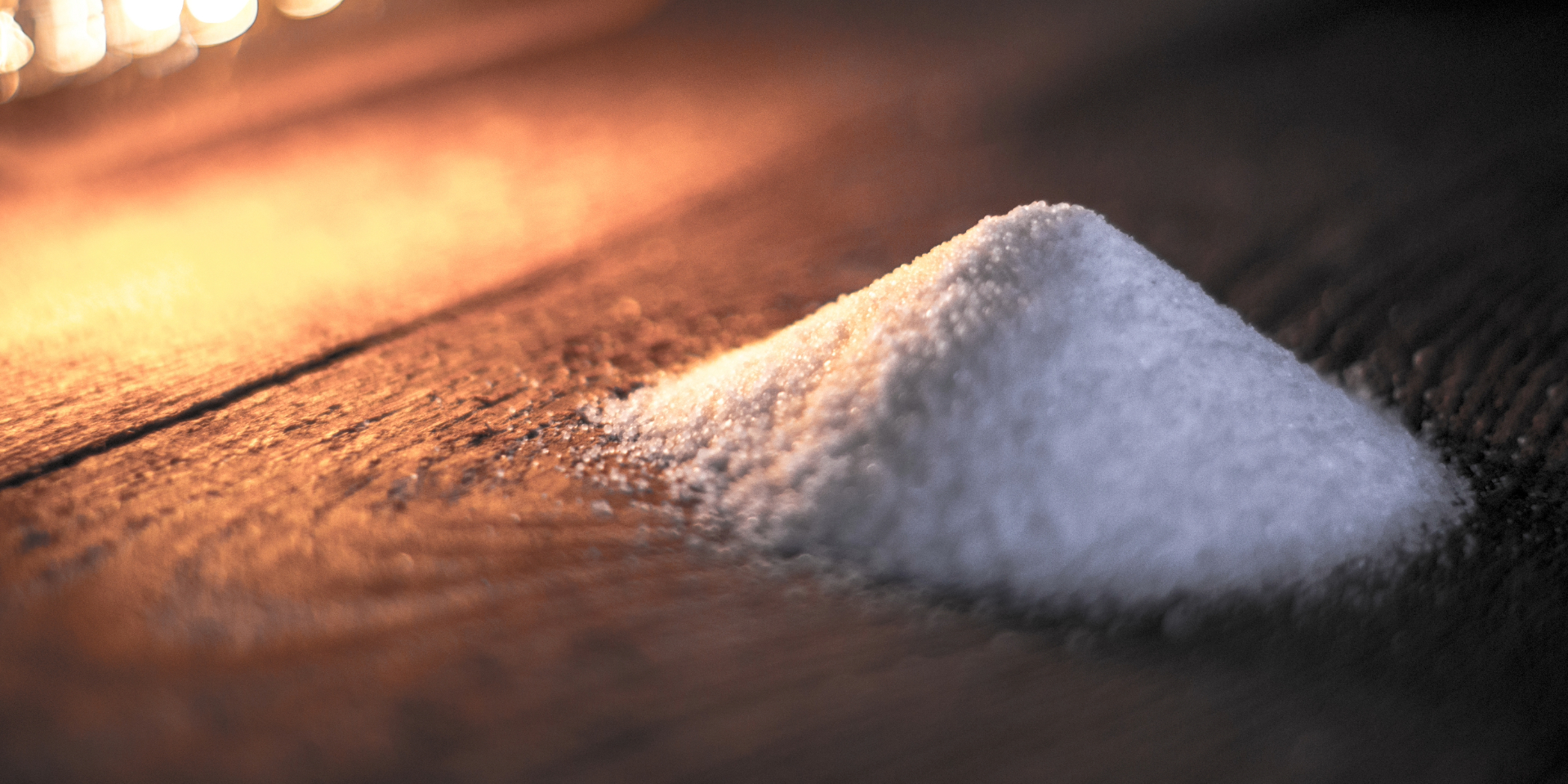
Salt (sodium chloride, or NaCl) is one of the most widely used additives in the food industry thanks to its low cost and versatile properties. One such property is its ability to reduce “water activity” in food. This does not refer to the total amount of water in a food, but rather to the amount available for chemical or biological reactions, including the growth of microorganisms. When salt is added to food, it attracts and binds water molecules, thereby rendering them unavailable to potentially harmful microorganisms such as bacteria and moulds. Thus, by reducing water activity, salt helps to extend the shelf life of food and prevent spoilage. Additionally, sodium chloride can intensify the taste of food by affecting biochemical mechanisms and reducing or enhancing the activity of enzymes responsible for generating or modifying taste, texture, and other sensory (organoleptic) attributes that we perceive when eating.
However, trends in the food industry point towards reducing salt content by using substitutes such as potassium chloride (KCl) or phosphates, enhancing food flavour with flavour enhancers instead of salt, or optimising the physical structure of salt—smaller crystals dissolve more quickly, so a smaller amount can produce the desired effect faster.
Sodium is an essential nutrient for maintaining proper blood fluid balance (plasma volume), acid–base balance, nerve impulse transmission, and normal cell function. Sodium deficiency is extremely unlikely in healthy individuals (Lowell, 2019; Mente, O’Donnell et al., 2021). The primary dietary source of sodium is table salt. Milk and meat are also sources of sodium. This mineral is also often present in large quantities in processed foods such as bread, processed meats, and snack foods, as well as in condiments such as soy sauce and monosodium glutamate, which is used as a food additive in many parts of the world.
Excess salt and potential risks
The average sodium intake in developed countries is 4–5 g per day, which is up to twice the daily limit for adults established by the World Health Organization (WHO) in 2012: a maximum of 2 g per day. (Note that 1 g of sodium is equivalent to 2.5 g of salt.) Around 95% of the global population consumes an average of 3–6 g of sodium per day, meaning the current WHO recommendation is below typical consumption levels (Powles et al., 2013). However, this recommendation was made without evidence that reducing sodium intake to such low levels in the long term would be feasible or reduce the risk of cardiovascular events or deaths.
Consuming more than 5 g of salt per day increases the risk of developing various health problems, ranging from heart disease to stroke. Nevertheless, most people still consume too much, with an average intake of between 7.5 and 15 g per day—up to three times the recommended amount. It is estimated that 3 million lives are lost each year due to high sodium levels in people’s diets. This is not primarily due to the liberal use of salt at the dinner table, but rather to packaged and ultraprocessed foods. In some countries, 80% of salt intake comes from these sources.
Strategies for appropriate consumption
Excessive salt consumption is a global problem, and the WHO is addressing it directly with a new set of guidelines designed to save lives and ease the pressure on health services.
Foods high in sodium chloride include bread (some types have as much salt per slice as a packet of crisps), salty snacks (a serving of pretzels can contain nearly the recommended daily intake of sodium), and meat products (a serving of ham, for example, contains nearly half the recommended daily intake on average). These aren’t the only products with higher sodium levels than we might expect. There are many others, such as soups, sauces, and canned beans.
Governments should develop, implement, monitor, and evaluate policies to reduce sodium intake, safeguarding them against potential conflicts of interest.
How to reduce your sodium intake:
- Eat mostly fresh, minimally processed foods.
- Choose low-sodium products containing less than 120 mg of sodium per 100 g.
- Cook with little or no added salt.
- Use herbs and spices to flavour your food instead of salt.
- Limit your use of commercial sauces, dressings, and instant products.
- Limit your consumption of ultraprocessed foods.
- Remove the salt shaker from the table.
Bibliography
- B. Lowell (2019), “The neuroscience of drives for food, water, and salt. Reply”, The New England Journal of Medicine, Vol. 380, No. 18, Art. No. e33
- Mente, A., O’Donnell, M., and Yusuf, S. (2021). “Sodium intake and health: What should we recommend based on the current evidence?”, Nutrients, Vol. 13, No. 9, Art. No. 3232.
- Powles, J., Fahimi, S., et al. (2013). “Global, regional, and national sodium intakes in 1990 and 2010: A systematic analysis of 24-hour urinary sodium excretion and dietary surveys worldwide”, BMJ Open, Vol. 3, No. 12, Art. No. e003733.