










Dwight D. Eisenhower, a former US president, had a heart attack at the age of 64. Later, despite his cholesterol levels being within the normal range, he adopted a low-fat diet. However, despite the diet, he gained weight and his cholesterol levels rose, calling the effectiveness of the diet into question.
Myth: Low-cholesterol foods automatically lower blood cholesterol levels.
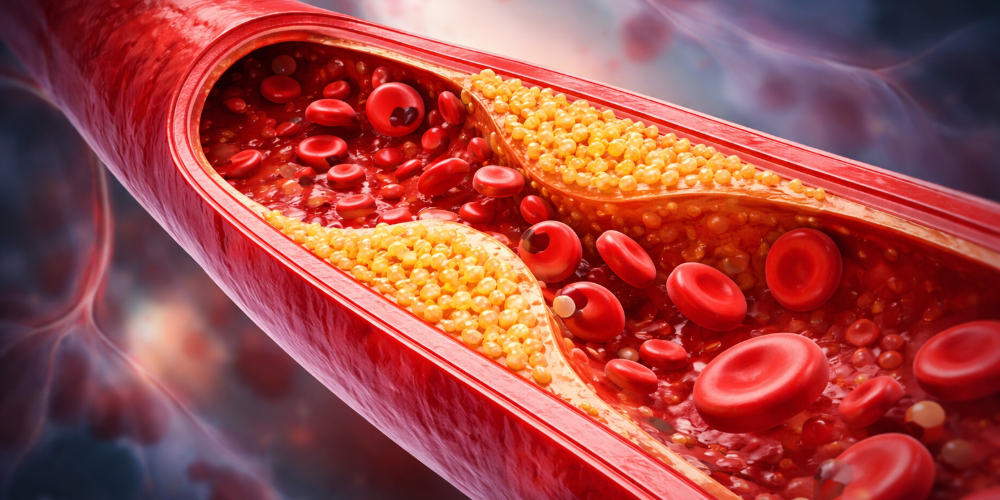
Cholesterol is vital for cell health and helps produce essential hormones and vitamins. In excess, however, it can cause atherosclerosis, which is a buildup of fat on artery walls that can restrict blood flow. Too low a cholesterol level can make it difficult for the body to absorb fat-soluble vitamins such as vitamin K, which is essential for blood clotting, and vitamin E, which is an antioxidant that protects cells from damage. Furthermore, during pregnancy, cholesterol is crucial for producing oestrogen, a hormone necessary for maintaining a healthy pregnancy.
Only a small amount of the cholesterol in our bodies comes directly from food. Most is produced by the liver. Some of this cholesterol is “recycled” through enterohepatic circulation, whereby cholesterol excreted in bile is reabsorbed in the intestine and returned to the liver (Schade, Shey & Eaton, 2020).
The link between diet and cholesterol
However, there is a link between diet and cholesterol levels in the body because blood cholesterol levels are influenced by factors other than the amount of cholesterol consumed through diet. Several other dietary components, including saturated and trans fats, soluble fibre, and excess calories in general, can also affect cholesterol levels. Although the impact of each factor individually may be relatively small, these factors combined can increase blood cholesterol levels by up to 25% on average. This cumulative effect is clinically significant (Grundy, 2016). For instance, the NHANES study found that the average level of “bad” cholesterol (LDL) among US adults is 123 mg/dL, considerably higher than the 70 mg/dL average observed in the Tarahumara population in Mexico and people on a vegan diet (Barnard, Cohen et al. 2006; McMurry, Connor, and Cerqueira 1982). The Tarahumara population is known for its predominantly plant-based diet and active lifestyle characterised by long-distance running.
Further evidence regarding the influence of diet on blood cholesterol has emerged. For instance, while our level of “bad” cholesterol (LDL) is relatively low at birth, ranging between 50 and 70 mg/dL, it has been observed that individuals who adopt a Western diet experience an increase in this level as they approach adolescence (O’Keefe, Cordain et al., 2004).
A recent study of 29,000 people revealed a significant correlation between dietary cholesterol levels and premature mortality (Zhong, Van Horn et al., 2019). The effects of certain medications, such as ezetimibe, which block the absorption of cholesterol from food, must also be considered. These medications can lower “bad” (LDL) cholesterol levels in the blood by approximately 20%, which suggests that dietary cholesterol also impacts blood cholesterol levels.
Beyond diet
Nevertheless, we know that diet is not the only factor responsible. The liver, for example, plays a major role in regulating cholesterol levels in the body. In order to maintain intrahepatic cholesterol balance, the liver can adjust its own cholesterol production as well as the cholesterol it absorbs from food. At the same time, cholesterol absorption in the intestine varies, partly due to genetic factors. Some people absorb a lot of cholesterol from food, while others absorb very little. These individual differences can influence the effect of dietary cholesterol on overall blood cholesterol levels.
. . .
Eisenhower died from heart disease in 1969 at the age of 78. Despite following a strict diet, he had suffered several acute coronary events by that time. We now know that these events may have occurred because diet has only a limited impact on blood cholesterol levels and that this influence is not solely caused by fats, but by a wide range of nutritional factors, including calorie and fibre intake (Barnard, N. D., Cohen, J., et al., 2006).
Bibliography
- D. Barnard, J. Cohen et al. (2006). “A low-fat vegan diet improves glycemic control and cardiovascular risk factors in a randomized clinical trial in individuals with type 2 diabetes,” Diabetes Care, vol. 29, no. 8, pp. 1777–1783.
- Grundy, S. M. (2016), “Does dietary cholesterol matter?”, Current Atherosclerosis Reports, vol. 18, no. 11, art. no. 68.
- McMurry, M. P., Connor, W. E., and Cerqueira, M. T. (1982), “Dietary cholesterol and the plasma lipids and lipoproteins in the Tarahumara Indians: A people habituated to a low cholesterol diet after weaning”, The American Journal of Clinical Nutrition, Vol. 35, No. 4, pp. 741–744.
- O’Keefe, J. H., Cordain, L. et al. (2004), “Optimal low-density lipoprotein is 50 to 70 mg/dL: Lower is better and physiologically normal”, Journal of the American College of Cardiology, Vol. 43, No. 11, pp. 2142–2146.
- Schade, D. S., Shey, L. and Eaton, R. P. (2020), “Cholesterol review: A metabolically important molecule”, Endocrine Practice, Vol. 26, No. 12, pp. 1514–1523.
- Zhong, V. W., Van Horn, L., et al. (2019), “Associations of dietary cholesterol or egg consumption with incident cardiovascular disease and mortality”, JAMA, Vol. 321, No. 11, pp. 1081–1095.