








COVID-19: The third signal
I thought to myself: Is there an alarm or is it an end of day signal?

Who stole the happy endings?
"If I cut off your arm, will your husband take you again?" "My husband loves me very much." So he started cutting. "There was no alternative."
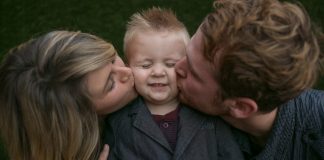
Help your child grow smarter
Every loving parent wants their child to become sharper, more intelligent, and to develop the essential skills needed to succeed in life. Science offers several key “tools” parents can use to help their child boost IQ and unlock potential, making them powerful advocates for their child’s future success.

Death is never wonderful
Socrates is surrounded by his disciples on the day of his death, but he discusses immortality with them calmly. Jesus, on the other hand, only a few hours before His death, asks His disciples not to leave Him alone. Socrates drinks the cup of poison quickly and joyfully, without fear or doubt, while Jesus, troubled, asks the Father to take the cup from...

Organic or conventional: a challenging food choice
The controversy surrounding organic foods is far from being resolved. Some argue it’s merely a marketing tool aimed at emptying consumers’ pockets, while others believe they’ve found the path to better health, provided they can afford the luxury.

The Great Schism, the great egos
“There are no other two churches in the world today that are so similar yet, at the same time, so opposite as the Eastern, or Greek, and the Western, or Roman Church” (Philip Schaff).

My money versus our money | How to manage finances as a couple
Talking about finances as a couple is not always comfortable; money has often been the cause of marital conflict. Aligning your financial goals and philosophy can be a difficult process that begins with answering a simple question: joint or separate accounts?
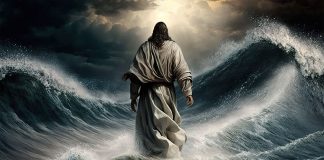
Through the storm with God by your side
"Even to your old age and gray hairs I am He, I am He who will sustain you. I have made you and I will carry you; I will sustain you and I will rescue you" (Isaiah 46:4).

The light of closed eyes
Under the burden of evil, often made public obsessively, insinuatingly, too often we perceive the world as an endless cycle of negative emotions and predictions. We lose the broad perspective that encompasses the initiatives beautifully woven by people whose hearts beat for God and for their fellow men, people who make this world liveable.

The seasons of (un)belief in Christopher Hitchens
Christopher Hitchens was not merely an atheist but, as he described himself, a militant antitheist. It was in his home, at his invitation, that the group known as “The Four Horsemen of New Atheism” first convened. Born in 1949 in postwar England, Hitchens was shaped by the politics and intellectual currents of the 1960s.

Is faith a negative thing in life?
The effect or influence that a particular thing has on us depends largely on where that thing falls on the scale of our values. It's one thing to lose your folding fan in a foreign country and quite another to lose your passport.

How children are affected by the loss of a parent
It is difficult to say whether there is a preferable age for facing the death of a parent, but having it happen during childhood and adolescence can have devastating effects on physical and mental wellbeing, which can extend even into adulthood.
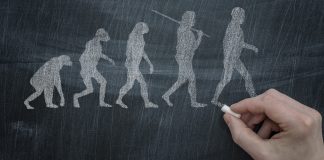
The pretext of ignorance is sold in different styles
Atheist evolutionists accuse Christians of offering explanations that blame everything on God when they have no other answer. In other words, God has become a pretext for ignorance. Without denying the fact that sometimes this is true, reality also has other facets.

COVID-19: What have we learned about ourselves?
Courage is not the opposite of fear, nor of caution. True courage is what you do right in the midst of fear.