











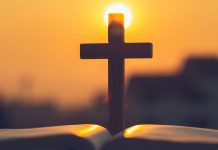


The parents who cancelled Christmas
For parents, Christmas is always a stressful time: how to satisfy the child's desires without spoiling them and giving them the impression that they deserve to receive whatever they want, just because their decibel level exceeds the parents' level of calm and patience.

Religion is harmful. True or false?
The idea that religion is harmful to the process of human development has no scientific support, but religious conviction has been associated with a number of tragic experiences within families.

Our resilience and the need to be “like little children”
Every day, we are surrounded by the resilience of developing characters and it’s almost impossible not to be touched by their beauty and fragility.

Is the end of something better than its beginning?
The question, "Is the end of something better than its beginning?" nuances the statement of Solomon, who is considered in the Bible the wisest man who ever lived.

From bootless boy to life-changing footballer
Footballers are often in the headlines for their off-field antics more than their on-field achievements. So, it is no real surprise that the greatest story...

We write the future ourselves: an overview of Biblical prophecy
The Bible, a prophetic book par excellence, is often misinterpreted. Its prophecies can seem fatalistic, or fear-mongering. But, when understood correctly, Biblical prophecy more than unravels the future—it also provides us with a clearer perspective on the present.

The forgotten sign
On May 19th, 1780, a strange phenomenon turned a sunny morning into an unexpected night. The event, known as the Dark Day, was seen as a sign of divine judgment by contemporaries and as a means of ridiculing apocalyptic expectations by sceptics.

The Edict of Milan
In Milan, in 313, Constantine participated in his sister’s wedding to Licinius, where he also signed the Edict of Milan. This decree, which officially recognised and legalised Christianity, marked the symbolic end of Diocletian’s era of persecution while defining Constantin’s religious policies.

Jesus, the supreme example of empathy
We are generally surrounded by people close to us—family, friends, or colleagues. We build a kind of microcosm in which we stand at the center, alongside the relationships we choose to maintain. But on that particular day, I was reminded that everyone has their own microcosm.
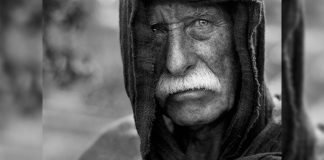
Sometimes God is hungry
There are people who love animals; we see them often, offering scraps of food to stray dogs or pigeons in public squares and parks, gazing at them affectionately, touching them, speaking to them tenderly. Rarely, however, does any of that reserve of sympathy find its way into the silence, indifference, or reproach with which people respond to a request for help from someone...

Antibiotics: Blind optimism is dangerous
The increased frequency with which doctors are encountering antibiotic-resistant bacteria is worrying. And it could affect an already precarious medical field—cancer treatment.

Stubborn faith
On a number of occasions during his writing life, Nobel Prize winner and author Elie Wiesel tried to re-tell the story of a profound experience he’d had as a young boy in the Nazi death camp at Auschwitz. He wrote a play, a novel, and even a cantata to try to re-create his memory of this event, each of which remained unpublished. Finally,...
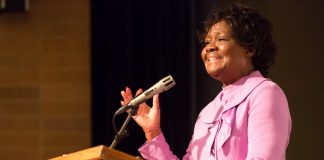
The price of change
Living in times of great social transformation is both a privilege and a challenge. In this interview, Dr Ella Simmons reveals what her childhood and youth were like during the American civil rights movement. In that turmoil, she also discovered the church she came to love and serve with dignity and courage.

The game where nobody wins
I was only 13 when I first experienced it. My three best girlfriends handed me a letter. It said they no longer wanted to be my friends. The only reason given was, “The guys pay you too much attention.” After delivering the letter, they simply shunned me.
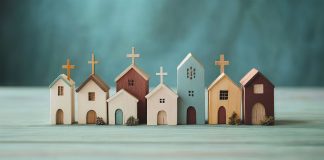
Collaboration within the church: from territory to shared mission
Why do some Christian churches remain trapped in an “economic market” paradigm, where success is measured in comparison with others? And how can they...