







Don’t all religions lead to God?
It is convenient, but also superficial, to say that all religions lead to God. However, this attitude is pervasive, and usually lasts only until one has had a chance to see the difference the various religions make in people's lives.

How false religious conspiracy theories came to abound
The documentary The Resurrection Tomb is based on James Tabor and Simcha Jacobovici’s book The Jesus Discovery[1] and resumes a controversial topic, also published in 2007, when a similar film was released.

Avoiding burnout syndrome: How to calibrate your work style
We often treat burnout syndrome as a diagnostic fad. In reality, overworking has become the norm, and its consequences are serious enough to urge us to identify the best strategies to prevent it.
Are spiritual forces real?
Ideas about death, souls and afterlife existence are often intertwined with religious or spiritual beliefs—in other words, belief in the supernatural. But are spiritual forces present or observable in this world? Do they exist? Can they be observed, defined, categorised? Are friendly ghosts and vengeful spirits lingering in haunted houses real, are the paranormal investigators you see on television really fighting an evil spirit as they claim, or...

The crossless Cross
The mention of the city of Rio de Janeiro evokes images of the traditional carnival or the vast, exotic beaches such as Ipanema and Leblon. But most often we think of the huge monumental statue representing Christ the Redeemer (Cristo Redentor) with wide, open arms, looking down towards humanity from the top of Mount Corcovado (700m).
How Jesus used the Hebrew Scriptures
When we read the Gospels, we may be put off by the way Jesus Christ interprets the Hebrew Scriptures.

The war in Ukraine as a struggle between interpretations
It has been said before that the wars of the 21st century are hybrid wars, in the sense that, in addition to the environments in which the hostilities have taken place until now–land, water and air–a fourth environment has appeared: the virtual one.

The migration of trust in the digital age
Trust is the main currency of the age in which we live, and people seem to be changing the directions they invest in faster than in the past. How is our life of faith influenced by how we relate generally to trust?
Digital natives, digitally naive: life at the dawn of another revolution
The generation born with the tablet and the smartphone in its arms, but which ends up being exploited by big data cultivators and controlled by radicalization and polarization, can become the generation that implements anti-democratic movements.

Facing the two doors: which one will you choose?
No other court in the world can judge a person as effectively as their own conscience. Before and immediately after a wrong has been committed, the "merciless" trial begins.
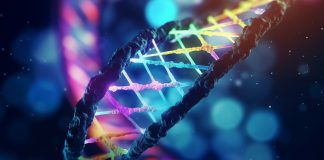
DNA: the language of chance, or of the Creator?
Scientific progress in understanding the DNA molecule and in deciphering the molecular mechanisms by which cells function can only be described as revolutionary. In the first of our "Genetics and Evolution" series of articles we examine the implications of these discoveries for evolutionary and creationist perspectives on the origin of life.

COVID-19: Excerpt from a diary on the Great Britain front
Noemina is a graduate of the University of Hertfordshire, UK, where she majored in health care. She is working in her field as of 2012. The journal excerpt she sent to us reflects her week-long experience at the epicentre of the battle with the new coronavirus in the intensive care unit, where serious cases are admitted.
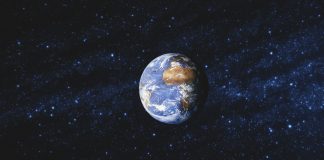
The flat Earth theory in the Middle Ages
Atheists frequently invoke the theory that in the Middle Ages, Christians (not just lay people, but even church leaders) believed in the myth of the flat Earth.

What is the value of patience in a world of passions?
Global warming, plastic pollution, antibiotic-resistant superbugs, extreme weather events, artificial intelligence, global resource depletion, social inequality, the proliferation of social media abuse and manipulation through fake news, the resurgence of political extremes with racist and nationalist overtones—these are some of the "signs of the times" that are analysed in the media as elements that could each cause radical changes in society. But why...
Before drawing a conclusion
From my experience and the conversations I have had so far, I have found that there are two major categories of people who come to doubt the existence of God.