













“Divine Providence: God’s Love and Human Freedom” | Book review
Bruce Reichenbach's book, Divine Providence: God’s Love and Human Freedom is impressive first of all due to the author’s total disinterest in impressing his readers. Instead, he has a legacy to pass on.

COVID-19: When time no longer means money
As a teenager, I remember pasting a quote from Blaise Pascal on the wall of my room. It was a thought I resonated with, not without some arrogance: "All of humanity's problems stem from man's inability to sit quietly in a room alone."

Nine tips for taming tempers
I walked into my boss’s office. For several years I’d been trying to manage a full-time job on part-time hours, complete my master's degree, support my husband in his career and run a busy home occupied by three children. The previous month, a friend had died tragically and unexpectedly, and in the previous week several major work and family crises had been bouncing...

Fear of war: how to soothe our hearts
When the fear of war overwhelms our thoughts, let us not forget that we are not alone, that God will end our suffering and give us a new and everlasting life.

Forgiving a Nazi
May 1944. The train stopped at the station and twins Eva and Miriam, with their father and mother and sisters Edit and Aliz, stepped out into the sunlight. There was war in Europe and the Nazis had gathered them and thousands of other Jews in Romania, crammed them into cattle cars and taken them to Poland.

Breaking the crisis cycle
In 1991, authors William Strauss and Neil Howe published Generations, theorising that every 80 years (one generation cycle) would consist of four “turnings”. Beginning after a crisis, the first turning would involve a feeling of recovery, or “high”. The second would be a spiritual awakening, while the third would see the dissolution of institutions and the rise of individualism. And finally, a crisis...

The uncertainty of the religious man
Pliny the Elder wrote, in Naturalis Historia, a well-known adage: "Among [mortals] the only certainty there is is that nothing is certain."[1] Few know that Pliny made this statement in a chapter on the gods.

The testament of Jesus
We experience a feeling of urgency as a consequence of the fear of failure, or the fear of missing out (on people, opportunities, time, good things). Urgency is, therefore, a corollary of fear. Today’s Christianity, hailed by loud voices as near extinction, can easily fall into the trap of undue urgency to quickly regain what has been lost.
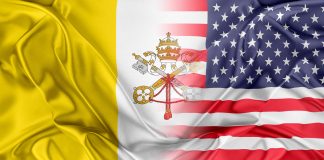
Pope Leo XIV: the relationship between the first American pope and US politics
Pope Leo XIV, who was born Robert Francis Prevost, was elected the 267th Supreme Pontiff. Born in the south of Chicago in 1955, he is the first North American pope. Despite this, his relationship with US politics is more complex than his biography might suggest.

An impossible inventory of the most widespread fake news about COVID-19
The epidemic of false information in this worldwide pandemic is even more infectious than the virus itself. Fortunately, there is a vaccine for this epidemic of fake news: quality information and information filters. However, not everyone has been vaccinated. Here is an immunization effort.

Low-carbohydrate diets may shorten lifespan
A diet based on significantly reducing the amount of carbohydrates on your plate can reduce life expectancy by up to 4 years, according to a study published in The Lancet Public Health.

The most important primary caregiver
According to attachment theory, originally formulated by John Bowlby and later refined by Mary Ainsworth, adults’ relational patterns are formed according to the model of the close relationship they formed in early childhood with their primary caregiver, who is usually the mother.

The kind of romance that destroys our relationships
Twenty-first century people are bombarded with fiction about romance.
The One who couldn’t live knowing that I was dying
Love stories have the ability to captivate us with the details of an undying beauty, to overshadow the uncertainties about their permanence, to introduce through the front door the hope that one day we will live such a story, which will bear the signature of eternity.

COVID-19: Fake news, now and ever
Elisa Granato, one of the first people to be tested for a Covid-19 vaccine, died. The news rolled in the virtual media 6 times faster than other news.[1] Keep this number in mind. This is important because, as we learn from a study published in Science, fake news spreads on average 6 times faster than genuine news. And not only faster, but also...