




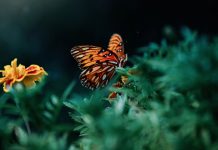









No matter what we do, we are merely puppets on a string. True or false?
When it comes to conspiracy theories, the public quickly becomes polarised. On one hand, you have the “experts” who reel off reliable information with credible arguments from confirmed cases. On the other hand, there are the “uninformed,” completely disinterested in the subject or outright rejecting it as a myth.

The trouble with alcohol
Elspeth Muir’s brother, Alexander, died from drowning. It was 2009, and he had just turned 21. He died from drowning, but his death “was not foreshadowed by his love of water except that it explains why he was near a river, alone, with a blood-alcohol content of almost 0.25. My brother died because he was drunk, and because the drink made him stupid.”

Marital incompatibility, and how to avoid it
Our moral problem is man’s indifference to himself… We experience and treat ourselves as commodities, and [as if] our own powers have become alienated from ourselves… We are a herd believing that the road we follow must lead to a goal since we see everybody else on the same road. We are in the dark and keep up our courage because we hear...

A fulfilled life in the presence of God: the picture
A fulfilled life is built on the foundation of faith and the desire to imitate the character of God, in a world conceptualised around the truth.

The conditions for courage (I)
Motto: "Fear is a reaction. Courage is a decision." (Winston Churchill)

No monster under the bed: Helping your child cope with fear
There is no monster under the bed—that much is certain. But how do you convince your child of this, when they come to you, for the hundredth time, with the same fear? When you constantly use the same unheeded command, "Stop fooling around and go to sleep!", this is a sign that you need to learn more about your child's anxiety, and how...

COVID-19: What do we do after the relaxation of restrictions?
After the authorities in different countries announced a relaxation of the restrictions, people started to impatiently waiting for that, maybe even with plans to recover last bits of a confiscated spring.

Messages from above
One day, Jesus’s disciples—who followed Him about, observing His every word and action—asked Him to teach them how to pray.

Beyond the mask of anger
Thousands of cries for help are hidden every day behind extreme violence or riots. Few of them overcome the wall of our indifference and prejudice, and even fewer of those in need get a second chance. Stories like that of Sephton Henry show what it means to offer help even when change for the better seems impossible.
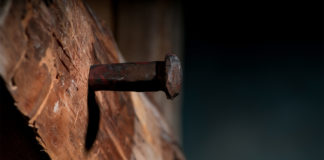
Why did Jesus have to die for us?
Taken as a whole, this question sounds like a painful cry, springing forth from the depths of the human being, in the midst of the darkness of uncertainty and doubt. This question, however, consists of multiple sub-questions. We will address these essential questions that will open our minds to the light of the teachings of Him who holds all knowledge and truth.
The school of happiness
The issue of education generates heated discussions and numerous controversies. The dialogue with Professor Steve Dickman, the director of a private high school in Savannah, Tennessee, presents a time-proven education model. The objective is not only in the acquisition of knowledge, but also in the skills to apply it in real life, for one’s own good and the blessing of others. The by-product...

The only death that can be avoided
"If there is anything more heartbreaking than a body perishing for lack of bread, it is a soul which is dying from hunger for the light." (Victor Hugo)

The generation gap, a power struggle?
At some point, we've all come across the phrase "back in my day," a deeply subjective expression which encapsulates a universal phenomenon: the generation gap.

Resilience: An invisible shield in the face of our problems
When strangers give you a helping hand after your friends have forgotten about you, the world suddenly seems a little more beautiful. This was the experience of PJ Robins when a crowd of strangers suddenly arrived at the party for his autistic little girl, which no one else had wanted to attend.

The birth certificate of morality
Humans are moral beings, while animals possess a rudimentary form of morality. Both the most conservative theologians and evolutionary biologists agree with these statements. Still, since the former speak of God and the latter of nature, the eternal dispute between the two parties is based on the authorship of the sense of ethics, the germination bed for the birth of morality. So, if...