













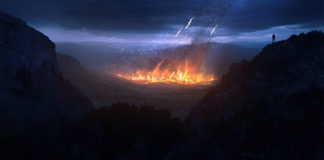
The end of the world according to Christianity
The idea of the end of the world refers to the end of the social order and humanity; the end of the planet as we know it. But according to the Bible, these will not all come at once.

Never enough: an imperfect article on perfectionism
The end of the line for Christian perfectionism is not perfection, but atheism. This is because what we imagine to be the constant unsatisfied look of God upon us, is a burden too heavy for any human to bear.

Thomas Helwys
“For men’s religion to God is between God and themselves. The king shall not answer for it. Neither may the king be judge between God and man. Let them be heretics, Turks, Jews, or whatsoever, it appertains not to the earthly power to punish them in the least measure. This is made evident to our lord the king by the scriptures.” These are...

God’s providence in times of crisis
Regardless of the form they take, crises give rise to legitimate questions about God's providence: Where is God when we suffer? Has He forgotten us? Is He punishing us? Does He still have things under control?

What is stewardship?
The smell of burning food filled my tiny kitchen. “What's that smell?” I asked a friend who was sharing my house for the week. Every young man knows the smell, familiar from an early age—your first acquaintance comes from burnt toast and camping trips where, after burning everything you tried to cook, you end up eating your baked beans straight from the can.

Divine inspiration | God’s breath upon the prophets
What is “divine inspiration?” How does it happen?

Fighting over the West: Orthodoxy, Protestant Reformation, and Catholicism
At the beginning of the 15th century, the threat of the Ottoman Empire to Eastern Europe was a painful certainty. The last Byzantines, aware of the ensuing disaster, called on Western aid, seeking political union with the Roman Catholic Church.

The world seen from the cross
For some of the witnesses to the crucifixion, the seven sayings of Jesus, spoken while He was nailed to the cross, were filled with meaning. Others downplayed or denied their significance. His words still divide people today. But the statements made by Jesus in those few hours are an important key to understanding His message.

Chernobyl: The cost of lies
On April 26th 1986, reactor 4 at Chernobyl nuclear power plant in Ukraine exploded. The effects were catastrophic—it was the worst nuclear disaster in history. The explosion let out the equivalent of 500 Hiroshima bombs-worth of radiation, and the area around Chernobyl—including the town of Pripyat—is now uninhabited. It will be unsafe to live there for the next 20,000 years.

Single (and happy)—an increasingly common status in modern society
The number of single individuals has skyrocketed in the past few decades in nearly 40% of the world’s countries. While some complain about the economic discrimination they face, many who have chosen this lifestyle believe they hold a winning ticket in other areas of their lives.

Sports betting: from entertainment to addiction
Sports betting may seem to be a harmless way to unwind, but the relationship between winning and losing is, mostly, not in the player’s favour. Moreover, the road from entertainment to addiction can prove to be a short one, while the recovery process is arduous and long.

Learning from Wave Rock
If you’re reading this article in July of 2024, there’s a good chance I already have climbed or am currently climbing Wave Rock. Called Katter Kich in the Nyungar dialect, Wave Rock is an enormous granite cliff face in the shape of—you guessed it—a wave that protrudes from the surface of the earth in the middle of Western Australia’s Wheatbelt. It forms the...

The questionable cause fallacy: Correlation does not equal causation
The questionable cause fallacy, described by the Latin phrase cum hoc ergo propter hoc, is an error of thought which leads us to believe that one event causes another event simply because the two events occur simultaneously. This error can easily be reinforced if the simultaneity of the two events is often repeated.

Non Sequitur: A forced conclusion is not really a conclusion
Needing to process a multitude of complex information in a short amount of time can lead to erroneous reasoning. When a conclusion is supported by weak or irrelevant arguments, the reasoning falls into the category called non sequitur—does not follow, or irrelevant argument.
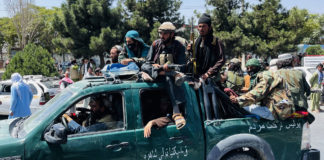
Who are the Taliban and how did they turn Afganistan against itself?
The rise of the Taliban in Afghanistan is the result of a history marked by local political ambitions, regional rivalry, and conflicting geopolitical aspirations, in which the religious element cannot be ignored. Who are the Taliban? What motivates them? Who helps them? What did they do when they ruled over Afghanistan, and what could they do now that they are back in power?