






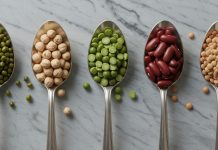





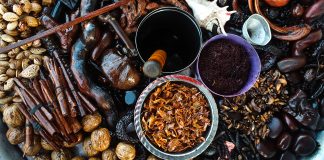
“When doctors don’t know what to do, it’s time for alternative medicine.” True or false?
When it comes to cases where "doctors don't know what to do," the first thought that comes to mind is usually cancer. Conventional treatment, which can prolong life for a few years and sometimes just a few months, comes at a high price in the quality of life, and patients come to prefer the "natural" way: alternative medicine.

The spring of happiness never runs dry
Immersed in contemplation, I eagerly remove the gnarled, wet roots. As my thoughts drew closer to the tenuous yet vigorous spring beneath them, a word intersected my search like an intense beam of light. Harmony. I felt as if the tips of my thoughts had reached the source of the experience I was trying to decipher—happiness.

Decoding the EU’s place in Bible prophecy
Europe is more divided than ever. What does that mean for our reading of biblical prophecy?
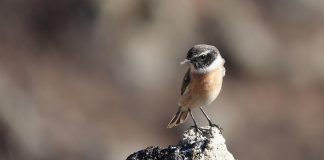
Returning to the blessing of the small things
Rediscovering the blessing that resides in the little things of life has been one of the challenges of every season I've lived through. This is the conclusion I always come to when I take a moment to reflect.

Non Sequitur: A forced conclusion is not really a conclusion
Needing to process a multitude of complex information in a short amount of time can lead to erroneous reasoning. When a conclusion is supported by weak or irrelevant arguments, the reasoning falls into the category called non sequitur—does not follow, or irrelevant argument.

Seven surprising facts about chocolate Easter eggs
During medieval times, eating eggs was forbidden during Lent (the 40 days before Easter). Any eggs laid were saved and decorated to celebrate on Easter Sunday. Apparently, everyone enjoyed tucking into their eggs, too.

Addiction prevention | Risk and protective factors
At 51, C.M. is a shadow of his former self. A shadow who has escaped lung cancer but it's mouth cancer that keeps him away from the cigarettes to which he was inextricably linked for 44 years. He swallows with difficulty, even saliva, and is always thirsty.

More than the slaves of appearances
What is left of me after I shut down my computer, turn off my phone, or wipe away my makeup? What about after I quit my job, after I move, after I lose my health, after I get older? What if no one knew me—would I still be someone?

Cut from a different cloth
When I look at the lives of some people, I can't help but wonder if they are cut from a different cloth to most of us. Their courage in the face of challenges, their resilience, their vision and their achievements are so impressive that my imagination wonders what the world would look like if their passion were multiplied.

Are we wired for altruism?
She donated a kidney to a stranger without expecting anything in return. This is the story of a graphic artist whose sole motivation was altruism. Such cases have led researchers to question whether altruism might be an inherent trait in the human brain.

Regaining lost free time | A parent’s route to leisure time
Sometimes, parents end up not having any free time during the day. Why is relaxation not easy for parents?
Busting four porn myths
It’s been said that porn and the internet rose together. As technology develops, the pornography industry finds new and even more instant ways to entangle consumers. I saw a video on social media where a young woman was talking about her subscription account (where people subscribe to access exclusive content of her) making $350k a month.

Is sugar the most dangerous drug?
While few people can remember the details of their first hit, everyone can identify with the rush of satisfaction, the tingling delight that starts on the tip of your tongue and then courses through your entire body.

Can God be removed from history?
“Is God dead?” was the question on the cover of Time magazine on April 8, 1966. Three-and-a-half years later (December 26, 1969), the publication changed that to: “Is God coming back to life?”

The Second Coming Files: A 2000-Year Inquiry | Part I: The fossilisation of the great Christian hope
Any religion’s popularity depends on the rewards it promises. While people are interested in the immediate benefits of this life, they are mostly interested in the future, the hope their religion brings, and how solid it is.