














The upside of religion getting marginalised
An administrative decision by a Catholic university in the United States is a good illustration of a major reason why Christian churches, with some exceptions, are rapidly losing their relevance in society.

COVID-19: Defending ourselves against fake news and panic
The fight against the new coronavirus is accompanied by several parallel fights, including the fight against fear, which can turn into panic—one of the most dangerous social phenomena.

Our resilience and the need to be “like little children”
Every day, we are surrounded by the resilience of developing characters and it’s almost impossible not to be touched by their beauty and fragility.

How to be a good listener
The portrait of a good listener contains skills that are formed over time, through an honest interaction with others, motivated by the desire to understand and help them.

The appeal to tradition or the risk of repeating history
In our everyday lives we often resort to simply repeating what has been said or done before. But not everything that is old is authentic or correct. When we refer to tradition with full confidence that the way it was understood and acted on in the past is self-evident, we are committing the logical error of appealing to tradition, or false induction.

The mystery of the seventh day (III)—Was Jesus a legalist?
In the first two articles of this series, we examined the biblical theology of the Sabbath in relation to the divine act of creation, the history and theology of the people of Israel and early Christianity. This third and final article in the series will examine the Sabbath from the perspective of legalism, under which some commentators have placed seventh-day observance.

Free time and the science of living
Free time is the slice of life that an appropriate will and motivation learn to transform into experiences that make our life better, more beautiful, more balanced, and more pleasant to remember.

Reading polls: How do we evaluate surveys carefully?
Many news programmes, speeches, or press articles refer to at least one poll. When designed and conducted well, polls are an excellent means of measuring public opinion on a particular topic. Unfortunately, not all surveys are well compiled, relevant, representative, or honest.

Light and shadow in our world of words
“Words are, of course, the most powerful drug used by mankind.” (Rudyard Kipling)

What is the use of general knowledge?
"No man can be called friendless who has God and the companionship of good books." (Elizabeth Barrett Browning, British poet)

Why do phones make us tired and ruin our mood?
The phenomenon of technoference (that is, the daily disturbance people experience due to the use of mobile phones) is becoming more and more prevalent, and researchers at the University of Technology in Queensland warn that as we become more dependent on these devices, we become more tired, more unproductive and unwell.

The end of a matter is better than its beginning
Most of us have been urged since we were little to not give up, to carry on, and to “go our own way”. The idea that giving up is a negative choice, a synonym for failure, or a sign of cowardice or inability, is deeply embedded in our minds.
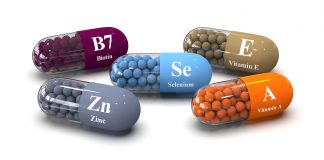
Vitamins, explained from A to K
We all know that vitamins are good for us. Many of us take supplements to boost the supply of vitamins in our bodies. However, it wasn’t until 1912 that Polish biochemist Casimir Funk actually came up with the concept of vitamins, which he called "vital amines."

COVID-19: Social distancing and the new ways to love amidst the pandemic
The epidemiologist Marc Lipsitch thinks that social distancing will have to continue, in one way or another, hopefully in milder forms and in correlation with other activities. Lipsitch is the author of a study suggesting that social distancing may be necessary, possibly intermittently, until 2022.

Our daily E-numbers: an epidemic of suspicion (Part II)
The first part of this discussion essentially highlighted that, despite the alarming and catastrophic claims surrounding E-numbers, these substances are generally far less harmful than many believe. In the following section, we will examine some of the most criticised and controversial E-numbers in Romanian public discourse. Let’s begin with the one often described as “the most TOXIC/CARCINOGENIC additive”: E330.