









In the heart of the most powerful man in Judea, a greater fear than any other was born: the fear of losing control. Herod’s story could be our story.
Few people seem to resemble Herod. Yet, few are those who do not resemble him at all. In every generation, there are people who, despite their success and outward order, are consumed by the fear of losing control. In a world that values power and visibility, Herod may seem like a distant figure, but his story can resonate with people today: parents who cannot cope with what is happening to their children; leaders who live in fear of being forgotten; and people who believe that security comes only from showing force.
One night, a king was disturbed by news of a child’s birth. That was the moment when the order of an entire world was disrupted.
The king behind the walls
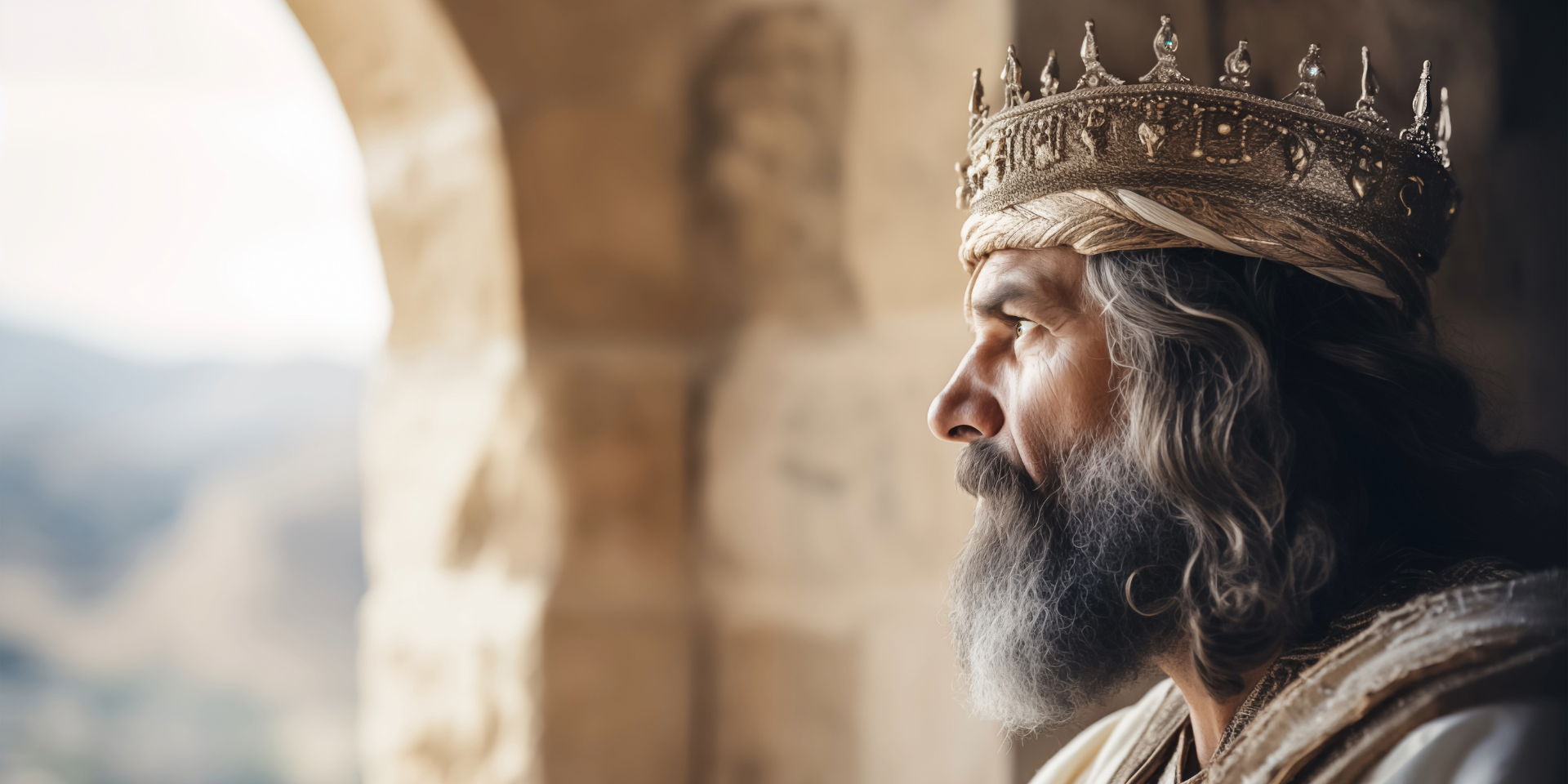
History presents Herod the Great as one of the most ambitious builders of antiquity. During his reign (37–4 BC), he built the port city of Caesarea Maritima, complete with aqueducts, an amphitheatre, and an artificial harbour that was unique for that time. He also rebuilt the Temple in Jerusalem, combining Roman architecture with Jewish symbolism to transform it into one of the most imposing sanctuaries of the ancient world. Through these monumental projects, Herod sought to secure the loyalty of Rome and the respect of his subjects. However, behind the architectural grandeur was a man who lived in an ongoing state of tension between power and fear—a ruler who defined his security by his level of control.
This fear drove him to tragic excesses. Flavius Josephus’ chronicle, one of the most important historical sources of the era, mentions that Herod ordered the killing of his wife Mariamne and two sons, Alexander and Aristobulus, on suspicion of treason.[1] The same fear of losing his throne reached its peak when Herod heard the news of the birth of Jesus, a baby who was said to be the King of the Jews (Matthew 2:2). The Gospel notes that Herod “was disturbed, and all Jerusalem with him” (Matthew 2:3). This was the turmoil of a man who saw the arrival of a child not as a blessing, but as a threat.
The fear of losing control
The fear of losing power is a universal human experience. It was this fear that caused Herod to fear a baby. Every human being has a deep-seated desire for balance, whether it be at work, within the family, or regarding self-image. However, when this desire is mixed with a fear of uncertainty, it gradually turns into a need for control—we try to organise everything so that we don’t lose anything. Peace thus turns into tension. The modern world glorifies success and control, but when fuelled by fear, both breed anxiety.
The Gospel’s logic tells us that power does not guarantee security; rather, it is a burden that weighs most heavily on the person who bears it alone. Recent studies show that the fear of losing control is deeply rooted in the human psyche, generating defensive reactions and emotional tension.[2] In a world where success is measured by power, planning, and security, the idea of a God who reigns through love seems paradoxical.
The Gospel does not depict God as competing for authority; rather, it portrays God as liberating us from the fear of loss. When Herod heard about “the one who has been born king of the Jews,” he could have understood that the arrival of this child did not threaten thrones, but offered hope to those living under the burden of fear. The birth of Jesus did not mark the beginning of a territorial struggle, but an inner revolution in which peace is born of faith, not control. When fear becomes the basis for decision-making, reason is lost and peace becomes impossible.
The transformation of the heart
There are times when we find ourselves defending our image, our righteousness, and our position. It seems to us that if we let our guard down, we will lose part of ourselves. However, it is precisely in this reflex of self-defence that an oppressive silence creeps in—a weariness that leaves no room for love. In order to avoid hurt, judgement, or being forgotten, we build walls around our hearts. We maintain control, but lose communion. In our attempt to be strong, we end up isolating ourselves.
The Gospel touches us precisely where the walls seem most solid. God does not tear them down, but waits until our longing for peace is stronger than our fear. Christ does not come to conquer us, but to dwell in us. Receiving Him means giving up the need to always be right, the pride that keeps us closed off and the fear of vulnerability. In a world that teaches us to defend ourselves at all costs, the gospel calls us to openness, repentance, and grace—to living without armour and being convinced that God’s love provides safer shelter than our own walls. This is God’s ancient promise: that He will replace our hearts of stone with hearts of flesh—living hearts capable of feeling, loving, and being touched by His love (Ezekiel 36:26).
The manger in our hearts
Herod died in agony in a palace, haunted by a fear that never left him, not even in his final moments.[3] His fate remains a bitter testimony to the loneliness that power without peace brings—a life lived in constant defence, ending without peace or rest.
The lesson for us is simple and full of gentleness: life is not based on what we manage to control, but on what we have the courage to entrust to God. Christ calls us to transform fear into trust, pride into sincerity, and the desire to lead into the desire to love. Instead of a throne, He offers us a manger; instead of a command, He offers us a calling. Instead of fear, He brings complete peace, and in this way He can rewrite my story and yours.
Flaviu Tereșneu believes that the beginning of conversion lies not in the fear of losing something, but in the willingness to make room for God within oneself.