











“By 2050, AMR could potentially kill one person every three seconds and become a more common cause of death than cancer.” —Vytenis Andriukaitis, European Commissioner for Health and Food Safety
In 2016, a 49-year-old woman in Pennsylvania arrived at a medical clinic with a routine problem: a urinary tract infection. But tests revealed something far from routine—a strain of Escherichia coli (E. coli), the bacterium behind most UTIs, carrying a rare genetic fragment. That fragment contained the MCR-1 gene, which made the bacteria resistant even to colistin, an antibiotic reserved for severe infections when other systemic antibiotics are either contraindicated or ineffective due to resistance.
This case “shows us that the end of the road isn’t very far for antibiotics—that we may be in a situation where we have patients in our intensive care units, or patients getting urinary tract infections for which we do not have antibiotics,” said Tom Frieden, then-director of the U.S. Centers for Disease Control and Prevention (CDC).
Colistin was widely used by physicians in the 1970s and ’80s before being largely abandoned because of its severe side effects. Doctors were forced to return to it only after newer, less toxic antibiotics began to lose their effectiveness against increasingly resistant bacteria, epidemiologist William Schaffner says. Colistin is typically used when carbapenems—considered “last-resort” antibiotics—fail. Its use nearly doubled in Europe between 2010 and 2014. Now, colistin resistance itself is beginning to spread.
In the end, the Pennsylvania patient was treated with a trio of antibiotics that succeeded in eliminating the E. coli. Because standard protocols offered no viable options, the medical team had to “think outside of the box, beyond traditional antibiotic combinations,” said Brian Tsuji, a professor at the University at Buffalo.
The case offered a stark warning about the kinds of bacteria we may face in the future, said Zackery Bulman of the University of Illinois Chicago’s College of Pharmacy. At the same time, he said that the successful treatment shows that “the golden era of antibiotics isn’t over yet.”
It’s an optimistic view—one that many researchers would approach with caution.
Early warning signs
Antibiotic resistance could spread across the globe, widening the range of infections for which no treatment exists, researchers warned after a routine 2015 screening at a pig farm in Shanghai revealed a strain of E. coli resistant to polymyxins—a class of last-resort antibiotics used only for severe infections caused by resistant microorganisms.
Researchers identified a new mutation—the MCR-1 gene (detected a year later in the Pennsylvania patient as well)—which prevents the antibiotic from killing the bacterium. They also found that this drug resistance had spread across multiple strains and species, including Klebsiella pneumoniae and Pseudomonas aeruginosa.
“All the key players are now in place to make the post-antibiotic world a reality. If MCR-1 becomes global, which is a case of “when”, not “if”, and the gene aligns itself with other antibiotic resistance genes, which is inevitable, then we will have very likely reached the start of the post-antibiotic era,” said Timothy Walsh of Cardiff University, one of the study’s authors.
Although antimicrobial resistance is not a new problem, what has changed is that it is now driven by resistance genes that can move from one bacterial population to another. The transfer rate of the MCR-1 gene is “ridiculously high,” said Mark Wilcox of Leeds Teaching Hospitals NHS Trust. In 2015, he noted that his hospital was seeing growing numbers of infections for which doctors struggled to find an effective antibiotic, whereas just five years earlier such cases had been “as rare as hens’ teeth.” The antibiotic apocalypse cannot be triggered by a single event, he said, but there are plenty of signs that this is where we are heading—and it is clear that “we’re losing the battle.”
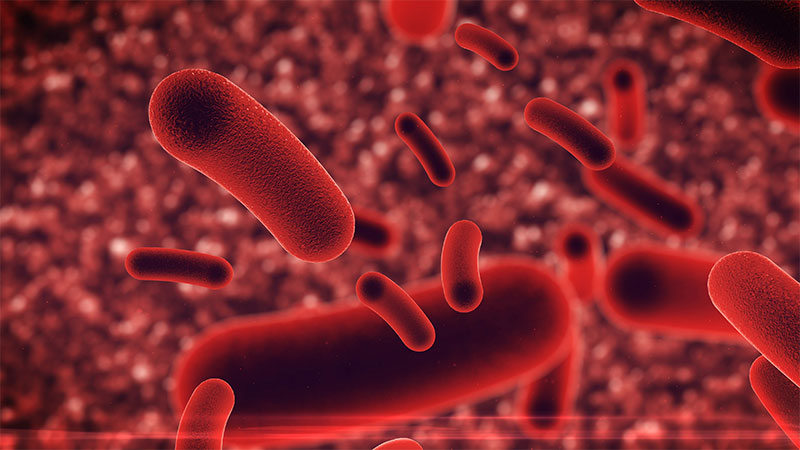
Beneath the blade of a microscopic threat
When asked how close we are to the edge, James Johnson of the University of Minnesota gave a blunt answer: “It’s already happening. People are dying. It’s right here, right now. Sure, it’s going to get worse. But we’re already there.”
Johnson’s remarks came in the wake of a 2016 death in Nevada caused by a superbug. After hip surgery, a woman in her seventies was diagnosed with an infection caused by Klebsiella pneumoniae, which proved resistant to all 26 known antibiotics. She ultimately died of septic shock.
Roughly 700,000 people worldwide die each year from infections that no longer respond to antibiotic treatment, often because the infection is detected only when there is no time left to test an effective drug, according to a 2016 report.
Antibiotic-resistant bacteria infect 2.8 million Americans and cause more than 35,000 deaths annually, according to a report published in November 2019 by the Centers for Disease Control and Prevention. Compared with 2013, deaths caused by complications from antibiotic-resistant superbugs have fallen by 18 percent, but the number of such infections has doubled since then—or, more likely, the report from six years earlier underestimated the true case count. The 2019 report shows that every 15 minutes, someone in the United States dies from drug-resistant bacteria.
As troubling as these figures are, they too likely underestimate the real number of deaths, says infectious-disease expert Greg Frank, who nevertheless calls the study a “really good first step” in describing the challenge posed by antibiotic resistance. Frank points to the hypothetical case of a cancer patient who dies after contracting a drug-resistant bacterial infection—yet whose death would almost certainly be attributed to cancer, not the infection.
“Despite significant progress, this threat remains our enemy. You and I are living in a time when some miracle drugs no longer perform miracles and families are being ripped apart by a microscopic enemy,” said CDC director Robert Redfield, urging the public to stop talking about the post-antibiotic era as a future scenario, because “it’s already here.”
The report identified 18 bacteria and fungi requiring close monitoring, five of which are classified as “urgent threats.” To the three superbugs already deemed imminent dangers in 2013—Clostridium difficile, which has the highest mortality rate; Enterobacteriaceae, known as the “nightmare bacteria” because it is asymptomatic and therefore difficult to detect; and Neisseria gonorrhoeae—two more have now been added: Candida auris and Acinetobacter.
No one is truly safe from the threat of superbugs; they have “the potential to affect every person on the planet,” said Michael Craig, a senior advisor at the CDC.
More than 150 million antibiotic prescriptions are issued each year in the United States alone, making it difficult to imagine what medicine in this century would look like if antibiotics were to lose their effectiveness.
To avoid an antibiotic apocalypse—or at least delay it long enough for more effective drugs to be developed—we first need to understand how we reached this crossroads.
From the alpha to the omega of antimicrobial resistance
Antibiotic resistance is one of the top three public-health threats of this century, according to the WHO, and it is driven largely by human behaviour. While some bacteria naturally develop resistance, the scale of the problem stems from the overuse of antibiotics, both in human medicine and in veterinary care.
A 2018 study published by the World Health Organization revealed significant disparities in antibiotic consumption across countries. While the Dutch use 9.78 defined daily doses (DDD) per 1,000 inhabitants, the United Kingdom’s consumption is twice as high, and Turkey and Iran use nearly as many antibiotics as the British.
The report also showed that Italy, Spain, and Japan are relatively heavy users of medicines that should be kept in reserve and deployed only when absolutely necessary.
“Findings from this report confirm the need to take urgent action, such as enforcing prescription-only policies, to reduce unnecessary use of antibiotics,” said Suzanne Hill, director of the Department of Essential Medicines and Health Products at the WHO.
The routine, preventive use of antibiotics in animals raised for food further fuels the emergence of drug-resistant bacteria. On farms, antibiotics are often administered to promote weight gain and protect animals from diseases that spread easily in crowded, enclosed facilities.
Although agricultural antibiotic use in the United States has shown a downward trend, global consumption is expected to rise by two-thirds by 2030, according to a study published in Proceedings of the National Academy of Sciences and produced by researchers from eight institutions. By 2030, the largest users of antibiotics in agriculture will be China—accounting for 30% of global use in this sector—followed by the United States (10%, down from roughly 13% today), Brazil (8%), India (4%), and Mexico (2%).
In some countries, about 80% of all antibiotics are used in the animal sector, according to the World Health Organization, which warns that curbing unjustified antibiotic use in livestock is a crucial step toward addressing antimicrobial resistance. A study published in The Lancet Planetary Health found that restricting antibiotic use in food animals reduced the prevalence of resistant bacteria by up to 39%.
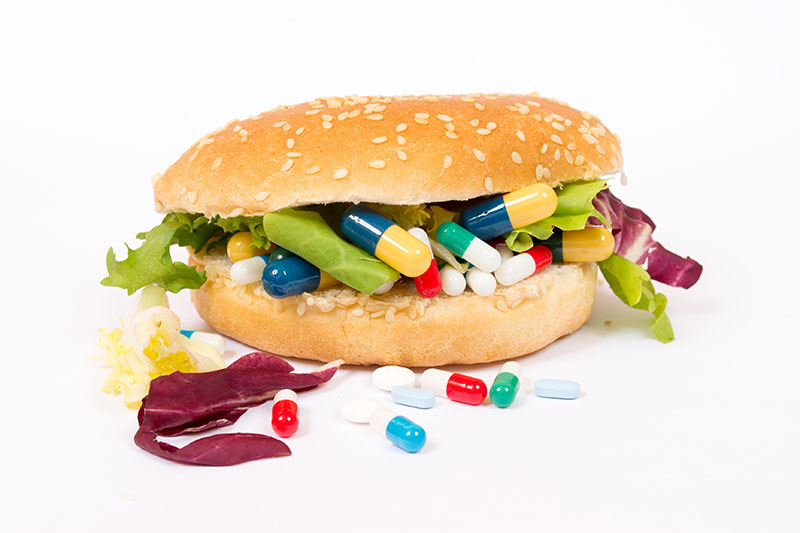
Avoiding a collision with immeasurable costs
Not all measures aimed at reducing antibiotic use are popular or comfortable, but the WHO warns that there are very few “promising options” besides limiting how widely these drugs are used.
According to WHO guidelines, powerful antibiotics reserved for treating life-threatening infections in humans should be banned from use in animals. Livestock should instead be quarantined, allowed to die, or culled to prevent the spread of disease, rather than treated with last-resort antibiotics. This is a crucial step in preventing resistance to the most potent drugs, WHO experts say, though it is deeply unpopular with farmers because of the financial losses it entails.
The links between antibiotic use on farms and risks to human health are clear, says Kazuaki Miyagishima, director of food safety at the WHO. He explained that the rising volume of antibiotics used in livestock is driven by “a growing demand for foods of animal origin, often produced through intensive animal husbandry.”
Cutting back on—or giving up—meat consumption is not exactly a trend in dietary choices, yet changing our eating patterns could be part of the solution, and not only to antibiotic resistance. The way doctors and patients approach antibiotic use is a key factor in curbing the spread of resistant bacteria.
After a study showed that 4.5 million Romanians treated their colds with antibiotics in the past year—one-third of them without a doctor’s recommendation—Professor Codruţ Sarafoleanu of the Romanian Rhinology Society explained that self-medication, the ease with which physicians prescribe antibiotics for simple viral infections, and the lax access to these drugs in pharmacies form a dangerous triad in the context of the alarming rise in bacterial resistance.
The European Union Council’s recommendations on patient safety outline several measures for preventing the spread of highly resistant bacteria. These include establishing a national multidisciplinary task force of experts to develop prevention policies and intervene at the hospital level, ensuring an appropriate ratio of infection control specialists to hospital beds, and actively screening “at-risk” patients upon hospital admission.
Ultimately, everyone can help prevent the spread of antibiotic resistance, says Michael Craig, advisor for CDC Antibiotic Resistance Coordination. Simple steps—such as taking antibiotics only with a doctor’s prescription, following basic hygiene practices like handwashing, and protecting oneself against sexually transmitted infections (some of which, like antibiotic-resistant gonorrhea, spread through sexual contact)—can make a meaningful difference.
Antibiotic resistance is already making certain diseases, such as meningitis and pneumonia, more difficult and more expensive to treat. A world in which we are thrust back to the era before antibiotics were discovered—a time when these drugs simply did not exist—would be a terrifying place to live, especially after decades of higher life expectancy, safer surgery, and effective treatment for infections that were once lethal.
The post-antibiotic era is dire news, and not only for those who might develop pneumonia or contract a urinary tract infection. Resistant bacteria already pose a deadly threat to vulnerable groups such as the elderly and people with chronic illnesses, says Anne Schuchat, Principal Deputy Director of the CDC. But if antibiotics were to stop working altogether, an even broader category of patients would lose their “safety net”—including cancer patients, diabetics, those who rely on dialysis, and people in need of organ transplants or hip implants.
Antibiotic resistance is an issue that should provoke the same level of concern as climate change, because it is essentially a tsunami—albeit one that builds slowly—says John Conly, a professor at the University of Calgary. The good news, buried beneath the discouraging mass of information, is that when it comes to seismic waves, survival rates improve if the warning system is functioning—and, of course, if the warnings are heeded.