













Moesha Johnson’s Olympic miracle
In the choppy waters of Port Doha, Qatar, things weren’t looking good. Moesha was midway through a 10-kilometre open water race in the World Championships. This was her chance to qualify for the Olympics. But she was trailing behind a pack of thirty girls and had been for much of the race.

William Wilberforce | The “Nightingale” who devoured the Hydra
A deeply religious English politician and tireless social reformer, William Wilberforce, nicknamed the “Nightingale of the House of Commons” for his distinct and melodious speaking, made history with his contribution to the complete abolition of slavery in the British Empire.

Complete surrender: A life summed up in two words
Of all the decisions we've ever had to make, it's easy to identify those that have changed our lives and tested our character. For Eric Liddell, one such decision was to give up an Olympic race for his faith.

Steps through the darkness: a testimony of saving faith
Sinking into darkness, after 14 years of enjoying all the spectacles of grace and beauty in which our world is enveloped, can be the beginning of tragedy. Or it can be the moment when you begin to discern, nuance by nuance, the splendour of a reality that healthy eyes so often miss.

(Un)Interesting sermons and the forgotten art of listening to the Word
If we were asked how many of the thousands of sermons we’ve listened to in a lifetime were truly memorable, the answers might not be too encouraging for those called to share Scripture. Equally challenging, however, remains the way we prepare to be good listeners of the Word.

Puritanism in the Protestant Reformation
Less than 50 years after the supporters of Martin Luther’s ideas in Germany were mockingly called “Lutherans,” England was in its turn discovering a derogative nickname—“Puritans”—which it applied to a category of Christians who disturbed the ordinary life of the English church and society.[1]

The greatness of an ordinary life
From an early age, we are bombarded with messages telling us to stand out, to make something of ourselves, to do something great with our lives. Many times the voices are religious in nature: God has great plans for us, He will do truly remarkable things with our lives.

“God is dead”. Any objections?
The tendency toward the total privatization of religious life is particularly strong today, especially in the new generation.

Pocket apocalypse: The end of the world in the press
The image of an apocalypse generated by a microscopic coronavirus has been sketched more than once by the press in the past few weeks.

Is the hero better than his God?
Its nomination for six Academy Awards and winning in two categories [1] confirmed the feeling of the public that they were dealing with a very good movie, in every way.
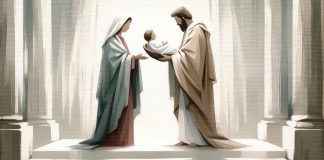
Simeon and Anna: From waiting to fulfilment
Some expectations dissolve into routine or turn into despair, while others invigorate life. The former are measured in deeds and desires, while the latter are measured in faithfulness and beliefs.

From heartache to hopeful
It’s not hard to misinterpret the Bible. I’ve done it, most people I know have done it and if you’ve read it enough, I’d bet you’ve done it too. It isn’t surprising then, that throughout history many have misinterpreted the Bible, especially when it comes to complex ideas like the end of the world and Jesus’ second coming.

The stable with the iron bars
At the end of every year, a covert censorship obscures the true meaning of the event that split history in two: the birth of Jesus. Under the festive guise of Christmas, the celebration of the birth of Jesus Christ has been culturally transformed into a holiday of good cheer. The religious motif has been preserved, but the spiritual meaning has largely been lost.

“The woman with the book” | The weakness that unleashes the power of God
God uses the traits we dislike as well as our weaknesses to create something great, beyond our abilities and imagination. This is the message that pervades the pages of "The Woman with the Book", the biography of the missionary Gladys Aylward.

The Church of England | Anglicanism between Rome and Geneva
The term "Anglicanism" denotes the system of doctrine and practice of those Christians who are in communion with the archbishop of Canterbury. The beginnings of the Church of England are linked to the reign of Henry VIII and Edward VI, while the initial formulation of Anglican principles is linked to the reign of Elizabeth I, during whose reign a middle ground was politically...