













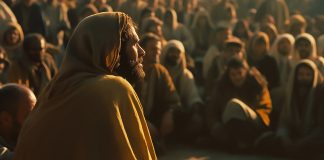
Jesus also loved…
"History shows how surpassingly difficult it is for Christians not to forget Christ," says Professor Chris Green. Forgetting does not mean losing sight of His existence, but rather losing sight of His way of being, His values, and His way of relating to those around Him.
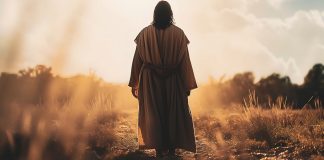
Agents of God
Undoubtedly, the best known of all Bible verses is John 3:16, but even this does not sound the same in its different renderings. One of these is a personalised version, sometimes employed in church settings: “For God so loved [insert your name here] that He gave His one and only Son, so that if [insert your name here] believes in Him, [insert your...

COVID-19: Crisis prayer
A major crisis pushes us to re-evaluate the way we see and do things in the fields of health, finance, and social interaction. But how does this crisis affect our religious practices—especially the most common of these, prayer?

The Ten Commandments
The book of Exodus is the second book in the Bible. It follows God’s servant Moses leading the Israelites out of slavery and through the desert towards the hoped-for Promised Land. Along the way, they stop at Mt Sinai. Moses goes up the mountain and receives from God ten commandments carved on a stone tablet. This is one of the most famous sections...

William Wilberforce | The “Nightingale” who devoured the Hydra
A deeply religious English politician and tireless social reformer, William Wilberforce, nicknamed the “Nightingale of the House of Commons” for his distinct and melodious speaking, made history with his contribution to the complete abolition of slavery in the British Empire.

The Second Coming Files: A 2000-Year Inquiry | Part IV: The world in the 18th-19th centuries
In the first three articles in this series, we examined what Scripture says about the coming of Jesus, and also how the biblical books of Daniel and Revelation remain the foundations of understanding time.

The mystery of the seventh day (II)—from Abraham to Paul
In this second article in a series of three, we continue our analysis of three major anti-Sabbatarian arguments. The series will conclude with an assessment of Jesus' practice and teaching on the Sabbath.

The God of all | The divine vision on our differences
The first part of my life was marked by multiple barriers that placed me in a minority status.

What the “miracle of the resurrection” means to Christians
"We cry out to the dry bones, 'Come alive! Come to life!' / We cry out to the dead hearts: 'Rise up! Come to life! Let us see an army rise from the ashes'". The song from which I extracted these verses is so rich in literary devices that, probably, if we randomly chose a person and had them listen to it, they...

John Andrews, the big-hearted genius
John Andrews and his family decided to cross the ocean against the current of that time. Therefore, many forgotten truths were brought to light, many hopes were reborn, and many dreams came true.

Christian persecution, at the highest level in the last three decades
One in seven Christians is a victim of persecution worldwide and one in sixteen Christians dies every day for their faith, according to a report published by the Open Doors organization, revealing that Christian persecution has reached the highest level in the last three decades.

In the footsteps of the historical Jesus: benefits and perils
Christianity is either historical or not. It claims that “God acted decisively in history, revealing Himself in external, specific events attested in the Scriptures of the Old and New Testaments.”[1] The most important of these events was the coming of Jesus as the Messiah, the saving Christ.

How do I know God exists?
You must picture me alone in that room in Magdalen night after night, feeling, whenever my mind lifted even for a second from my work, the steady, unrelenting approach of Him whom I so earnestly desired not to meet. That which I greatly feared had at last come upon me. In the Trinity Term of 1929 I gave in, and admitted that God...

Why the Church?
I’m sure you’ve heard the statement: “I’m all about Jesus, but I’m not interested in church.” I’ve heard this many times and have even found myself saying it during certain periods of my life.

No doubt has overtaken us, except that which is common to mankind
Without ever looking for doubt I often welcomed it with interest and gratitude. I did not run away from it, nor did I treat it with indifference. I rather sought to tone it down.