











Searching for glow-worms
With packs and tents strapped to our backs, it took our little group of three several hours to reach the hidden valley. The lush, green rainforest was cool and damp and as we gingerly clambered over moss-covered boulders, we attempted to follow an almost non-existent track that wound its way parallel to the mountain stream.

The final days of history
Virtually every civilization has been characterised by religious beliefs about the end of all things, not least about the timing and the conditions that precede the end, and signs of its imminence. There are many differences between these beliefs across civilisations, but many similarities too.

Why I believe in God
If I could turn back time and return to my friend’s living room that day, when she was telling me with tears in her eyes that she wished she could believe, that she tries but is not able, I would probably find more appropriate words than I did then.

What is the Church?
What do you think of when you hear the word church? Perhaps your mind conjures up images of ancient cathedrals, resplendent with gothic spires, stained glass windows, and vaulted ceilings.

Forgiveness is not an emotion
It is hard to remain indifferent to a life story like that of Terri Roberts, the mother of a young man who, in a still-unexplained moment of madness, stormed into an all-girls Amish school and began shooting, killing five of the students before killing himself.
Living a resurrection life
In February 2008, English theologian NT Wright made headlines—at least on the website of Time magazine, among others—with comments associated with the launch of his book, Surprised by Hope: Rethinking Heaven, the Resurrection, and the Mission of the Church.

Let’s read Genesis with “new eyes”
In the spring of 2022, I interviewed the venerable professor of Hebrew exegesis, Jacques Doukhan, for the second time. Ten years before, in our first interview, we discussed his life: his beginnings in a Jewish family in Constantine, Algeria, his studies in France, Switzerland and the United States, his work as a teacher and author. This time we talked about the study that...

How (and why) to encourage your pastor
After 25 years in the ministry, during which he never once considered leaving, Pastor Tim Kuperus admits that the last three years have been difficult enough for him to consider a different path.

Life under the cross and death at the stake
For the chained man, there were now only two options: unreserved submission to the council or condemnation; recantation or death. Outside, the stake was already prepared.
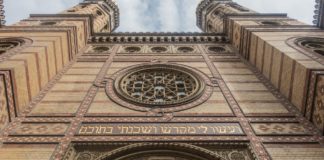
The Jewish narrative context of Jesus’s words
Jesus's words could not have been foreign to the Jewish people of His day. In an eminently oral culture, narratives, stories, parables and metaphors occupied an important place.

The last days of Jesus in Bible prophecy
The story of Jesus's first coming to earth is remarkable, not only because it was foretold thousands of years in advance, but also because the prophesied details of His passion and death were exactly fulfilled.
Religion is good for you—really?
Religion has often been maligned in both the press and popular culture. But could believing give you an edge in life?

How to study the Bible properly
Do your best to present yourself to God as one approved, […] who correctly handles the word of truth. (2 Timothy 2:15)

A blood-red sunrise: martyrs and the instinct of persecution
Even though we have been in a much better place for 700 years now, we know that the passing of time has not eliminated the instinct of persecution from human nature.

Facing the person in the mirror
The great attraction of the virtual world comes from the fact that it gives its users the possibility of escape. Inside that world, they feel they can hide their identity and satisfy their every fantasy without suffering any consequences. Being able to hide one's identity offers a sense of freedom, which isn't a bad thing to want, after all. But is freedom of...