














Reasons for the cross of Christ: why was His sacrifice needed?
The name of Jesus brings to mind the gift of the incarnate Godhead—their supernatural acts, astonishing wisdom, incomparable goodness, unmitigated innocence, supreme sacrifice, offered salvation, and our only certain hope.
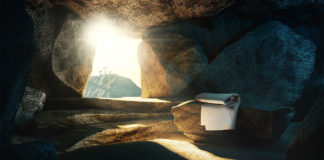
Did Jesus really rise from the dead?
No serious historian doubts that Jesus lived in first century Palestine and died by crucifixion. However, controversies arise when the resurrection is discussed.

Misleading bridges, and better prayers
Bridges seem to be the emblem of existential stress for Romanians. In the face of a difficult situation, even Romanian folk wisdom recommends: "Make a pact with the devil until you have crossed the bridge."
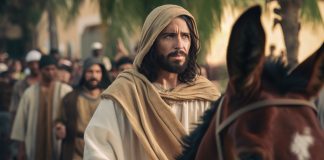
The prophecy of the Messiah
Daniel chapter 9 contains what many consider to be the most sublime prophecy of the Old Testament—a prophecy of the Messiah, Jesus Christ. Amazingly, not only did this prophecy reveal the purpose of His incarnation as a child, but it also specified when His ministry would begin and when He would die.
Old Testament and New Testament | The unity of Scripture
The Bible has 66 books written by different authors over about 1,500 years. Is there a common theme, a leitmotif? If so, which is it? Is there an Old Testament God and a New Testament God?

Why we cannot escape the vicious circle of moral failure
Judging by the headlines in the press over the last weeks, the world seems ready to have a discussion about sin.

Case closed…32 years later
"Even if you're imprisoned for life, that's still a short time. After that, Jesus will come back. All you have to do is try to make the best of the situation you're in' (Lindy Chamberlain).

How to enjoy closeness in your relationship with God
Could we have a quality Christian ministry without an authentic relationship with God? Anyone can pretend in the short term, but to truly succeed in the long term you need a devotional life full of passion and a continual closeness to Jesus Christ.

A child caught up in the struggle for Black emancipation
For La Tanya Butler, childhood memories are imbued with the injustices that Black people regularly endured at the hands of white people at a time when discrimination was enshrined in law.

Beyond what the eyes can see
There are times when we feel that life is hard and that some challenges are beyond our power. But when we look around us, at people like Ben Underwood, we realise that we are not only unaware of the gifts we have been given, but also of the immense power to enjoy life even when those gifts are denied us.

Revenge is not always sweet
Revenge is a trap the wise do not fall into, goes the diplomatic saying. Still, wanting to give someone a taste of their own medicine is a common desire.

Jesus: Where two worlds meet
Un hombre pasa con un pan al hombro.../Otro busca en el fango huesos, cáscaras/¿Cómo escribir después del infinito?

My journey to Bethlehem
They say that "all roads lead to Rome". This famous saying originated in ancient times with the extensive network of roads built by the Romans to facilitate communication and travel throughout their empire.

The end of the world in literature
The end of the world has been an enduring human preoccupation and, paradoxically, has existed since the dawn of civilisation.
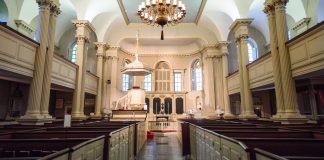
The Unitarian Movement | How an unorthodox minority contributed to the development of the Reformation
The Unitarian Movement was defined as a significant minority movement under the influence of Humanism. The name “Unitarians” comes from the belief in one divine Person, a belief also common to Judaism and Islam, as opposed to the doctrine of the Trinity.