














The immortal Bible
"Scripture" is a Latin word that means "writings", while "Bible" is a neutral Greek plural meaning "books" (from biblíon = book, document, scroll). Today, however, in all languages, the word "Bible" is understood as a feminine singular, meaning Holy Scripture.

He believes and what he believes comes into being
Very few people have ever found rest in what they are and what they do. They are always seeking what they do not have and trying to become what they are not. These people talk about transformation, development and fulfilment but no matter their accomplishments or status, they are always thinking that they need to surpass their present state, that there is something...
The awakening America needed
In the early decades of the 18th century, America was in the throes of an identity crisis. The new American lifestyle had earned New England the nickname of “the new English Sodom.”

The best interest of the eternal child
Some time ago, an older friend, now a parent, was telling me how the way his father treated him in childhood caused him unnecessary suffering. Now, as an adult struggling with anxiety, he has spent much time in a psychologist’s office.
Good reasons to read the whole Bible
As intimidating as the Bible may sometimes be, especially because of its size and its sometimes difficult passages, many who have read it from cover to cover say that it has changed their lives for the better—the spiritual resources the whole Bible can provide are not found elsewhere.
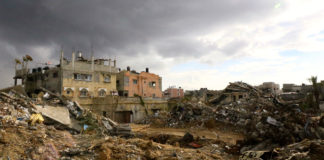
The doctor who healed hatred
When war kills not one but three of your children, what is there left besides hatred?

“Teach us to pray!”
Many people know the Lord’s Prayer, having learned it from a parent or grandparent. But few know that it was given as a response to the disciples’ request for Jesus to teach them how to pray.

Would Jesus be disappointed in the Church?
The dissonance between what church representatives say and what they do, the crises caused by sexual scandals, tolerating sin, not taking responsibility for mistakes and hiding them, and selling spiritual gifts for money, are just a few of the reasons why people say they’re disappointed in the Church.

From the religion of lack to the lack of religion
A group of atheists in Sacramento, California, have prepared 55 billboards for the Christmas season, featuring images of local people and slogans such as "Good without God", "Doing good is my religion" or "Believe in yourself".

Lewis and the Lion
We have become so accustomed to authors and researchers being highly specialised in niche fields, that we are tempted to be skeptical of works they produce outside of their accepted field of expertise. It seems bizarre therefore that an author of children's literature could also be a professor at Oxford and Cambridge and an expert on the medieval era.

Thank God for atheists?
Richard Dawkins is arguably the world’s best-known atheist. His 2006 book The God Delusion was a runaway success and widely influential. That’s why theologian Alister McGrath was surprised when a young man told him he became a Christian after reading The God Delusion.

The surprise of this very night
''The ground of a certain rich man yielded an abundant harvest. He thought to himself, ‘What shall I do? I have no place to store my crops.’ Then he said, ‘This is what I’ll do. I will tear down my barns and build bigger ones, and there I will store my surplus grain. And I’ll say to myself, 'You have plenty of grain...

Old Testament and New Testament | The unity of Scripture
The Bible has 66 books written by different authors over about 1,500 years. Is there a common theme, a leitmotif? If so, which is it? Is there an Old Testament God and a New Testament God?

What do we do with our guilt?
Nothing else on earth judges a person as ruthlessly as their own conscience, and truthfully, nothing else should. The painful process happens before and after the harm has been done.

The portrait of Jesus (I): Jesus, the Saviour
Salvation is not a concept Christianity discovered. In a broad sense, salvation means rescue from any danger or adverse situation.